Address
Work Hours
Monday to Friday: 7AM - 7PM
Weekend: 10AM - 5PM

Address
Work Hours
Monday to Friday: 7AM - 7PM
Weekend: 10AM - 5PM



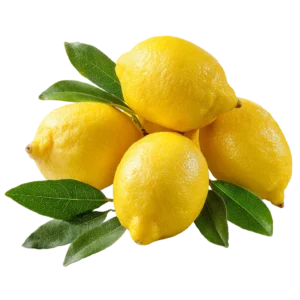
PEI Trade supplies Egyptian lemons in bulk to manufacturers, processors and large-volume buyers. The fruit is grown for juice yield and acidity rather than shelf appearance, which is the opposite specification from a retail programme and the reason industrial buyers need a different conversation.
What matters on a processing line is throughput: how much juice comes out per tonne, how consistent the acid level is batch to batch, and whether the fruit arrives sized closely enough that an automated slicer or juicer does not have to be reset. This page covers those, the pack formats that suit a factory intake, and the season position.
Target juice percentage and acid range are agreed against your line before a programme starts, and confirmed per lot rather than published here as a single number. The variety and specification detail is in the Egyptian lemon export specifications guide.
| Application | What the buyer specifies | Pack format that suits it |
|---|---|---|
| Juice and concentrate | Juice percentage and acid level; appearance is secondary | Ventilated bin or bulk carton |
| Citric acid extraction | Acid level and consistency between lots | Ventilated bin |
| Preserved lemons | Maturity stage and peel condition | Export carton |
| Food service slicing and garnish | Size uniformity above all | Export carton, count-graded |
| Essential oils and cosmetics | Peel condition and oil content | Bin or carton, by process |
| Eco-cleaning products | Volume and acid level; cosmetic defects accepted | Ventilated bin |
Buyers whose requirement is a retail or wholesale fresh programme rather than a processing intake should start from the fresh Egyptian lemons page instead.
| Format | Suits | Notes |
|---|---|---|
| 15 kg export carton | Food service, preserved lemon, slicing | The common export format; count-graded |
| Ventilated bin | Juicing, extraction, non-food use | Lowest handling cost per tonne at intake |
| Plain or branded carton | Either | Barcoding and internal-use labelling available |
| Palletised, sea-freight ready | All formats | Pallet pattern built to your intake equipment |
Egyptian lemon exports run from the end of September to May, so a processing programme is planned across that window.
| Window | Volume | What to do |
|---|---|---|
| End of September to May | Export season | Book programmes ahead of the season opening; volumes confirmed per loading week |
| June to September | Before the season opens | Agree tonnage profile, grade and pack format for the next season |
For industrial buyers we plan volume across the season rather than shipment by shipment: an agreed tonnage profile, container space reserved ahead of the season opening, and traceability recorded by harvest date so you can match an intake result back to a lot.
Partner farms operate to GLOBALG.A.P and packhouse operations run to HACCP practice. Residues are managed to the maximum residue limits of the destination market, with reports for a lot available on request, and every lot traces back to the orchard and harvest date.
Certificate numbers, issuing bodies and validity dates go to buyers on request rather than being published here. Processors shipping into the European Union should also read five pesticide rules for Egyptian fruit exports to the EU.
Other Egyptian lines we supply to processors and bulk buyers:
Egyptian lemon exports run from the end of September to May. Volumes and count range are confirmed per loading week at the time of offer.
Yes. We supply juice and concentrate producers, citric acid extraction, preserved lemon manufacturers, food service slicing operations, and non-food users in essential oils, cosmetics and eco-cleaning products.
Full container loads in 15 kg export cartons or ventilated bins, palletised and sea-freight ready, with the pallet pattern built to your intake equipment. Bins are usually the lowest handling cost per tonne at a factory gate.
Targets are agreed against your line before a programme starts and confirmed per lot. We do not publish a single figure, because juice percentage and acid level move with variety, growing zone and point in the season.
By destination port and Incoterms, volume, fruit grade, pack format and the season position at the time of offer. Send those and we will quote; we do not publish price figures because they change through the season.
Partner farms operate to GLOBALG.A.P and packhouse operations run to HACCP practice, with a phytosanitary certificate and certificate of origin on every shipment. Lots are traceable and residue reports are available on request. Certificate numbers and issuing bodies go to buyers on request rather than being published.
Yes. Traceability is recorded at lot level by harvest date, so an intake result can be matched back to the orchard and picking day rather than only to a container.
Send the destination port and Incoterms, the volume and tonnage profile, the application the fruit is going into, the pack format and the loading weeks. We will quote against the current season position.