Address
Work Hours
Monday to Friday: 7AM - 7PM
Weekend: 10AM - 5PM

Address
Work Hours
Monday to Friday: 7AM - 7PM
Weekend: 10AM - 5PM


How in-transit cold treatment, phytosanitary certification and destination pest protocols work on Egyptian citrus and other reefer produce, and what importers should confirm before a container is booked.
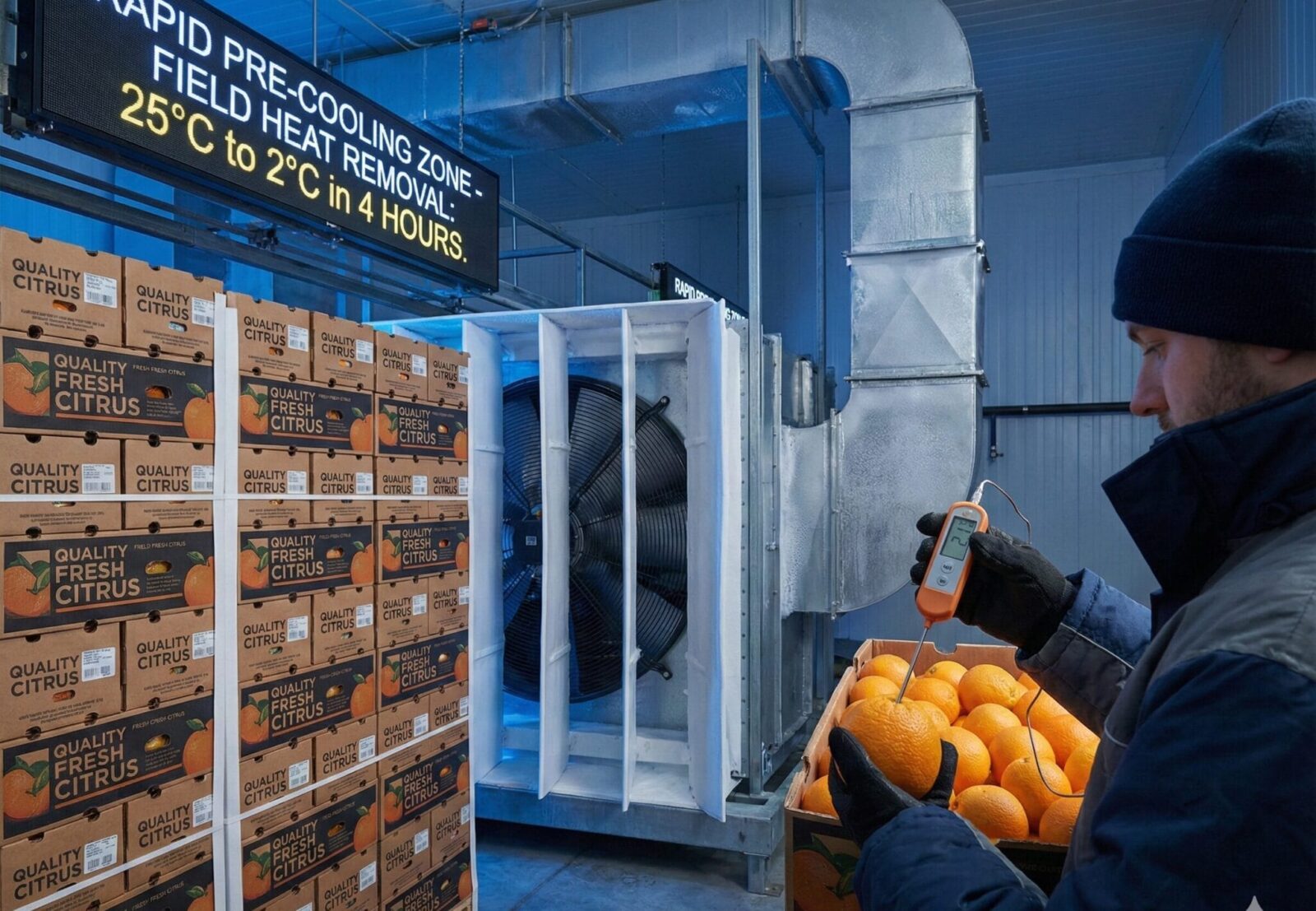
A container of Egyptian produce clears a border twice. Once as cargo, and once as a plant health case file. The second clearance is the one that strands shipments, because the requirements are set by the importing country’s plant protection authority and they are agreed long before the fruit is picked. With the 2026/2027 citrus season opening from late November, this is the point in the calendar where those protocols should be confirmed rather than assumed.
The phytosanitary certificate is issued by the Egyptian Central Administration of Plant Quarantine after inspection of the consignment. It states the botanical name, the quantity, the packhouse and the destination, and it confirms the lot was found free of the pests of concern for that destination. It is consignment specific. It cannot be reissued for a different market once printed, and a change of discharge port after issue usually means a replacement certificate, which is why the final destination has to be fixed before the inspection is booked.
Additional declarations sit under the main text. These are the lines that carry the real weight. A destination may require a declaration that the fruit originates from an area of low pest prevalence, that the orchard is registered, or that a specified treatment has been applied. If the additional declaration wording does not match what the destination authority expects, the certificate is technically valid and practically useless.
Mediterranean fruit fly is the pest that drives most treatment requirements on Egyptian citrus. Several markets in East Asia and the Americas accept cold treatment as the mitigation, applied either in a cold store before loading or in transit inside the reefer. In-transit treatment is the common route from Egypt because it uses voyage time rather than adding days at origin.
The mechanics matter. The container is loaded with pre-cooled fruit, calibrated probes are placed in the pulp at positions specified by the protocol, and the carrier runs a fixed set point at or near the freezing point for a continuous number of days. Typical schedules sit around 1 degree Celsius or below for roughly two to three weeks, but the exact temperature and duration are set by the destination protocol, not by the exporter. The treatment fails if any probe drifts above the ceiling for longer than the protocol allows, and the download at discharge is the evidence. Probe calibration certificates travel with the documents.
Not every crop and market pairing needs this. Gulf destinations generally accept inspection and certification without in-transit treatment, and EU and UK entry rests on the certificate plus border control checks rather than a mandatory cold schedule for citrus. Treatment costs voyage flexibility and some shelf life, so it should only be applied where the protocol calls for it. Our note on reefer set points by crop covers where commercial carriage temperatures diverge from quarantine set points.
Ask the exporter for the destination protocol reference, the packhouse and orchard registration numbers, and confirmation that the shipping line will carry the treatment and supply calibrated probes. Confirm who signs off the probe placement, and whether your own authority requires a pre-notification before arrival. Where a treatment applies, build the extra transit days into the arrival plan and into the shelf life you promise your own customers. The wider document set that travels alongside is set out in our guide to export documents on Egyptian produce.
PEI Trade handles phytosanitary certification, orchard and packhouse registration and in-transit cold treatment arrangements across 35 export-grade crops, with SGS or Intertek verification available on request. To confirm what your destination requires for the 2026/2027 season, message our export desk on WhatsApp at +20 10 9911 1918.
