Address
Work Hours
Monday to Friday: 7AM - 7PM
Weekend: 10AM - 5PM

Address
Work Hours
Monday to Friday: 7AM - 7PM
Weekend: 10AM - 5PM


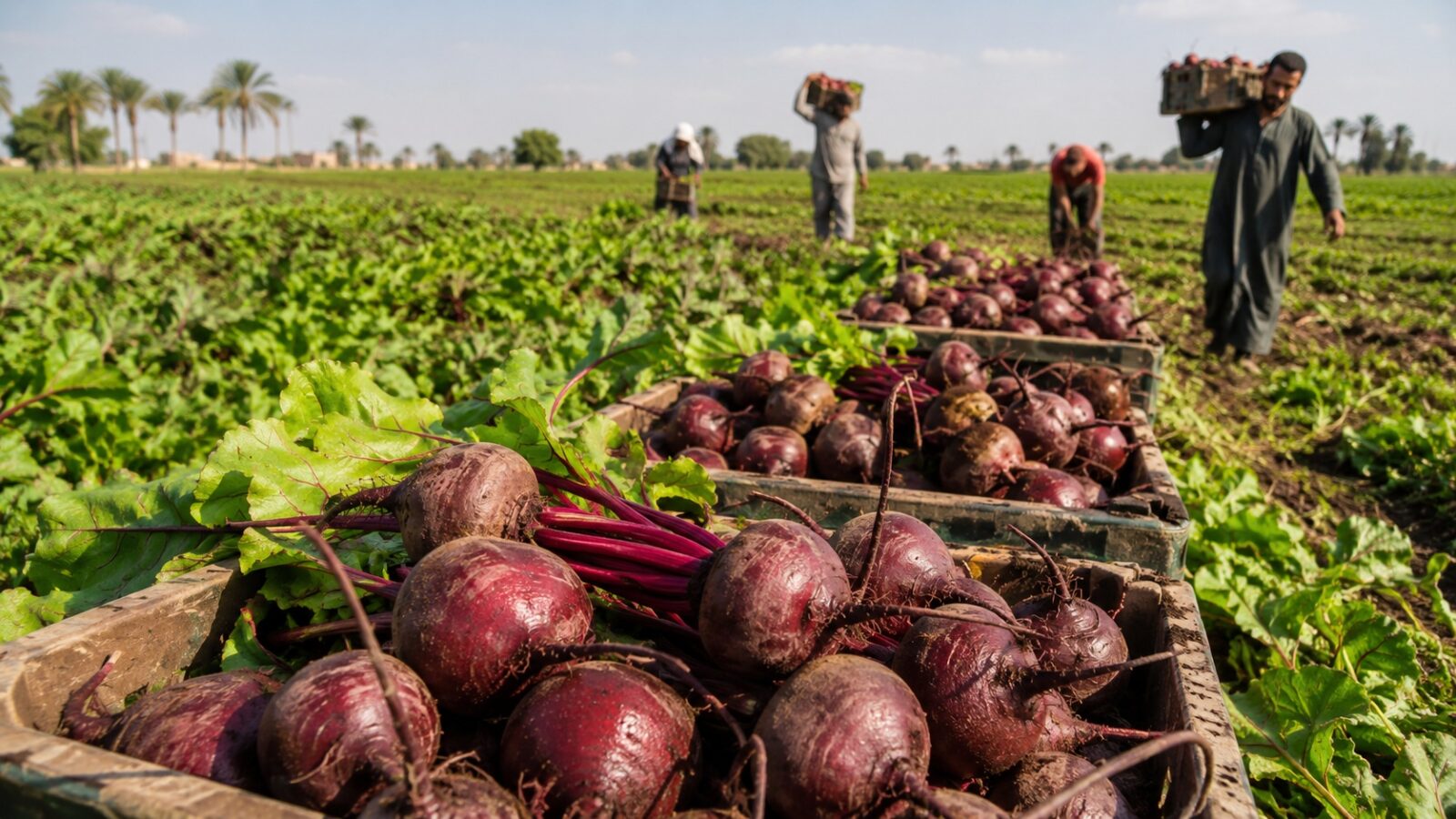
Beetroot, like other storable roots, gives importers stability rather than a scramble for a narrow window: a main winter–spring crop backed by good storage that stretches supply across much of the year. For buyers that means programmable volume and steady shelf presence. This guide sets out the Egyptian beetroot export season and how to plan around it.
Quick answer: Egyptian beetroot has its main crop in winter and spring and is available for much of the year, because topped roots store well in controlled conditions. Bunched (with-tops) beet follows the fresher crop more closely, while topped and cooked/frozen product supply continuity. (Main crop peaks winter–spring; exact windows shift year to year with planting and weather.)
Topped beetroot behaves like other storage roots: with tops removed and cool, humid conditions, it keeps for months without major quality loss. That lets Egypt offer near year-round supply and steady programs — a commercial advantage for buyers planning continuous shelf presence. Bunched beet (tops on) is more perishable and tracks the fresh crop more tightly.
| Period | Activity | Supply |
|---|---|---|
| Winter–Spring | Main harvest | Peak fresh volume (bunched & topped) |
| Summer–Autumn | Storage & shipping | Topped from storage; cooked/frozen |
| Year-round | Processed product | Cooked/frozen beetroot continuous |
A storable crop changes how you buy. Rather than locking a short window, you can run a continuous program across many months, smoothing supply and shelf presence. The freshest, most plentiful supply — especially bunched beet — is around the main winter–spring harvest, while topped and processed product carry continuity through the rest of the year.
Winter and spring, with peak fresh volume (bunched and topped) around then.
Largely yes – topped roots store well, and cooked/frozen product runs year-round.
Bunched (tops-on) beet is more perishable and follows the fresh crop, mainly winter-spring.
Removing the tops and holding cool, humid conditions lets roots keep for months.
Yes – planting and weather shift the dates, so confirm the program window with your supplier.
How to cite this page
PEI Trade. “Egyptian Beetroot Export Season & Calendar.” peitrade.com, 2026. https://peitrade.com/egyptian-beetroot-export-season/
This page is part of our Egyptian Beetroot Export Guide hub.
Plan your Egyptian beetroot program with PEI Trade. Main-crop bunched beet and year-round topped and cooked/frozen supply, with full documentation and correct cold storage. Contact: [email protected] · WhatsApp +20 109 911 1918 · www.peitrade.com