Address
Work Hours
Monday to Friday: 7AM - 7PM
Weekend: 10AM - 5PM
Address
Work Hours
Monday to Friday: 7AM - 7PM
Weekend: 10AM - 5PM


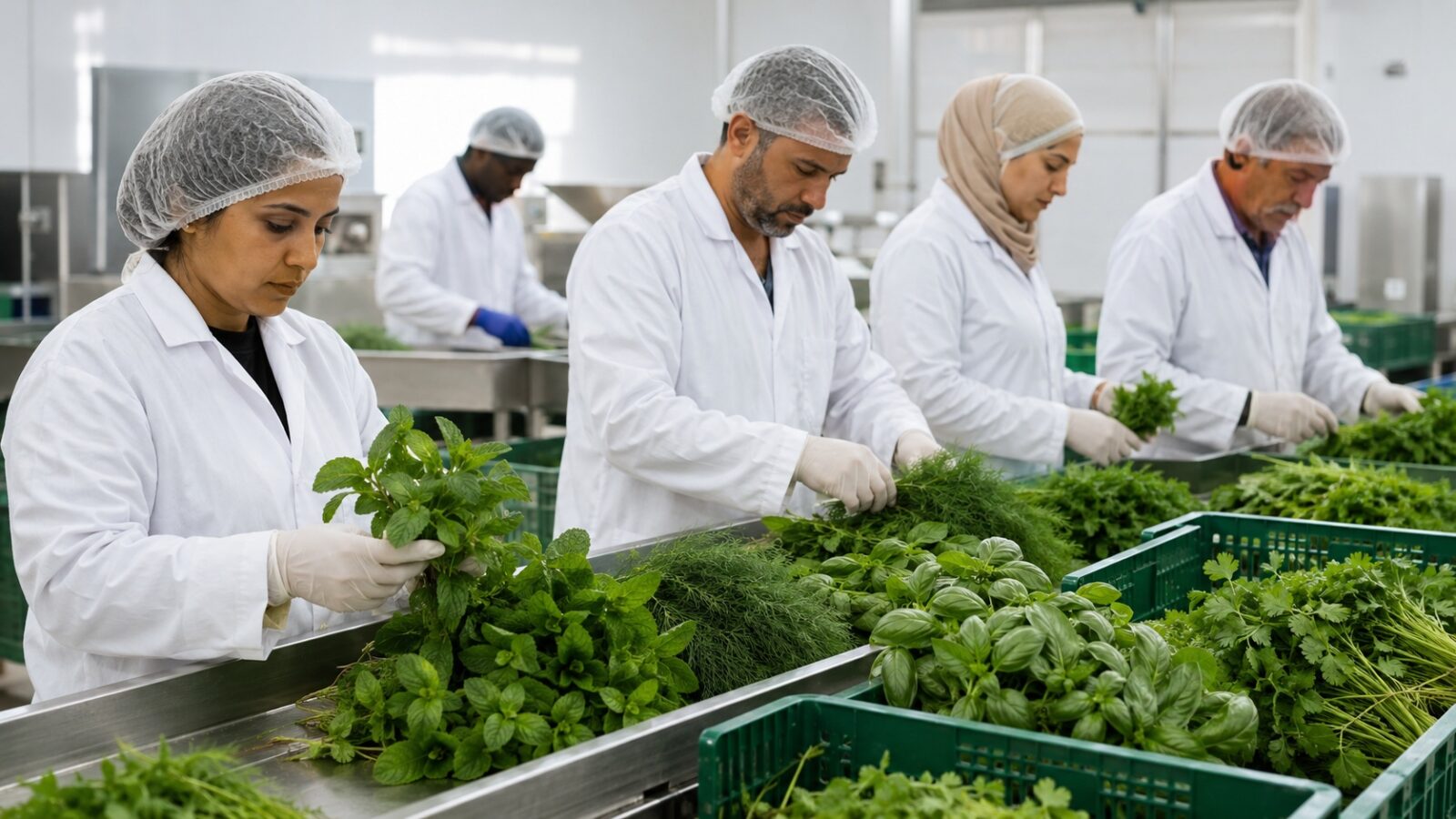
Herbs are one of the most heavily scrutinised fresh categories at the EU border — close pesticide-residue checking on fresh herbs, microbiological control for leafy product, and a separate contaminant burden (aflatoxins, unauthorised dyes) for dried herbs. Compliance discipline is the single biggest differentiator between herb exporters. This guide sets out what an importer and exporter need to move Egyptian herbs cleanly.
Quick answer: Fresh herbs need a phytosanitary certificate, strict compliance with destination MRLs (EU: Regulation (EC) No 396/2005 — fresh herbs face close residue checks), and microbiological control (Salmonella/E. coli), with GLOBALG.A.P. and traceability. Dried herbs additionally need HACCP with controls for aflatoxins, Salmonella and unauthorised dyes (e.g. Sudan), commonly with BRCGS / ISO 22000. HS codes vary (fresh culinary 0709.99; aromatic 1211.90; dried 1211.90 / 0712). Herbs that are listed have historically faced increased border checks set in the annexes of Regulation (EU) 2019/1793, revised roughly twice a year — confirm the current rate and each herb’s listing before shipping.
Fresh herbs are subject to strict MRL enforcement — for the EU, Regulation (EC) No 396/2005 — and certain herbs have historically faced increased official controls at the EU border. Exporters must run tightly managed spray programs, observe pre-harvest intervals and use accredited residue testing before shipment. This is the most common reason herb consignments are rejected, so a credible residue-control system is essential. Specific herbs (such as mint, parsley and coriander) have at times been listed under Regulation (EU) 2019/1793 with increased identity and physical checks historically in the region of 10–50% of consignments, set in the annexes and revised roughly twice a year; confirm the current rate and each herb’s listing before shipping.
Leafy fresh herbs carry a microbiological risk (Salmonella, E. coli) from water and handling, so reputable suppliers control irrigation-water quality, hygiene and the cold chain, and test as required. Clean water and good practice from field to pack are central.
Dried herbs are a processed food with their own contaminant profile: aflatoxins (mycotoxins from poor drying/storage), Salmonella, and — for some products — checks for unauthorised colours such as Sudan dyes. Control rests on HACCP, good drying and storage, microbiological reduction where needed, and a GFSI scheme (BRCGS / ISO 22000).
For EU and UK markets, GLOBALG.A.P. is the baseline for fresh herbs, alongside HACCP and clear lot-coded traceability; dried-herb plants are expected to hold a GFSI-recognised certification. Wood pallets and dunnage must be ISPM 15 compliant.
| Document | Fresh | Dried |
|---|---|---|
| Phytosanitary certificate | Required | Often required |
| Residue test report (MRLs) | Strongly expected | Recommended |
| Micro test (Salmonella/E. coli) | As required | Expected |
| Aflatoxin / contaminant report | — | Often required |
| GLOBALG.A.P. certificate | Baseline | At farm level |
| BRCGS / ISO 22000 | — | Expected (plant) |
| CoO / EUR.1, invoice, packing list, AWB/B/L | Required | Required |
Fresh herbs face strict pesticide-residue checks and microbiological risk; some have had increased EU border controls.
Exceeding pesticide MRLs – which is why a credible residue-control and testing system is essential.
Aflatoxin and Salmonella control, and for some products checks for unauthorised dyes such as Sudan – under HACCP/GFSI systems.
GLOBALG.A.P. for fresh, and a GFSI-recognised scheme (BRCGS/ISO 22000) for dried-herb plants.
They vary: fresh culinary herbs 0709.99; aromatic mint/basil 1211.90; dried 1211.90 / 0712.
How to cite this page
PEI Trade. “Egyptian Herbs Export Requirements.” peitrade.com, 2026. https://peitrade.com/egyptian-herbs-export-requirements/
This page is part of our Egyptian Herbs Export Guide hub.
Export Egyptian herbs the compliant way with PEI Trade. Tightly managed residue control with accredited testing, microbiological discipline for leafy herbs, and full HACCP/BRCGS contaminant control for dried herbs — with GLOBALG.A.P. and complete documentation. Contact: [email protected] · WhatsApp +20 109 911 1918 · www.peitrade.com