Address
Work Hours
Monday to Friday: 7AM - 7PM
Weekend: 10AM - 5PM

Address
Work Hours
Monday to Friday: 7AM - 7PM
Weekend: 10AM - 5PM


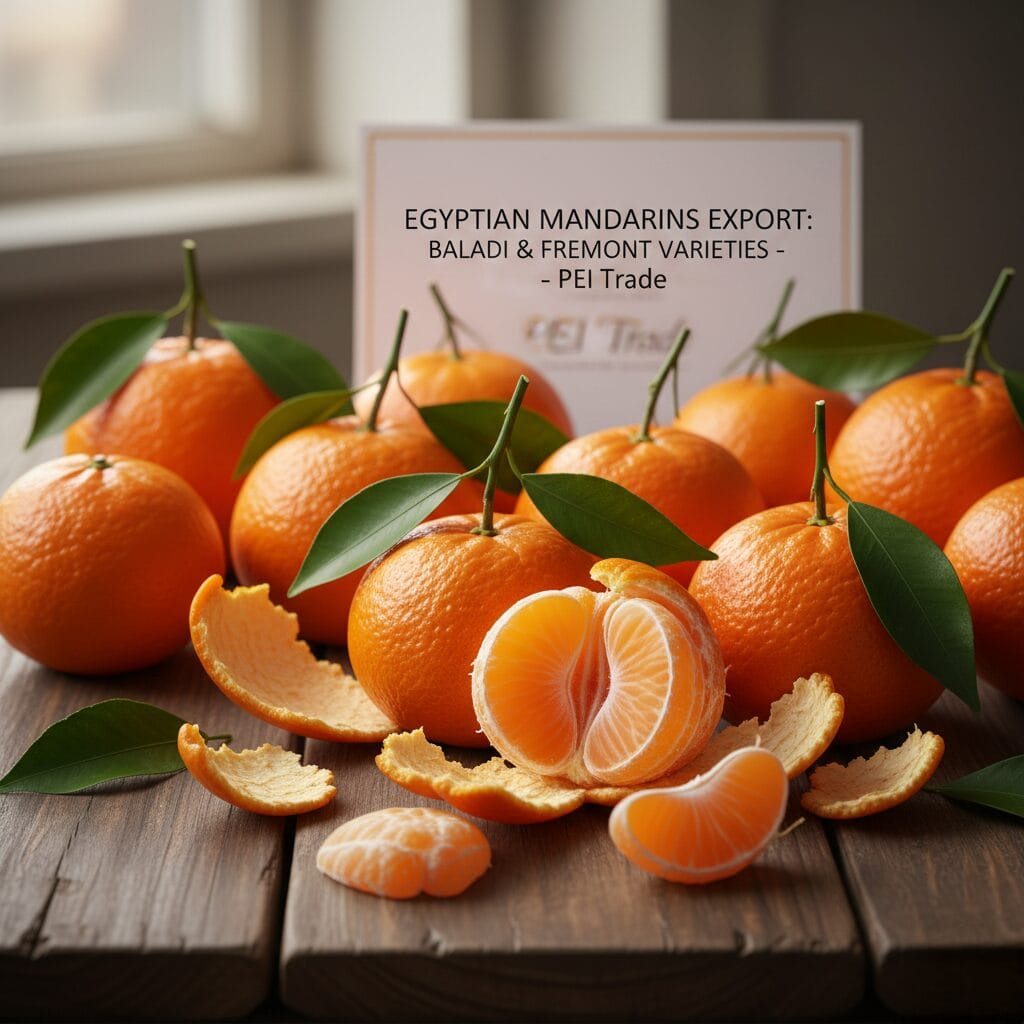
Saudi Arabia is one of the largest Gulf markets for Egyptian mandarins. Easy-peel, sweet and seedless-friendly, Egyptian mandarins (HS 0805.20) land in the Kingdom through the winter season when demand for fresh citrus peaks. For Saudi importers and retail chains, Egypt offers short Red Sea transit, competitive FOB and a supply window that matches the Gulf winter. This guide covers varieties, logistics, SFDA requirements, seasonality and pricing.
Saudi Arabia is a top Gulf market for Egyptian mandarins. Peak supply is November–March. Main varieties: Baladi (aromatic, traditional), Fremont (seedless, modern) and Murcott (late, sweet). Transit is 3–7 days by reefer to Jeddah/Dammam. Imports need an SFDA health certificate, phytosanitary certificate, GSO MRL compliance and Halal-compliant handling.
Saudi Arabia has minimal domestic citrus and high winter demand for easy-peel fruit for households and gifting. Egypt supplies exactly in this window, with mandarins that peel easily and travel well over the short Red Sea route. Egyptian fruit competes with Turkish and Spanish mandarins but wins on freight cost and delivery speed into the Gulf, making it a reliable choice for Saudi retailers and wholesalers.
| Market snapshot | Detail |
|---|---|
| Market profile | Top Gulf easy-peel market |
| HS code | 0805.20 (mandarins & easy-peelers) |
| Main entry ports | Jeddah, Dammam |
| Transit time | 3–7 days by sea |
| Peak window | November–March |
| Key varieties | Baladi, Fremont, Murcott |
Baladi: the traditional Egyptian mandarin — intense aroma and flavour, early season. Fremont: a modern, near-seedless, deep-orange variety with strong retail appeal. Murcott: a late, very sweet tangor extending the season into spring. Graded by calibre (sizes 1-XXX to 10), packed in 10 kg cartons with cushioning. Grade A is colour-uniform and blemish-free for retail; Grade B routes to wholesale.
Shipments leave Egyptian ports for Jeddah (Red Sea) and Dammam (Gulf) in roughly 3–7 days. Mandarins are delicate and travel in reefer containers at 4–6°C at 90–95% RH, with careful handling to avoid rind damage. Fruit is pre-cooled, degreened if needed, waxed and packed with tissue cushioning. The short route preserves the easy-peel quality Gulf buyers expect.
Saudi imports require a phytosanitary certificate from Egyptian plant quarantine, an SFDA-recognised health certificate, and a certificate of origin. Pesticide residues must meet GSO/Saudi MRLs, checked at port. Consignments follow Halal-compliant handling and Arabic labelling (product, origin, packer, net weight, lot). GLOBALG.A.P at farm level and lot traceability are expected by organised buyers.
| Period | Availability |
|---|---|
| October–November | Early Baladi mandarins |
| December–February | Peak — Fremont & main crop |
| February–March | Late Murcott — season extension |
The Egyptian mandarin season runs through the Gulf winter, giving Saudi buyers a continuous easy-peel supply from early Baladi to late Murcott.
Source & data: Egypt is the EU’s top non-EU citrus supplier; mandarin exports rising sharply (EU volumes nearly tripled to 71,457 t in 2025/26). Source: FreshPlaza, 2026. HS code 0805.20 (mandarins). Figures are Egypt-market trade data; per-shipment specifications are confirmed at contracting.
PEI Trade — New Cairo, Egypt. Request a quote or mandarin spec sheet →