Address
Work Hours
Monday to Friday: 7AM - 7PM
Weekend: 10AM - 5PM

Address
Work Hours
Monday to Friday: 7AM - 7PM
Weekend: 10AM - 5PM


Melons are aromatic, perishable and chilling-sensitive — and different types want different temperatures. The job is to pre-cool fast, hold each type at the right cool (not cold) setpoint, and move fruit quickly before aroma and texture fade. Get it right and Egyptian cantaloupe and Galia arrive fragrant and firm. This guide covers the melon cold chain from harvest to reefer, and packing.
Quick answer: Egyptian melons are pre-cooled fast (forced-air or hydro) and held cool — cantaloupe and Galia around 4–7°C, honeydew warmer (about 7–10°C) — at 90–95% RH. They are chilling-sensitive, so setpoints are kept moderate, not near 0°C. Melons are ethylene-producing and perishable (shelf roughly 2–3 weeks). They ship by reefer at ~5–7°C (premium fruit sometimes airfreighted), packed in single-layer cartons by count. Melons trade under HS 0807.19.
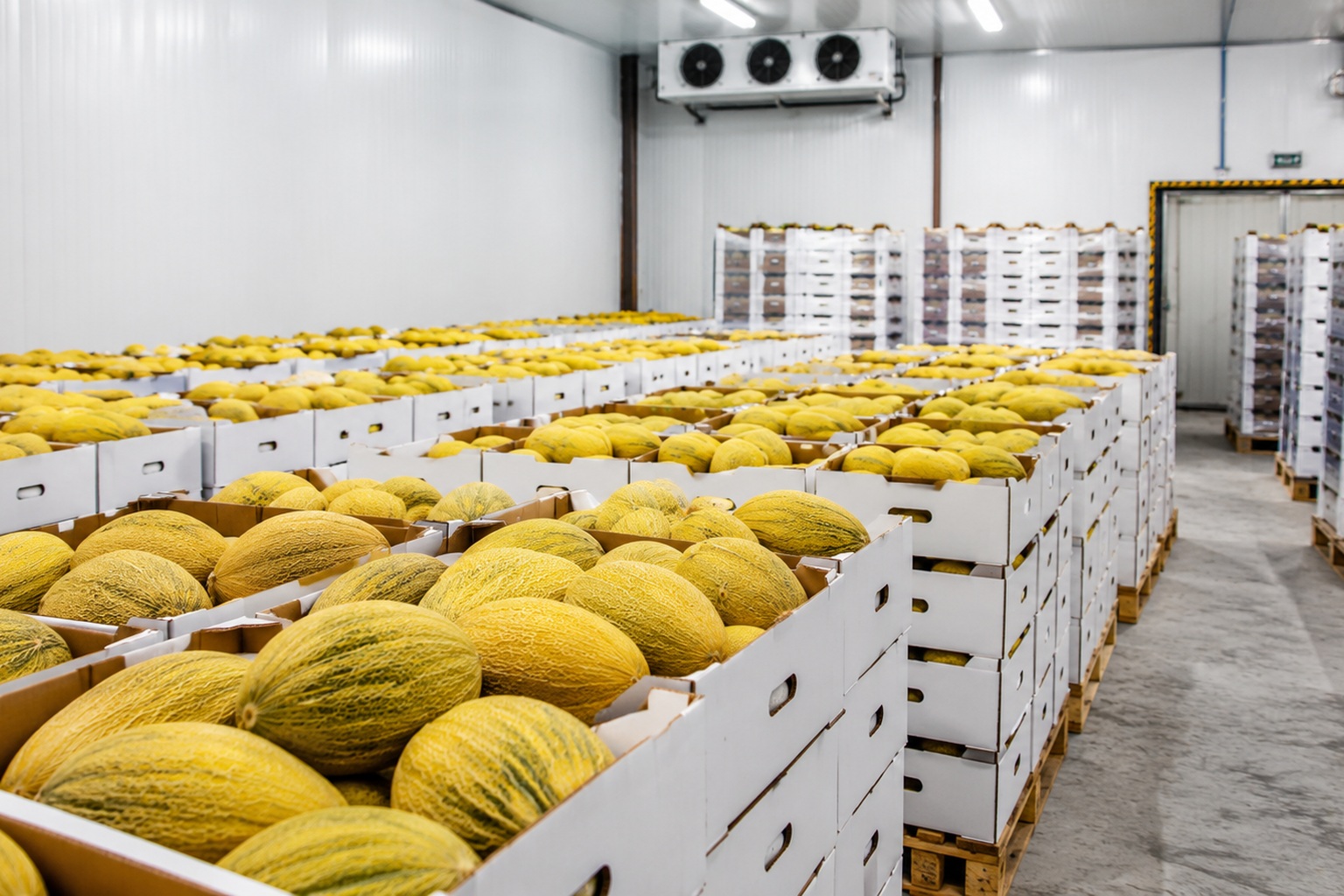
Melons carry significant field heat and lose aroma and firmness quickly, so Egyptian export fruit is moved to forced-air or hydro-cooling soon after harvest. Rapid cooling preserves the fragrance, sweetness and texture that define a quality melon and protects the 2–3 week shelf life.
Melons are chilling-sensitive, so they are held cool rather than cold. Cantaloupe and Galia do well around 4–7°C; honeydew prefers a warmer 7–10°C. All want 90–95% RH. Going too cold causes pitting and surface breakdown, so matching the setpoint to the type is key. Melons also produce ethylene, so they are kept away from ethylene-sensitive produce.
| Type | Storage temp | Humidity |
|---|---|---|
| Cantaloupe / Galia | ~4–7°C | 90–95% RH |
| Charentais | ~4–7°C | 90–95% RH |
| Honeydew | ~7–10°C | 90–95% RH |
Melons are graded by size and Brix, handled gently to avoid bruising and stem-end damage, and kept humid. Harvest ripeness (the “slip” stage for cantaloupe) is matched to the journey length.
Most melons ship by reefer at ~5–7°C (honeydew warmer) with airflow and logged temperature, carefully avoiding cold setpoints that cause chilling injury. Premium or early fruit is sometimes airfreighted for speed. A temperature recorder gives the buyer proof the chain held within the correct range.
Cantaloupe and Galia around 4-7 degrees C, honeydew warmer (7-10 degrees C), at 90-95% humidity – cool but not near 0 degrees C.
They are chilling-sensitive and develop pitting and surface breakdown when too cold.
Roughly 2-3 weeks in good conditions, depending on type and ripeness.
In single-layer cartons by count, shipped by reefer at ~5-7 degrees C (premium/early fruit sometimes airfreighted).
Yes – they are kept away from ethylene-sensitive produce in storage and transit.
How to cite this page
PEI Trade. “Egyptian Melon Packaging & Cold Chain.” peitrade.com, 2026. https://peitrade.com/egyptian-melon-packaging-cold-chain/
This page is part of our Egyptian Melon Export Guide hub.
Ship Egyptian melons that arrive fragrant with PEI Trade. Fast pre-cooling, type-correct chilling-sensitive handling, single-layer packing and logged reefer or airfreight transit — for cantaloupe, Galia, Charentais and honeydew. Contact: [email protected] · WhatsApp +20 109 911 1918 · www.peitrade.com