Address
Work Hours
Monday to Friday: 7AM - 7PM
Weekend: 10AM - 5PM
Address
Work Hours
Monday to Friday: 7AM - 7PM
Weekend: 10AM - 5PM


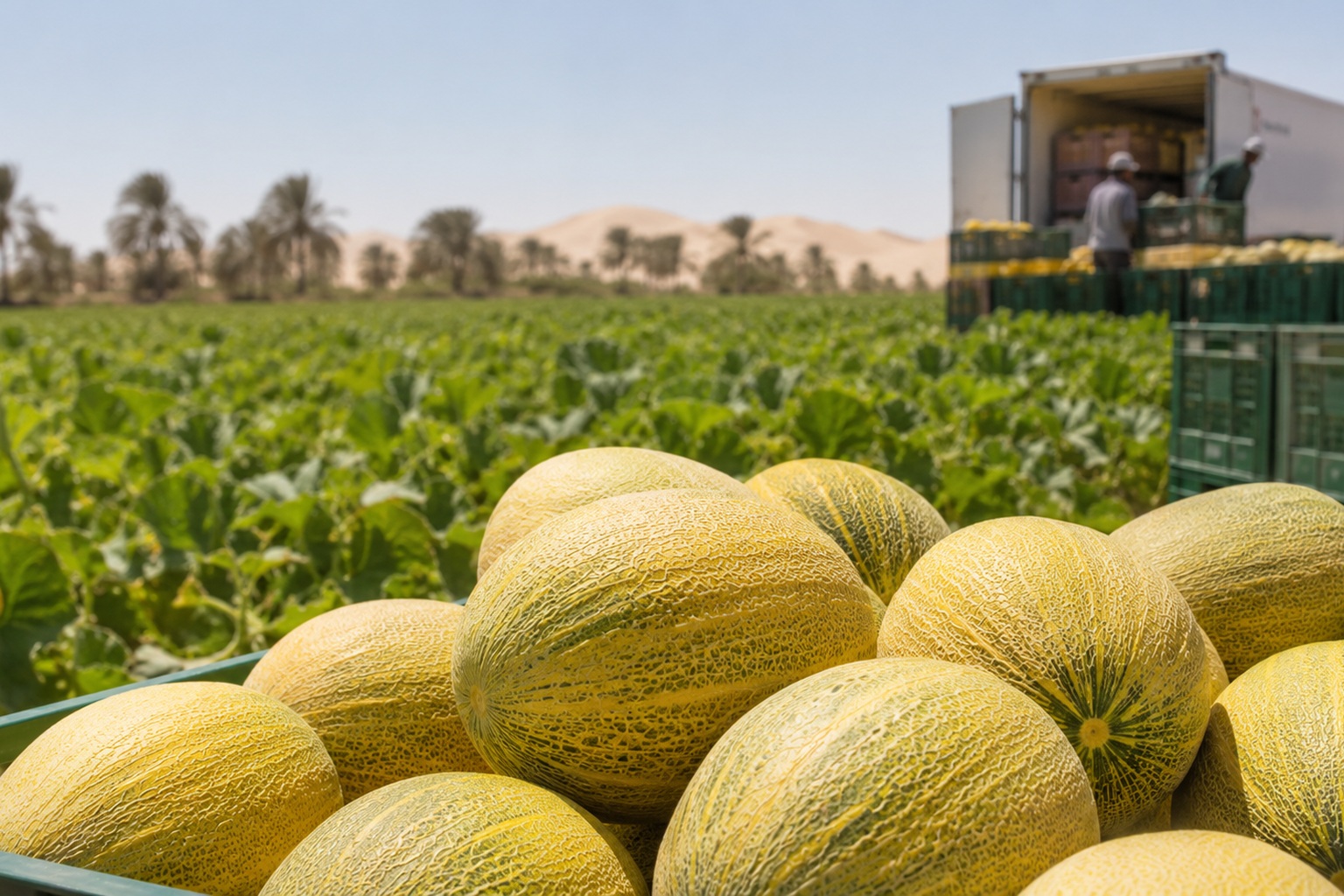
Egypt is a strong early-season melon exporter, sending aromatic cantaloupe, netted Galia, smooth Charentais and yellow honeydew to Europe and the Gulf ahead of the main Mediterranean crop. A warm climate and protected early production let Egypt open the melon season early and supply through spring and summer. This guide is the hub for importers: what Egypt grows, when it ships, the markets it serves, the specifications buyers ask for and the compliance behind every consignment.
Quick answer: Egypt is a significant early-season and counter-seasonal melon exporter to Europe and the Gulf. Main types are cantaloupe (muskmelon), Galia, Charentais and yellow honeydew. The main export window runs roughly April to June (early fruit from February–March under protection), giving Europe an early-season supply ahead of the main Spanish crop; protected cultivation also supports some supply through the cooler autumn–winter months. Melons trade under HS code 0807.19. They are chilling-sensitive to varying degrees and stored cool (about 4–7°C, honeydew warmer). Markets include the EU, the Gulf, Russia and Eastern Europe. (Sources: CBI; ITC Trade Map, 2025.)
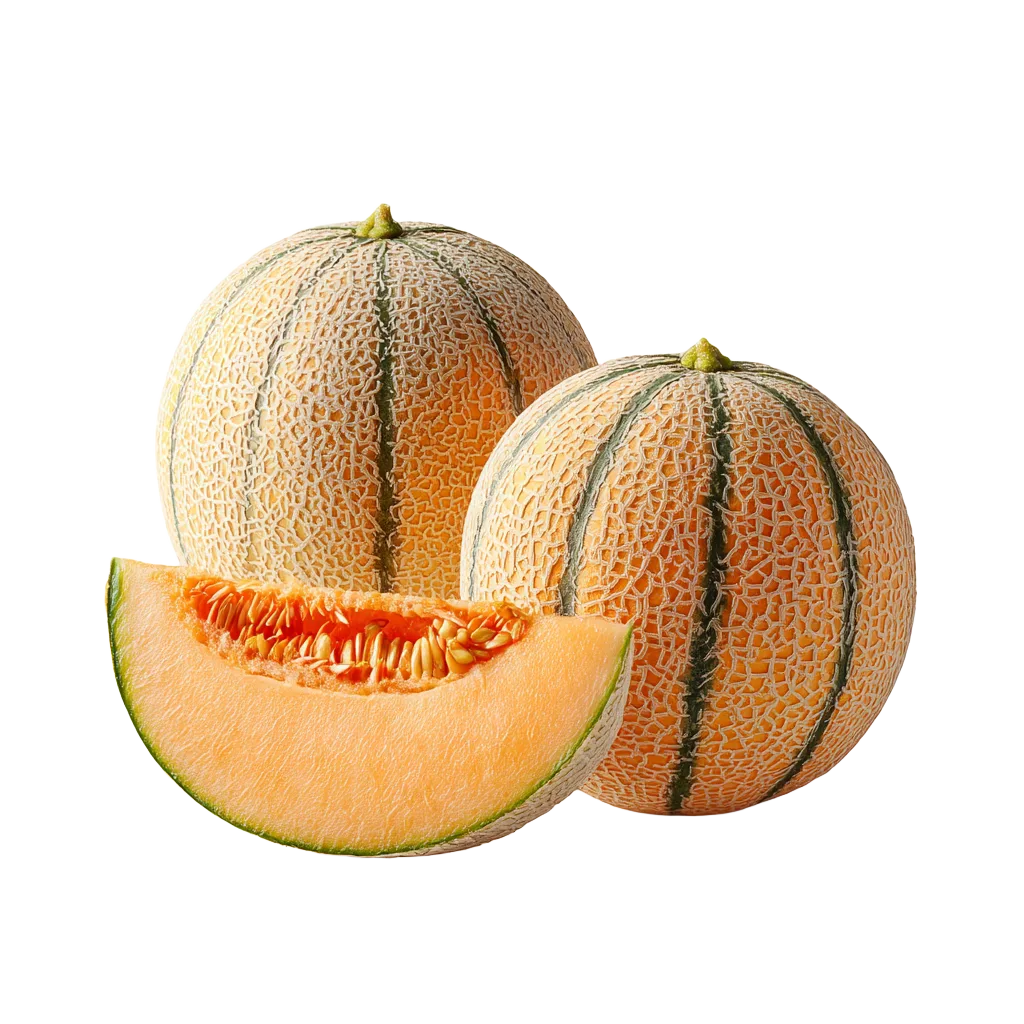
| Type | Character | Main market |
|---|---|---|
| Cantaloupe (muskmelon) | Netted skin, orange flesh, aromatic | EU, Gulf & regional (the mainstay) |
| Galia | Netted skin, green-to-amber flesh, fragrant | EU retail |
| Charentais | Smooth grey-green skin, deep orange flesh | EU premium / French type |
| Honeydew (yellow / Amarillo) | Smooth skin, pale sweet flesh | Gulf & EU |
The main export season runs from about April to June, with early fruit from February–March under tunnels and in warm regions — giving Europe an early-season supply before the main Spanish crop. Protected (greenhouse/tunnel) cultivation also enables some counter-seasonal supply through the cooler autumn–winter months. Production spans reclaimed-desert and Delta zones such as Nubaria, Beheira and Ismailia. Exact windows shift year to year with planting and weather.
Melons (other than watermelon) are traded under HS code 0807.19.
Fresh melons require a phytosanitary certificate (key pest: Mediterranean fruit fly, Ceratitis capitata), compliance with destination MRLs (EU: Regulation (EC) No 396/2005), and GLOBALG.A.P. certification with ISPM 15 packaging and traceability. Netted-skin melons carry a surface food-safety consideration (Salmonella/Listeria), so washing and hygienic handling matter, and cut melon is high-risk and needs full food-safety control. Egyptian melons are not on the EU’s enhanced official-controls list (Regulation (EU) 2019/1793), so they are not subject to increased border checks — standard MRL and phytosanitary rules apply.
The main export season runs roughly April to June, with early fruit from February-March under protection – an early-season supply for Europe; protected cultivation also supports some autumn-winter supply.
Cantaloupe (muskmelon), Galia, Charentais and yellow honeydew.
The EU (early season), the Gulf, Russia and Eastern Europe.
Melons other than watermelon fall under HS code 0807.19.
Cool, around 4-7 degrees C (honeydew warmer) – they are chilling-sensitive to varying degrees.
How to cite this page. Reusing a figure from this guide? Please cite it and link to this page as the source.
PEI Trade. “Egyptian Melon Export: The Complete Guide.” peitrade.com, 2026. https://peitrade.com/egyptian-melon-export-guide/
Source Egyptian melons with PEI Trade. We supply cantaloupe, Galia, Charentais and honeydew to EU, Gulf, Russian and Eastern European buyers, with GLOBALG.A.P. handling, phytosanitary documentation and chilling-sensitive cold-chain discipline. Contact: [email protected] · WhatsApp +20 109 911 1918 · www.peitrade.com