Address
Work Hours
Monday to Friday: 7AM - 7PM
Weekend: 10AM - 5PM

Address
Work Hours
Monday to Friday: 7AM - 7PM
Weekend: 10AM - 5PM


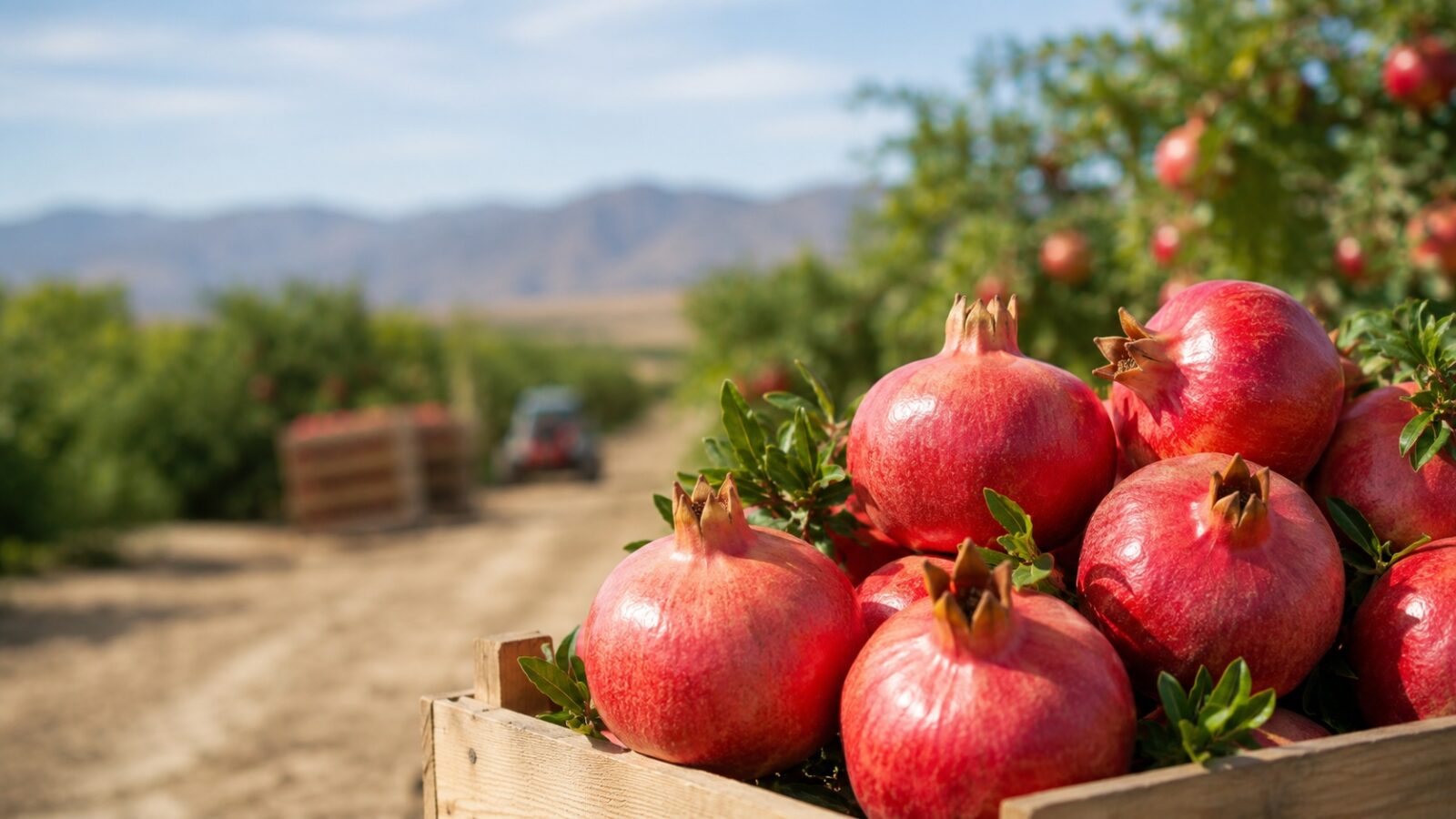
Egypt is one of the world’s fastest-growing pomegranate exporters. Backed by the deep-red, globally-demanded Wonderful variety and a long tradition of growing pomegranates in Upper Egypt, the country supplies an autumn window that reaches the EU, Russia, the Gulf, India and the Far East — as whole fruit, ready-to-eat arils and juice. This guide is the hub for importers: what Egypt grows, when it ships, the markets it serves, the specifications buyers ask for and the compliance behind every consignment.
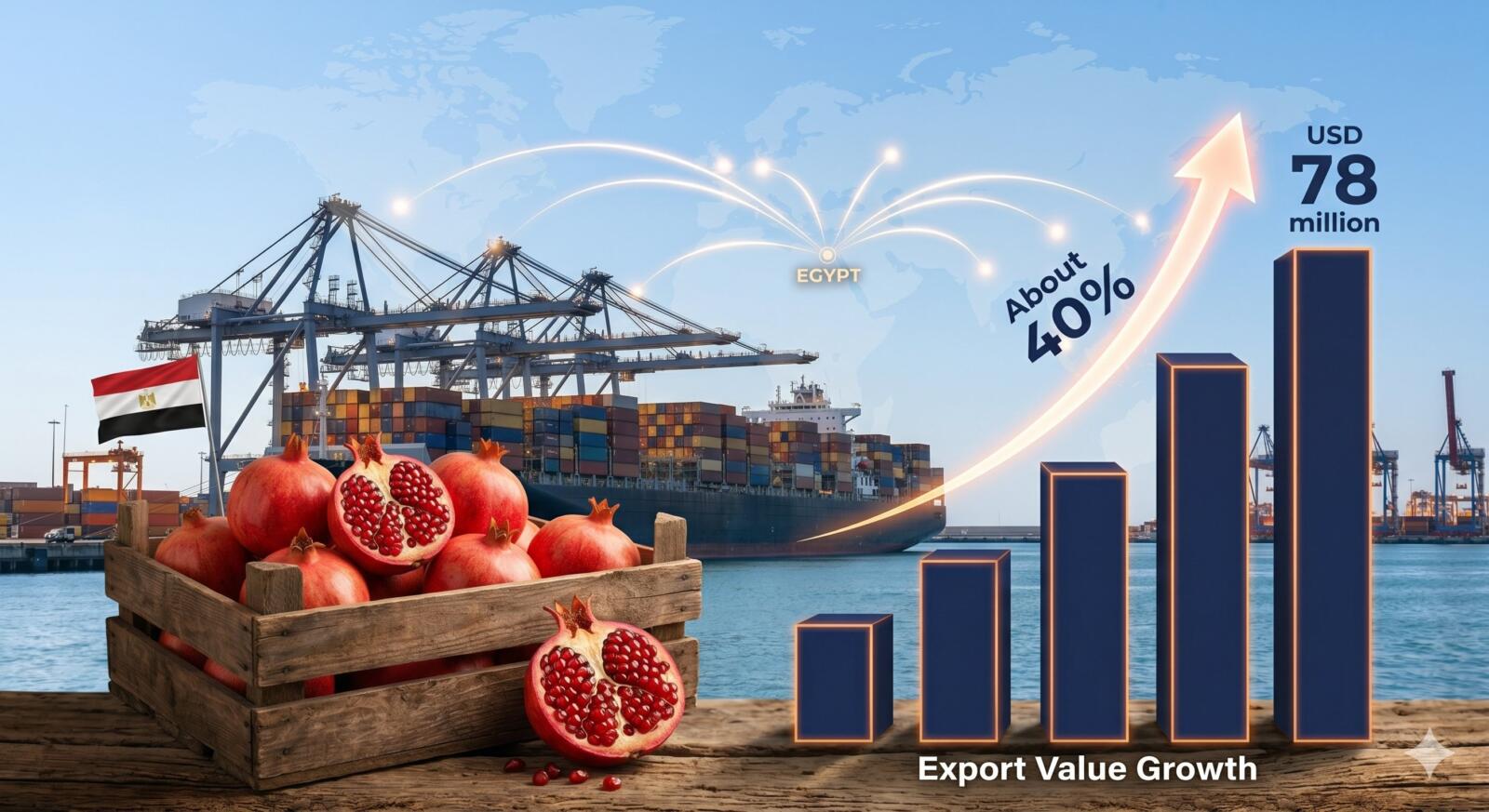
Quick answer: Egypt is a major and fast-growing pomegranate exporter, producing roughly 880,000 tonnes a year (2023) and exporting on the order of 150,000 tonnes (some trade estimates run higher). The dominant export variety is Wonderful (deep red, tart-sweet); the traditional Egyptian Manfalouti and local types are also grown. The season runs roughly September to December (some early fruit from August, extending into January from storage). Markets include the EU, Russia, the Gulf, India and the Far East. Pomegranates are chilling-sensitive and stored around 5–7°C, and trade under HS code 0810.90. (Sources: FAO, 2023; ITC Trade Map / CAPMAS, 2025.)
| Variety | Character | Notes |
|---|---|---|
| Wonderful | Deep red skin & arils, tart-sweet | The leading export variety worldwide |
| Early Wonderful | Wonderful type, earlier | Opens the season ahead of main Wonderful |
| Manfalouti | Large, sweet, lighter red | Traditional Egyptian variety (Assiut/Manfalut) |
| Baladi / Assiouti | Local types | Regional and domestic supply |
Egyptian pomegranates are exported as whole fresh fruit, ready-to-eat fresh arils (in modified-atmosphere packs), frozen arils, and juice / concentrate. Whole fruit is the largest segment; arils and juice add value and serve processing and convenience markets.
The Egyptian pomegranate season runs from about September to December, with some early fruit from August and supply extending into January from cold storage. Growing is concentrated in Assiut (Manfalut), El-Minya and Sohag in Upper Egypt, plus large new plantings in Beheira, Nubaria and reclaimed desert. The main harvest concentrates from late August/September through November, with cold storage extending shipments toward year-end; exact windows shift year to year with variety and weather.
Pomegranates are traded under HS code 0810.90.
Pomegranates require a phytosanitary certificate (the key pest concerns include false codling moth, Thaumatotibia leucotreta, and Mediterranean fruit fly), compliance with destination MRLs (for the EU, Regulation (EC) No 396/2005), and increasingly GLOBALG.A.P. certification, with ISPM 15 wood packaging and lot-coded traceability. Fresh arils are a minimally-processed food and additionally need food-safety management (HACCP, and where required BRCGS / IFS / ISO 22000) with microbiological control. Egyptian pomegranates are not on the EU’s enhanced official-controls list for residues (Regulation (EU) 2019/1793), so they are not subject to increased border checks on that basis — though the plant-health requirement against false codling moth still applies, and standard MRL rules under Regulation (EC) No 396/2005 must be met.
Roughly September to December, with some early fruit from August and supply extending into January from cold storage.
Wonderful – deep red and tart-sweet – is the leading export variety; the traditional Manfalouti and local types are also grown.
The EU and UK, Russia, the Gulf, India and the Far East.
Yes – as ready-to-eat fresh arils in modified-atmosphere packs, frozen arils, and as juice/concentrate.
Pomegranates fall under HS code 0810.90 (other fresh fruit).
How to cite this page. Reusing a figure from this guide? Please cite it and link to this page as the source.
PEI Trade. “Egyptian Pomegranate Export: The Complete Guide.” peitrade.com, 2026. https://peitrade.com/egyptian-pomegranate-export-guide/
Source Egyptian pomegranates with PEI Trade. We supply Wonderful and traditional varieties — whole fruit, fresh arils and juice — to EU, Russian, Gulf, Indian and Far East buyers, with GLOBALG.A.P. handling, phytosanitary documentation and chilling-sensitive cold-chain discipline. Contact: [email protected] · WhatsApp +20 109 911 1918 · www.peitrade.com