Address
Work Hours
Monday to Friday: 7AM - 7PM
Weekend: 10AM - 5PM

Address
Work Hours
Monday to Friday: 7AM - 7PM
Weekend: 10AM - 5PM


What actually happens to fruit between the field and the carton: wash-water sanitising, post-harvest fungicides, coatings, curing and heat treatment, and why the destination market decides which of them may be used at all.
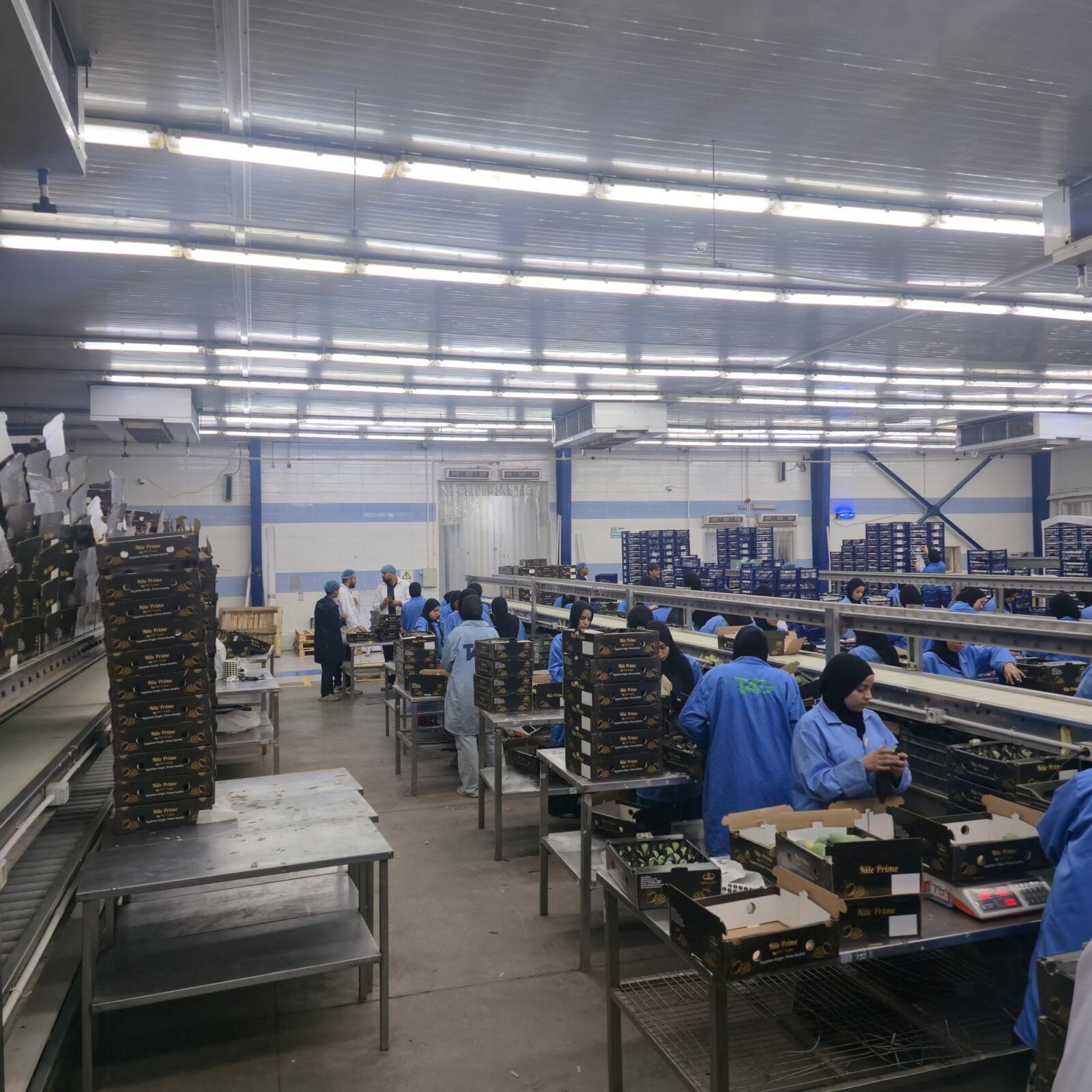
Most arrival disputes on fresh produce are decay disputes, and most decay begins in the packhouse rather than in the container. What happens to the fruit in the hours between the field crate and the closed carton decides how much shelf life is left on arrival. It also decides whether the load passes residue testing at your border, because a post-harvest application sits on the surface of the fruit and is the residue most likely to be detected.
Dump tanks and drenchers recirculate water across thousands of fruit. Without a sanitiser that water spreads spores rather than removing them. Egyptian export packhouses commonly dose with chlorine or peroxyacetic acid, monitored on concentration and pH through the shift. The point is to sanitise the water, not the fruit. Ask any supplier how often the tank is dumped and what the log looks like. A packhouse that cannot answer is running an unmanaged risk on every carton.
Citrus is the crop where post-harvest fungicides do the heavy lifting, because green mould, blue mould and sour rot develop in transit from wounds made at picking. Actives used in the trade include imazalil, thiabendazole, fludioxonil and pyrimethanil, applied in the drencher, in wax, or both.
The critical point is that registration is market-specific. An active permitted in one destination may be unapproved in another, and approvals move. Nothing may be applied to a load without confirming that the active is registered for that crop in the destination country and that the application rate keeps residues inside the applicable limit. That check happens before treatment, not after. Our note on MRL and residue testing before loading sets out how the sampling is organised.
Organic programmes exclude conventional fungicides altogether and rely on cold chain discipline, careful handling and shorter transit. Buyers who want organic certification and long sea transit on the same load should expect a shorter usable window.
Wax is applied to citrus to slow moisture loss and improve appearance. Carnauba and shellac based coatings are both in use, with different gloss and different gas exchange behaviour. A heavy shellac coat looks impressive in the packhouse and can cause off-flavour on a long voyage by restricting respiration. Specify the coating type rather than leaving it to the line.
Not every treatment is chemical. Onions, garlic and root crops are cured, which is a controlled drying of the neck and skin that decides storage life more than anything applied later. Mango destined for certain markets moves under hot water or vapour heat treatment as a phytosanitary requirement rather than a quality one. Pre-cooling to remove field heat is the treatment with the largest measurable effect on arrival condition, and it costs nothing but time and discipline.
Ask for the treatment list by name, the application point, the concentration, and the destination approval basis. Ask whether the fruit is waxed and with what. Ask for the pre-cooling record. A supplier who treats these as routine questions is one who has answered them before.
Grading tolerance interacts with all of this, since a treatment cannot rescue fruit that was picked wrong. Our reference on Extra, Class I and Class II tolerances covers where the line sits.
PEI Trade documents the post-harvest treatment applied on every load and can arrange SGS or Intertek pre-shipment inspection on request. To discuss treatment requirements for your market, message the export desk on WhatsApp at +20 10 9911 1918.
