Address
Work Hours
Monday to Friday: 7AM - 7PM
Weekend: 10AM - 5PM

Address
Work Hours
Monday to Friday: 7AM - 7PM
Weekend: 10AM - 5PM


How an export lot is sampled, which defects are counted as major or minor, what the Class I tolerance percentages actually permit, and how to write a tolerance into a contract that both sides can verify.
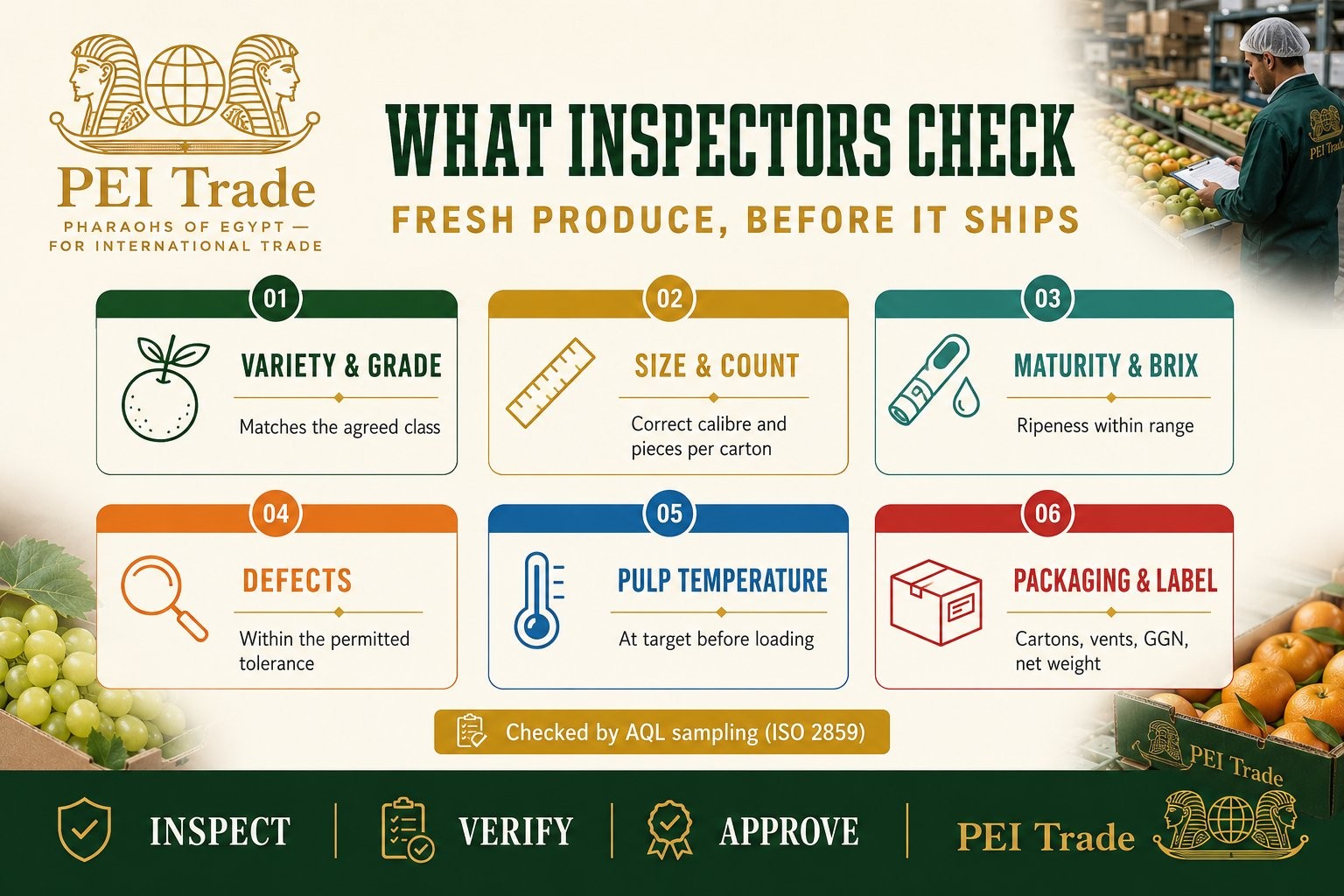
Most arrival disputes are not disputes about quality. They are disputes about counting. One side inspected 20 cartons and the other inspected three, one side counted a scuff as a defect and the other did not, and both sides believed they were applying the same standard. Writing the counting method into the contract removes more argument than any amount of extra specification detail.
Class I is not a promise of perfect fruit. Under the UNECE marketing standards that the EU standards are built on, a Class I lot permits a total tolerance of 10 percent by number or weight of produce not meeting the requirements of the class, of which no more than 1 to 2 percent may fall below the minimum Class II requirements depending on the crop. Separately, a sizing tolerance of 10 percent applies to fruit outside the stated size band. Those two tolerances are cumulative, not alternatives.
This means a Class I container that arrives with 7 percent minor blemish is a compliant container, not a defective one. Buyers who have written a zero-defect expectation into their internal QC manual, without adjusting it for the published standard they are contracting against, will find the exporter has met the contract and the receiving team has still rejected the load.
A defensible sample is drawn across the lot, not from the door. The working method on our shipments is to take cartons from a minimum of three pallets, and from different layers within each pallet, with the number of cartons scaling to the size of the lot. On a 20-pallet load that is 10 to 20 cartons opened. Each carton is recorded separately, because an average across the sample hides a single bad pallet, and a single bad pallet is usually traceable to one field block or one packing shift.
Record the pallet number and the lot code on every carton opened. Without that, the exporter cannot trace the cause, and an untraceable claim is a slower claim. Our note on traceability and lot coding covers what the carton code should carry.
Count defects in two classes and state which is which before loading. A major defect is one that makes the unit unsaleable in its intended channel: decay, internal breakdown, live pest, deep bruising, severe skin damage. A minor defect affects appearance without affecting saleability: light scuffing, healed skin marks, slight shape irregularity, small colour variation. Mixing the two into one number is where most tolerance arguments begin.
Progressive defects also need naming. Decay that begins in transit will show at 20 percent on day three at destination and 40 percent on day six. The inspection date therefore forms part of the evidence, which is why arrival inspection should happen within 24 to 48 hours of devanning and be recorded with photographs, the temperature trace and the pulp readings.
A workable tolerance clause names five things: the standard being applied, the total and sizing tolerances, the split between major and minor defects, the sampling method and carton count, and the deadline for arrival inspection. If a third party will inspect at origin, name them and state whether their certificate is final and binding. Our note on third-party inspection at loading explains what an SGS or Intertek pre-shipment certificate does and does not cover.
We will send our inspection sheet and sampling method for any product before you book, so both desks are counting the same way. Message us on WhatsApp at +20 10 9911 1918 with the product and destination.
