Address
Work Hours
Monday to Friday: 7AM - 7PM
Weekend: 10AM - 5PM

Address
Work Hours
Monday to Friday: 7AM - 7PM
Weekend: 10AM - 5PM


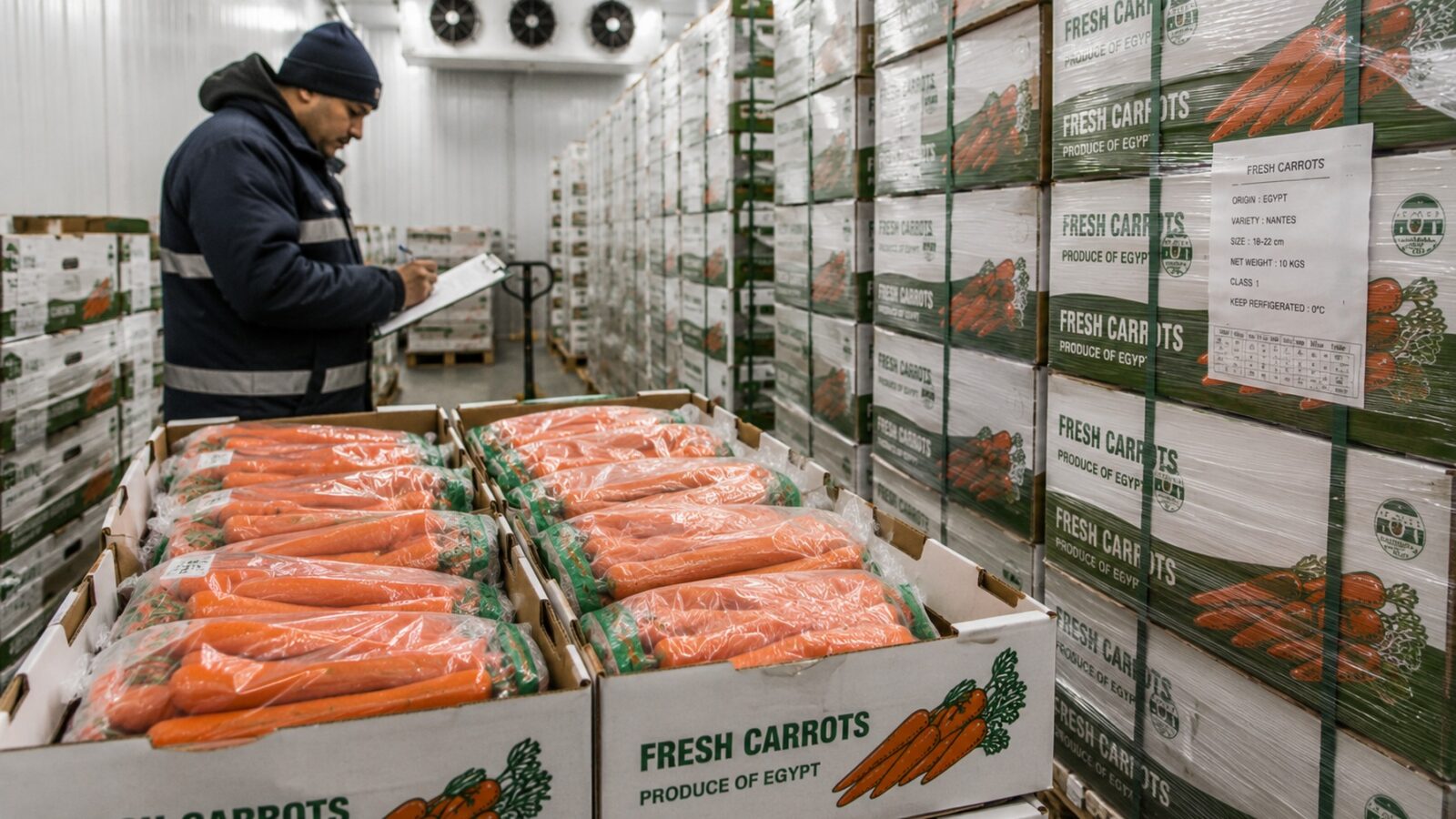
Carrots are forgiving on temperature but demanding on humidity: they tolerate cold storage near freezing, but they lose water and go limp quickly in dry air, so very high humidity is the key to keeping them crisp. Handle that well and carrots store and travel for weeks. This guide covers the carrot cold chain from harvest to reefer, plus packing.
Quick answer: Carrots are not chilling-sensitive and are stored cold, near 0°C, at very high humidity (95–98%) — they lose water easily, so humidity is critical to prevent wilting. They are pre-cooled (hydro- or forced-air) after harvest and shipped by reefer at ~0–1°C. Bunched carrots (tops on) are more perishable than topped. Fresh trades under HS 0706.10, frozen under HS 0710.80.
Unlike chilling-sensitive crops, carrots store best cold, close to 0°C. The real risk is moisture loss: in dry air carrots quickly become limp and rubbery. So they are held at very high humidity (95–98%), which keeps them firm and crisp through storage and transit.
After harvest carrots are washed and pre-cooled — often by hydro-cooling or forced-air — to remove field heat fast. Topped carrots then store for a long time in cold, humid conditions; bunched carrots with their tops on are more perishable and must move faster.
| Parameter | Carrots (topped) | Notes |
|---|---|---|
| Storage temperature | ~0°C | Not chilling-sensitive |
| Humidity | 95–98% RH | Critical — prevents wilting |
| Pre-cooling | Hydro / forced-air | Remove field heat fast |
| Shipping | Reefer ~0–1°C | Bunched more perishable |
Carrots are graded by length and diameter and checked for smoothness, deep colour and freedom from cracks, forking, greening and breakage.
Topped carrots ship by reefer at ~0–1°C with high humidity and good airflow; a temperature recorder documents the chain. Frozen carrots ship at −18°C. Carrots are kept away from ethylene sources, which can cause them to develop a bitter taste.
Cold, near 0 degrees C – carrots are not chilling-sensitive.
Carrots lose water easily; without very high humidity (95-98%) they wilt and go rubbery.
Removing field heat fast after harvest, often by hydro-cooling or forced-air, before cold storage.
Ethylene exposure can give carrots a bitter taste.
In retail or bulk bags/cartons (topped), as bunches (tops on), or frozen in bags/bulk.
How to cite this page
PEI Trade. “Egyptian Carrot Packaging & Cold Chain.” peitrade.com, 2026. https://peitrade.com/egyptian-carrot-packaging-cold-chain/
This page is part of our Egyptian Carrot Export Guide hub.
Ship Egyptian carrots that arrive crisp with PEI Trade. Prompt washing and pre-cooling, cold high-humidity storage, careful size grading, and logged reefer transit — plus frozen diced/sliced at −18°C. Contact: [email protected] · WhatsApp +20 109 911 1918 · www.peitrade.com