Address
Work Hours
Monday to Friday: 7AM - 7PM
Weekend: 10AM - 5PM

Address
Work Hours
Monday to Friday: 7AM - 7PM
Weekend: 10AM - 5PM


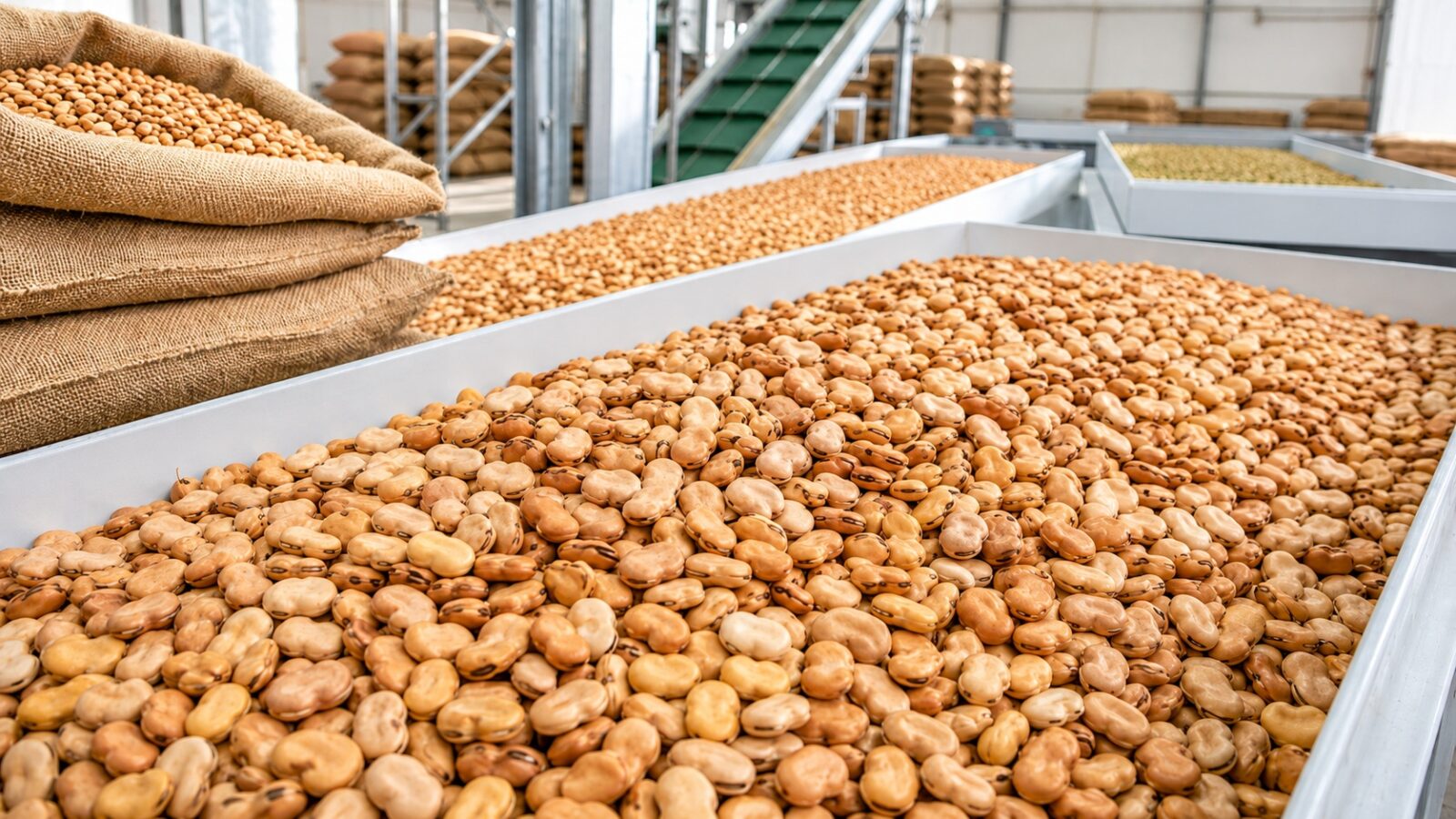
Saudi Arabia is one of the world’s largest importers of faba beans, driven by heavy consumption of ful medames — the slow-cooked broad-bean dish that is a breakfast staple across the Kingdom. Egyptian faba beans (dried broad beans, HS 0713.50) are a natural fit: Egypt is the home of ful cuisine and a recognised top-five global exporter of dried broad beans. This guide covers grades, logistics, SFDA requirements, crop calendar and pricing for Saudi importers and canners.
Saudi Arabia is among the world’s largest faba importers, mainly for ful medames. Egypt is a recognised top-five exporter of dried broad beans (HS 0713.50). Grades: large-seeded whole (canning/ful), small-seeded, split/decorticated. Ships in 25/50 kg bags in dry containers, transit 3–7 days to Jeddah/Dammam. Imports need SFDA clearance, a phytosanitary certificate, Halal handling and MRL compliance.
With almost no domestic pulse production and very high per-capita ful consumption, Saudi Arabia imports large volumes of faba year-round, including a strong lift during Ramadan. Egyptian faba is the reference product for authentic ful medames — the right varieties, size and cooking behaviour — and Egypt’s proximity via the Red Sea keeps freight short and costs competitive for both bulk buyers and canners.
| Market snapshot | Detail |
|---|---|
| Use in market | Ful medames, canning, foodservice |
| HS code | 0713.50 (dried broad & horse beans) |
| Main entry ports | Jeddah, Dammam |
| Transit time | 3–7 days by sea (dry container) |
| Packaging | 25 / 50 kg PP bags |
| Demand peak | Year-round; lift during Ramadan |
Large-seeded whole faba: the premium grade for canning and traditional ful, prized for uniform size and tender cooking. Small-seeded faba: economical for bulk foodservice. Split/decorticated: for quick-cook and processed applications. Specifications cover moisture (≤13%), purity/admixture, sizing and defect tolerance. Canners specify tight size bands and low defect counts; product is machine-cleaned, calibrated and colour-sorted.
Dried faba ships in standard dry containers — no cold chain — in 25 or 50 kg bags, from Alexandria/Damietta to Jeddah (Red Sea) and Dammam (Gulf) in roughly 3–7 days. The short route and shelf-stable product make replenishment fast and economical. Bags must be kept dry and ventilated to hold moisture spec; fumigation certificates are commonly required to control storage pests.
Saudi imports require SFDA clearance, a phytosanitary certificate from Egyptian plant quarantine, a certificate of origin and often a fumigation certificate. Pesticide residues must meet GSO/Saudi MRLs. Consignments follow Halal-compliant handling and Arabic labelling (product, origin, packer, net weight, lot). Canners and organised buyers expect ISO 22000/HACCP at the packing facility and full lot traceability.
| Period | Availability |
|---|---|
| April–June | Main harvest — new-crop faba |
| July–December | Peak shipping from stored new crop |
| January–March | Continuity supply; pre-Ramadan build-up |
Because faba stores well, Egypt supplies year-round from the spring harvest — important for Saudi buyers timing stock ahead of the Ramadan demand peak.
Source & data: Egypt is recognised among the world’s top-five exporters of dried broad beans; Saudi Arabia is among the largest global faba importers. Source: Tridge broad-bean trade overview, 2024. HS code 0713.50 (dried broad & horse beans, shelled). Per-market volumes vary seasonally and are confirmed at contracting.
PEI Trade — New Cairo, Egypt. Request a quote or faba bean spec sheet →