Address
Work Hours
Monday to Friday: 7AM - 7PM
Weekend: 10AM - 5PM

Address
Work Hours
Monday to Friday: 7AM - 7PM
Weekend: 10AM - 5PM


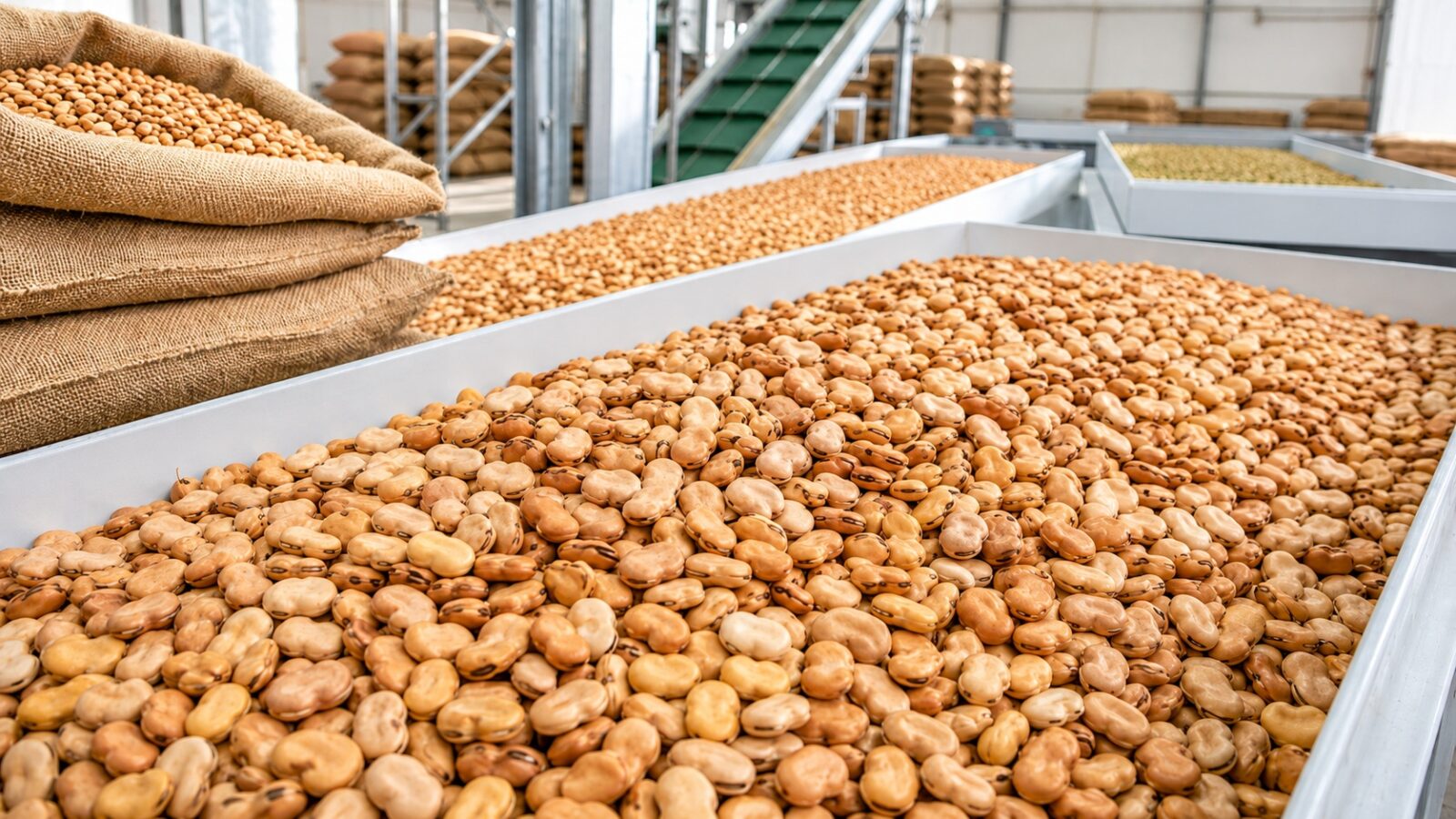
Spain is both a traditional broad-bean consumer and a large processing and re-export hub for pulses in the EU. Egyptian faba beans (dried broad beans, HS 0713.50) serve Spanish canners, ethnic-food distributors and re-exporters. Egypt is a recognised top-five global exporter of dried broad beans, supplying EU-compliant, food-grade faba at competitive prices. This guide covers grades, logistics, EU requirements, crop calendar and pricing for Spanish importers.
Spain buys faba for canning, ethnic-food retail and pulse re-export. Egypt is a recognised top-five exporter of dried broad beans (HS 0713.50). Grades: large-seeded whole, small-seeded, split/decorticated. Ships in 25/50 kg bags or big bags in dry containers to Valencia/Barcelona/Algeciras, ~7–12 days. Imports must meet EU MRLs and plant-health rules; buyers require HACCP/ISO 22000 or BRCGS and traceability.
Spain has a strong pulse-processing and canning industry and a large North-African community, both of which use faba. Domestic production does not cover demand, so Spanish canners and re-exporters import to secure consistent, food-grade raw material. Egypt is a competitive EU-compliant origin with reliable grading and shelf-stable shipping, feeding Spain’s processors and its onward EU/Maghreb re-export trade.
| Market snapshot | Detail |
|---|---|
| Use in market | Canning, ethnic retail, pulse re-export |
| HS code | 0713.50 (dried broad & horse beans) |
| Main entry ports | Valencia, Barcelona, Algeciras |
| Transit time | 7–12 days by sea (dry container) |
| Packaging | 25 / 50 kg bags; big bags for processors |
| Grades | Large whole, small-seeded, split/decorticated |
Large-seeded whole faba: for canning and whole-bean lines. Small-seeded faba: for purees and value packs. Split/decorticated: for quick-cook and processed products. Specifications cover moisture (≤13%), purity/admixture, sizing and defect tolerance. Spanish processors specify size bands, low defects and clean colour; product is machine-cleaned, calibrated and colour-sorted.
Dried faba is shelf-stable and ships in standard dry containers — 25/50 kg bags for retail/canning or big bags for processors — from Alexandria/Damietta to Valencia, Barcelona or Algeciras in roughly 7–12 days. No cold chain is needed. Product must be kept dry and ventilated to hold moisture spec; fumigation certificates are commonly required.
EU imports require a phytosanitary certificate and compliance with EU plant-health entry rules. Pesticide residues must meet EU MRLs — among the strictest globally — verified by border and buyer testing. Spanish importers require HACCP/ISO 22000 or BRCGS at the packing facility, EU-compliant labelling (product, origin, packer, net weight, lot) and full lot traceability. A fumigation certificate is commonly requested.
| Period | Availability |
|---|---|
| April–June | Main harvest — new-crop faba |
| July–December | Peak shipping from stored new crop |
| January–March | Continuity supply from storage |
Faba stores well, so Egypt ships to Spain year-round from the spring harvest, letting canners and re-exporters contract volume across the calendar.
Source & data: Egypt is recognised among the world’s top-five exporters of dried broad beans. Source: Tridge broad-bean trade overview, 2024. HS code 0713.50 (dried broad & horse beans, shelled). Per-market volumes vary seasonally and are confirmed at contracting; no per-market figure is asserted here.
PEI Trade — New Cairo, Egypt. Request a quote or faba bean spec sheet →