Address
Work Hours
Monday to Friday: 7AM - 7PM
Weekend: 10AM - 5PM

Address
Work Hours
Monday to Friday: 7AM - 7PM
Weekend: 10AM - 5PM


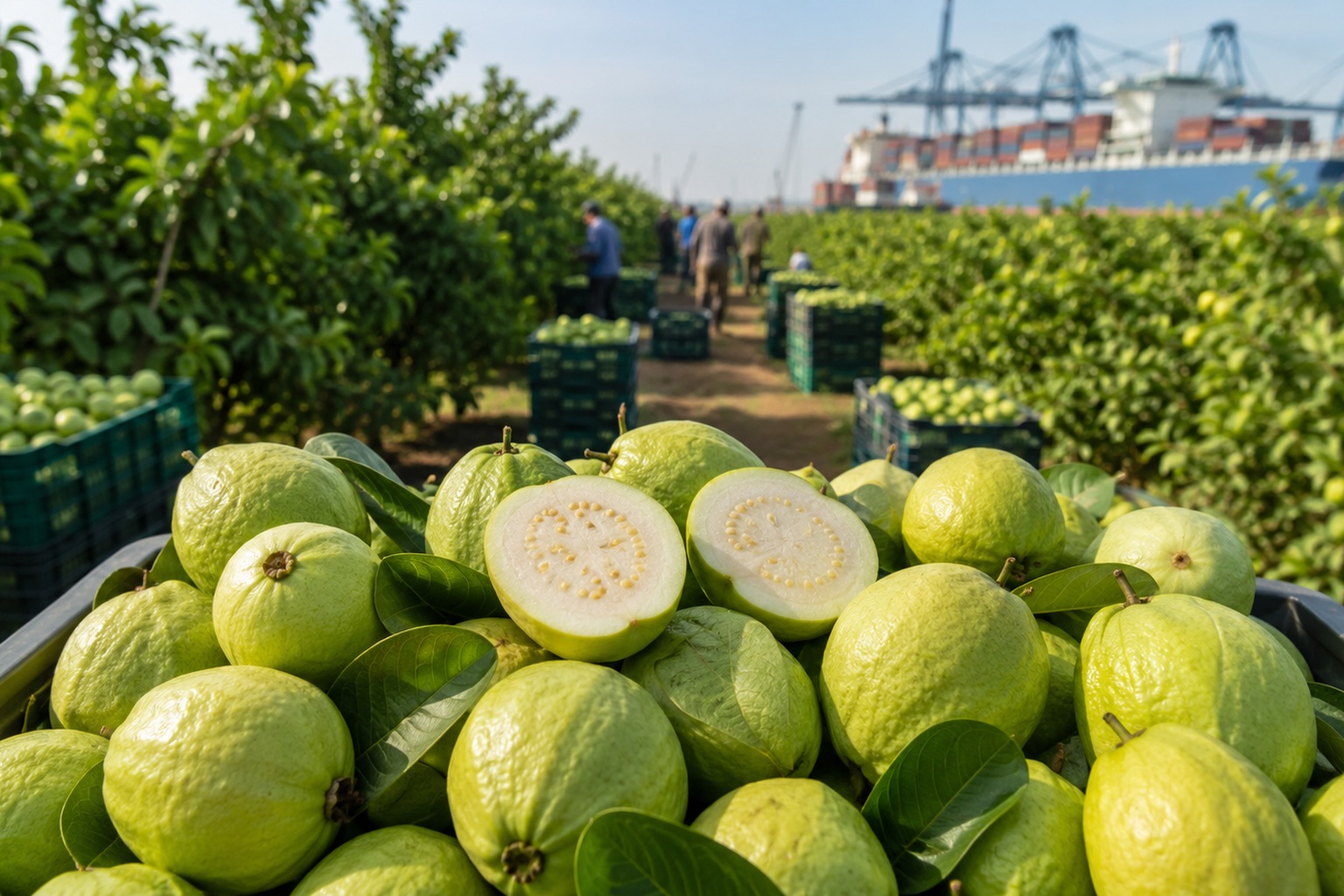
Guava is one of Egypt’s beloved traditional fruits and a growing export — fragrant white-flesh guava shipped fresh to the Gulf and increasingly Europe, plus frozen guava pulp and halves for the juice and processing industry. With large autumn volumes and a distinctive aroma, Egyptian guava has a clear place in world markets. This guide is the hub for importers: what Egypt grows, when it ships, the markets it serves, the specifications buyers ask for and the compliance behind every consignment.
Quick answer: Egypt is a significant guava producer — around 365,000 tonnes a year (FAOSTAT, 2022), roughly the world’s eighth-largest — and a growing exporter (about US$16 million in 2023, its tenth-largest agricultural export). The main export is the aromatic white-flesh guava, with pink/red-flesh types also grown, sold fresh and frozen (halves, pulp, purée). The fresh season runs roughly August to December (peak October–November); frozen ships year-round. Fresh guava trades under HS code 0804.50 (the subheading it shares with mangoes and mangosteens) and frozen under HS 0811.90. It is chilling-sensitive and stored around 8–10°C. Markets include the Gulf, the EU and Russia. (Sources: FAOSTAT, 2022; ITC Trade Map, 2023.)
| Type | Character | Main use |
|---|---|---|
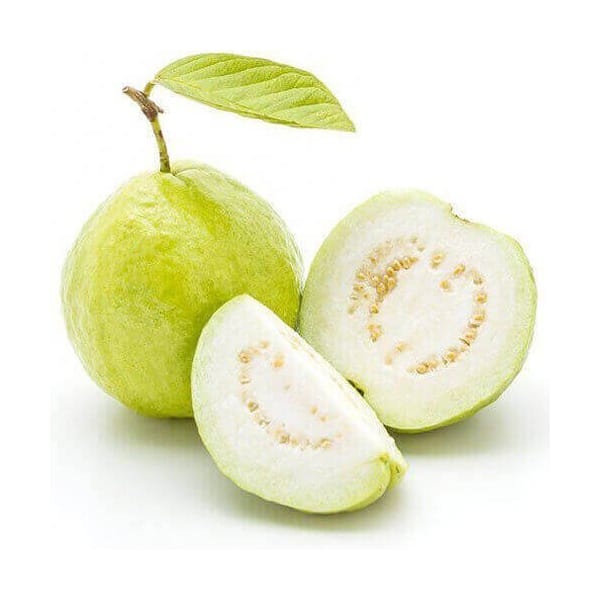
| White-flesh (Balady) | Green-yellow skin, white aromatic flesh | Fresh (the export mainstay) & processing |
| Pink / red-flesh | Pink-red flesh, sweet | Fresh & juice/pulp |
| Frozen halves / pulp | IQF halves, pulp, purée | Juice & food processing |
The fresh season runs from about August to December, peaking October to November, with some availability beyond. Frozen pulp and halves are produced in season and held in cold storage, so Egypt supplies them year-round. Growing is concentrated in Qalyubia, Sharqia, Beheira and Ismailia and parts of Upper Egypt. A lighter secondary crop can extend availability into spring; exact windows shift year to year with cultivar and weather.
Fresh guava is traded under HS code 0804.50 — the subheading shared with mangoes and mangosteens (“guavas, mangoes and mangosteens”) — and frozen under HS 0811.90.
Fresh guava requires a phytosanitary certificate (the key pest is the Mediterranean fruit fly, Ceratitis capitata — some markets require a treatment such as cold or hot-water treatment), compliance with destination MRLs (EU: Regulation (EC) No 396/2005), and GLOBALG.A.P. with ISPM 15 packaging and traceability. Frozen pulp and halves are a processed food and additionally need food-safety management (HACCP, and where required BRCGS / ISO 22000). Egyptian guava is not on the EU’s enhanced official-controls list (Regulation (EU) 2019/1793), so it is not subject to increased border checks — standard MRL and phytosanitary rules apply.
Fresh from about August to December (peak October-November); frozen pulp and halves are available year-round.
The aromatic white-flesh (Balady) guava, with pink/red-flesh types also grown.
Mainly the Gulf for fresh, with growing EU demand and frozen pulp to the juice industry.
Fresh guava under HS 0804.50 (shared with mangoes and mangosteens) and frozen under HS 0811.90.
Cool, around 8-10 degrees C – guava is chilling-sensitive and damaged by cold storage.
How to cite this page. Reusing a figure from this guide? Please cite it and link to this page as the source.
PEI Trade. “Egyptian Guava Export: The Complete Guide.” peitrade.com, 2026. https://peitrade.com/egyptian-guava-export-guide/
Source Egyptian guava with PEI Trade. We supply fresh white and pink guava and frozen pulp and halves to Gulf, EU and processing buyers, with GLOBALG.A.P. handling, phytosanitary documentation and chilling-sensitive cold-chain discipline. Contact: [email protected] · WhatsApp +20 109 911 1918 · www.peitrade.com