Address
Work Hours
Monday to Friday: 7AM - 7PM
Weekend: 10AM - 5PM
Address
Work Hours
Monday to Friday: 7AM - 7PM
Weekend: 10AM - 5PM


Melons sit at an interesting compliance crossroads: a regulated fruit fly on the plant-health side, MRL compliance like any fresh crop, and — because of their netted rind — a surface food-safety dimension that catches some importers out. This guide sets out what an importer and exporter need in place to move Egyptian melons cleanly.
Quick answer: Egyptian melons need a phytosanitary certificate (key pest: Mediterranean fruit fly, Ceratitis capitata), compliance with destination MRLs (EU: Regulation (EC) No 396/2005), and GLOBALG.A.P. certification with ISPM 15 packaging and traceability. Netted-skin melons carry a surface food-safety consideration (Salmonella/Listeria) requiring hygienic washing and handling. Melons trade under HS code 0807.19.
Fresh melons travel with an official phytosanitary certificate from Egypt’s plant-quarantine authority (CAPQ), confirming inspection and freedom from quarantine pests. The main concern is the Mediterranean fruit fly (Ceratitis capitata), managed through monitored field programs and pre-export inspection.
Melons must meet destination MRLs — for the EU, Regulation (EC) No 396/2005. Exporters follow approved spray programs, pre-harvest intervals and, where required, residue testing. Because the netted rind can hold residues and the flesh is eaten fresh, disciplined production matters. Melon is not currently among the Egyptian products on the EU’s enhanced residue-controls list (Regulation (EU) 2019/1793), though as a Mediterranean fruit fly host it must still meet the EU’s plant-health special requirements (Regulation (EU) 2019/2072); verify the latest annexes and any destination-specific checks before shipping.
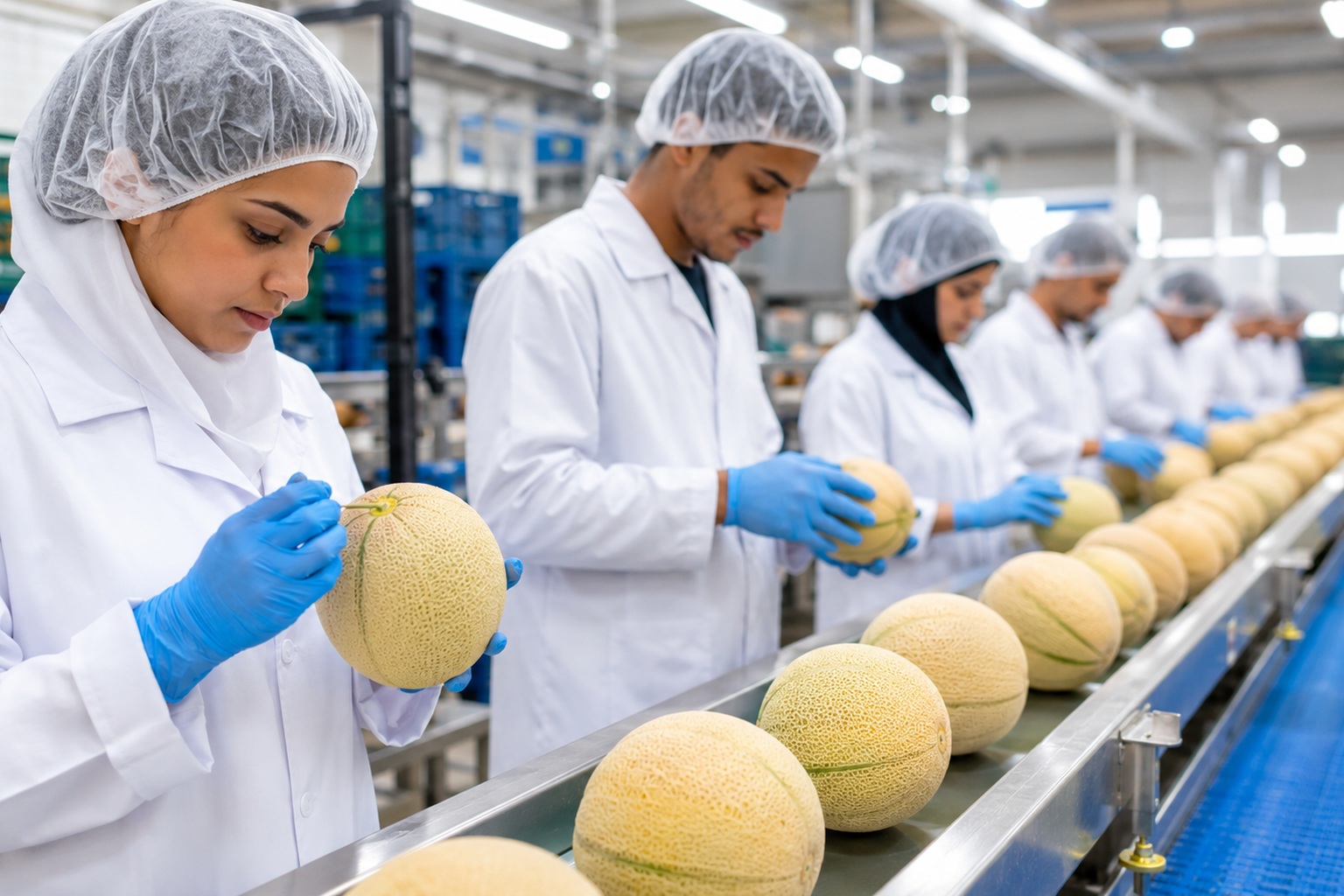
Cantaloupe and Galia have textured, netted skin that can harbour surface microbes. Internationally, netted melons are associated with Salmonella and Listeria surface contamination risks, so reputable suppliers apply hygienic washing, sanitation and handling, with clean water and good practice from field to pack. Cut melon is a high-risk product needing full food-safety management.
For EU and UK retail, GLOBALG.A.P. certification is the baseline, frequently with the GRASP add-on, alongside packhouse food-safety management (HACCP) and clear lot-coded traceability. Wood pallets and dunnage must be ISPM 15 compliant.
| Document | Required? |
|---|---|
| Phytosanitary certificate | Yes (medfly) |
| Residue test report (MRLs) | As required by buyer/market |
| GLOBALG.A.P. certificate | Baseline for retail |
| Certificate of Origin / EUR.1 | Yes |
| Invoice, packing list, B/L (AWB) | Yes |
| ISPM 15 marked pallets | If wood used |
A phytosanitary certificate, MRL compliance, GLOBALG.A.P. for retail, ISPM 15 packaging and standard commercial documents.
Mediterranean fruit fly (Ceratitis capitata), controlled by field programs and inspection.
The textured rind can harbour surface microbes (Salmonella/Listeria), so hygienic washing and handling are important; cut melon is high-risk.
Sweetness (Brix), size, aroma, ripeness stage and freedom from bruising or cracks.
Melons other than watermelon are HS 0807.19.
How to cite this page
PEI Trade. “Egyptian Melon Export Requirements.” peitrade.com, 2026. https://peitrade.com/egyptian-melon-export-requirements/
This page is part of our Egyptian Melon Export Guide hub.
Export Egyptian melons the compliant way with PEI Trade. Phytosanitary documentation and medfly control, MRL-compliant production, hygienic washing and handling, GLOBALG.A.P. certification and complete export paperwork. Contact: [email protected] · WhatsApp +20 109 911 1918 · www.peitrade.com