Address
Work Hours
Monday to Friday: 7AM - 7PM
Weekend: 10AM - 5PM

Address
Work Hours
Monday to Friday: 7AM - 7PM
Weekend: 10AM - 5PM


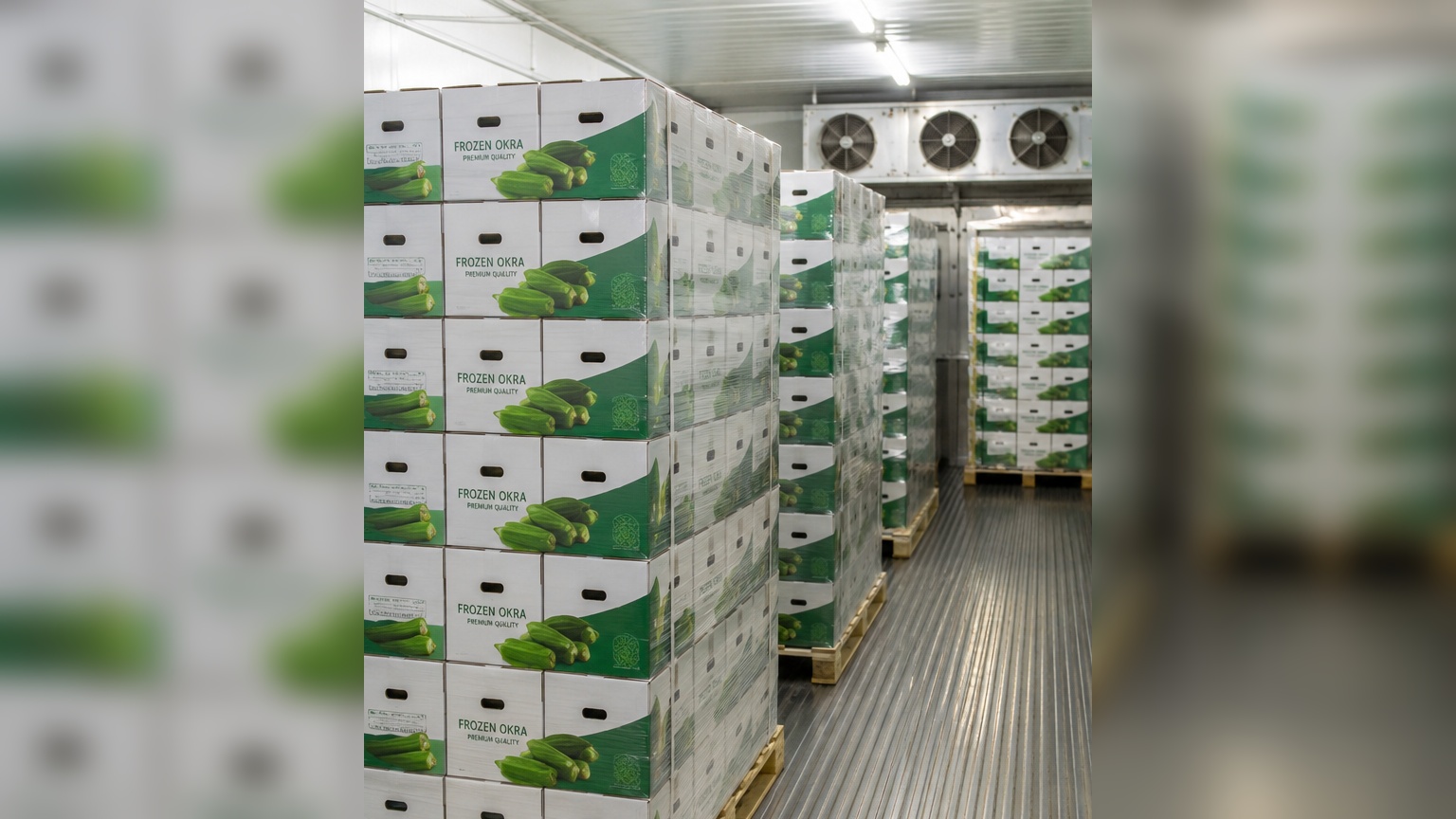
Okra is fragile: fresh pods are chilling-sensitive and bruise, toughen and blacken fast, which is exactly why most Egyptian okra is frozen at peak freshness instead. The frozen route — blanch and IQF — locks in the tender green pod, while the small amount of fresh okra is airfreighted under careful, not-too-cold handling. This guide covers the okra cold chain, the IQF process, and packing.
Quick answer: Most Egyptian okra is frozen: pods are graded, blanched and IQF-frozen, then held at −18°C — the dominant, year-round form. Fresh okra is chilling-sensitive and held cool, not cold (about 7–10°C, 90–95% RH); it is highly perishable (toughens and blackens) and airfreighted. Fresh trades under HS 0709.99, frozen under HS 0710.80.
Fresh okra has a very short shelf life — pods bruise, develop dark blemishes and toughen within days — so freezing at peak freshness is the natural way to preserve the prized tender baby pod and ship it worldwide. This is why frozen IQF is the backbone of Egypt’s okra trade.
For frozen okra, pods are washed and graded by size, blanched (to set colour and stop enzyme activity), then individually quick-frozen so they stay separate and free-flowing. Held at −18°C, they keep colour, tenderness and shape for a long time and let the customer use the exact quantity needed.
| Stage | Frozen okra (dominant) | Fresh okra |
|---|---|---|
| After harvest | Wash, grade, blanch, IQF | Pre-cool gently |
| Storage | −18°C | ~7–10°C, 90–95% RH |
| Shelf life | Months | Days (very perishable) |
| Shipping | Reefer at −18°C | Airfreight |
The fresh okra that is exported is chilling-sensitive: below about 7°C it develops pitting and dark patches. So it is held cool (around 7–10°C) at high humidity and moved fast by airfreight, since it stays good for only a few days.
Frozen okra is graded tightly to size and checked for colour and foreign matter; fresh okra is handled gently to avoid bruising and blackening.
Fresh okra is highly perishable, so freezing at peak freshness preserves the tender pod for year-round export.
Pods washed, graded, blanched and individually quick-frozen, then held at minus 18 degrees C.
Cool, around 7-10 degrees C at 90-95% humidity – not below ~7 degrees C, as it is chilling-sensitive.
Only a few days, which is why it is airfreighted.
In retail bags or bulk cartons by grade, shipped by reefer at minus 18 degrees C.
How to cite this page
PEI Trade. “Egyptian Okra Packaging & Cold Chain.” peitrade.com, 2026. https://peitrade.com/egyptian-okra-packaging-cold-chain/
This page is part of our Egyptian Okra Export Guide hub.
Ship Egyptian okra that arrives tender with PEI Trade. Tight size grading, blanching and IQF with an unbroken −18°C chain for frozen, plus careful cool handling and airfreight for fresh. Contact: [email protected] · WhatsApp +20 109 911 1918 · www.peitrade.com