Address
Work Hours
Monday to Friday: 7AM - 7PM
Weekend: 10AM - 5PM

Address
Work Hours
Monday to Friday: 7AM - 7PM
Weekend: 10AM - 5PM


Sweet potato has the most distinctive cold chain of any root export: it must first be cured warm, then stored warm — never refrigerated cold. Treat it like a potato and chill it, and it suffers internal breakdown and off-flavours. Cure and store it correctly, and it keeps for months and ships worldwide. This guide covers the sweet potato cold chain from harvest to reefer, and packing.
Quick answer: After harvest, sweet potatoes are cured — about 29–32°C at 85–90% RH for 4–7 days — to heal the skin, then stored warm at about 13–15°C, 85–90% RH. They are chilling-sensitive: below about 12–13°C they develop chilling injury (internal breakdown, hardcore, off-flavours). Cured and stored right, they keep for months. They ship by reefer at ~13–14°C, packed in cartons (~5–6 kg), retail bags or bulk bins. Sweet potato trades under HS code 0714.20.
Curing is the defining step. Freshly dug roots are held warm and humid — around 29–32°C at 85–90% RH for several days — which heals harvest wounds and skin, converts some starch to sugar (improving flavour), and prepares the roots to store. Skipping or rushing curing leads to decay and poor shelf life. It is the single most important post-harvest action for sweet potato.
After curing, sweet potatoes are stored warm, around 13–15°C at 85–90% RH — not in cold refrigeration. They are chilling-sensitive: held below about 12–13°C they develop internal breakdown, “hardcore” (failure to soften when cooked) and off-flavours. This is the opposite of ordinary potatoes and the mistake that ruins consignments. Correctly stored, cured roots keep for many months. Our reference table of cold chain storage temperatures for fresh produce sets this warm range against the much colder settings used for other crops.
| Stage | Temperature | Humidity / notes |
|---|---|---|
| Curing | ~29–32°C, 4–7 days | 85–90% RH; heals skin |
| Storage | ~13–15°C (never <12–13°C) | 85–90% RH; keeps for months |
| Shipping | Reefer ~13–14°C | Logged temperature |
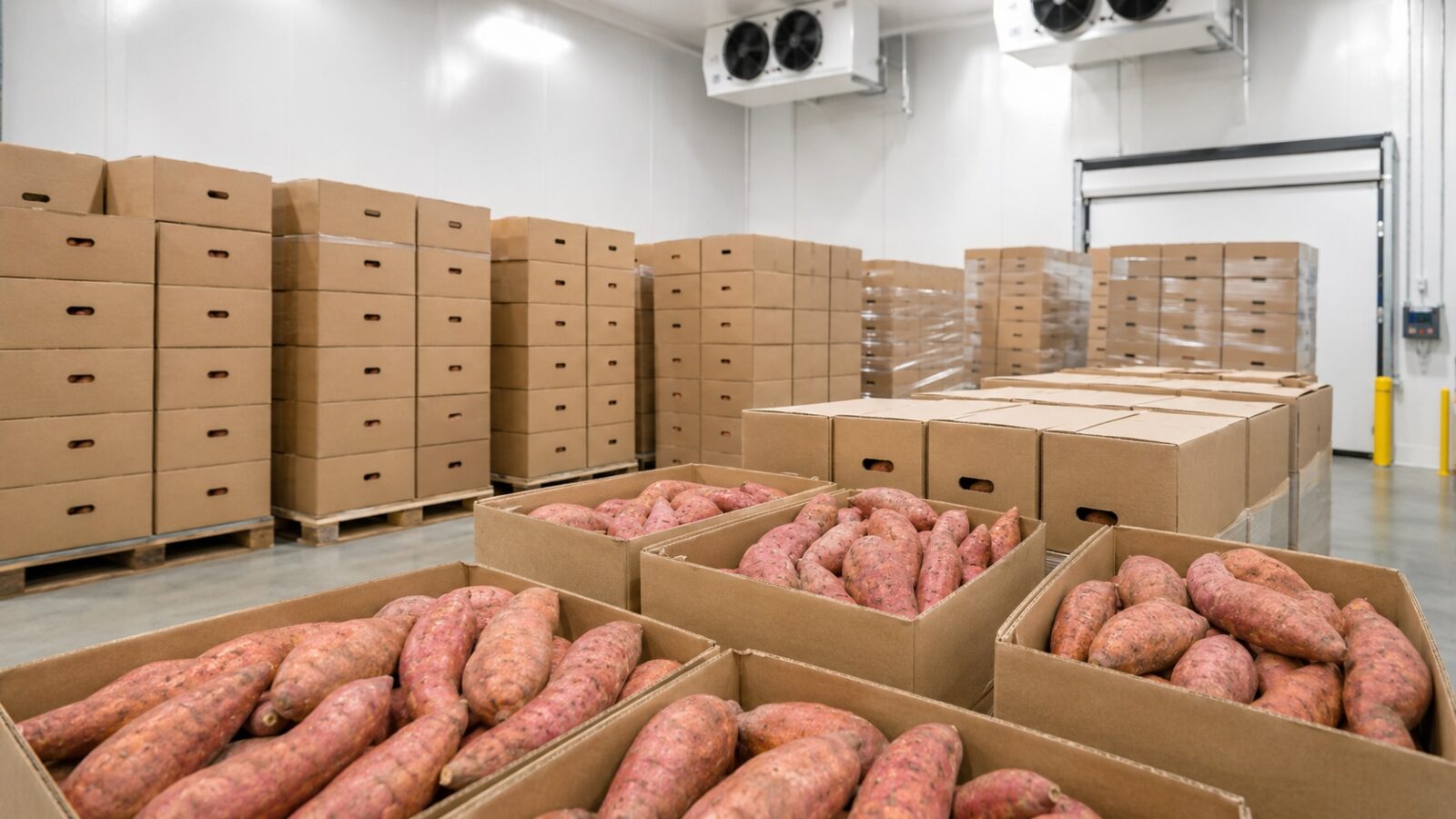
| Packaging | Cartons (~5–6 kg), bags, bins | Washed/brushed; gentle handling |
Roots are usually washed or brushed, graded by size, and handled gently — the cured skin protects the root but still bruises and scuffs, so careful handling preserves appearance and shelf life.
Sweet potato ships by reefer at ~13–14°C with airflow and logged temperature — deliberately warmer than most produce, to avoid chilling injury. The long shelf life of cured roots makes sea freight straightforward for all main markets. A temperature recorder gives the buyer proof the chain stayed in the correct warm range.
Curing heals the skin, improves flavour and prepares roots for months of storage; without it they decay quickly.
Warm – about 13-15 degrees C at 85-90% humidity – never in cold refrigeration.
It develops chilling injury: internal breakdown, hardcore (won’t soften when cooked) and off-flavours.
Many months when properly cured and stored warm.
In cartons (~5-6 kg), bags or bins, shipped by reefer at ~13-14 degrees C with logged temperature.
How to cite this page
PEI Trade. “Egyptian Sweet Potato Packaging & Cold Chain.” peitrade.com, 2026. https://peitrade.com/egyptian-sweet-potato-packaging-cold-chain/
This page is part of our Egyptian Sweet Potato Export Guide hub.
Ship Egyptian sweet potato that arrives in spec with PEI Trade. Correct curing, warm chilling-sensitive storage, gentle washed-and-graded packing and logged reefer transit — for orange-flesh and specialty roots. Contact: [email protected] · WhatsApp +20 109 911 1918 · www.peitrade.com