Address
Work Hours
Monday to Friday: 7AM - 7PM
Weekend: 10AM - 5PM

Address
Work Hours
Monday to Friday: 7AM - 7PM
Weekend: 10AM - 5PM


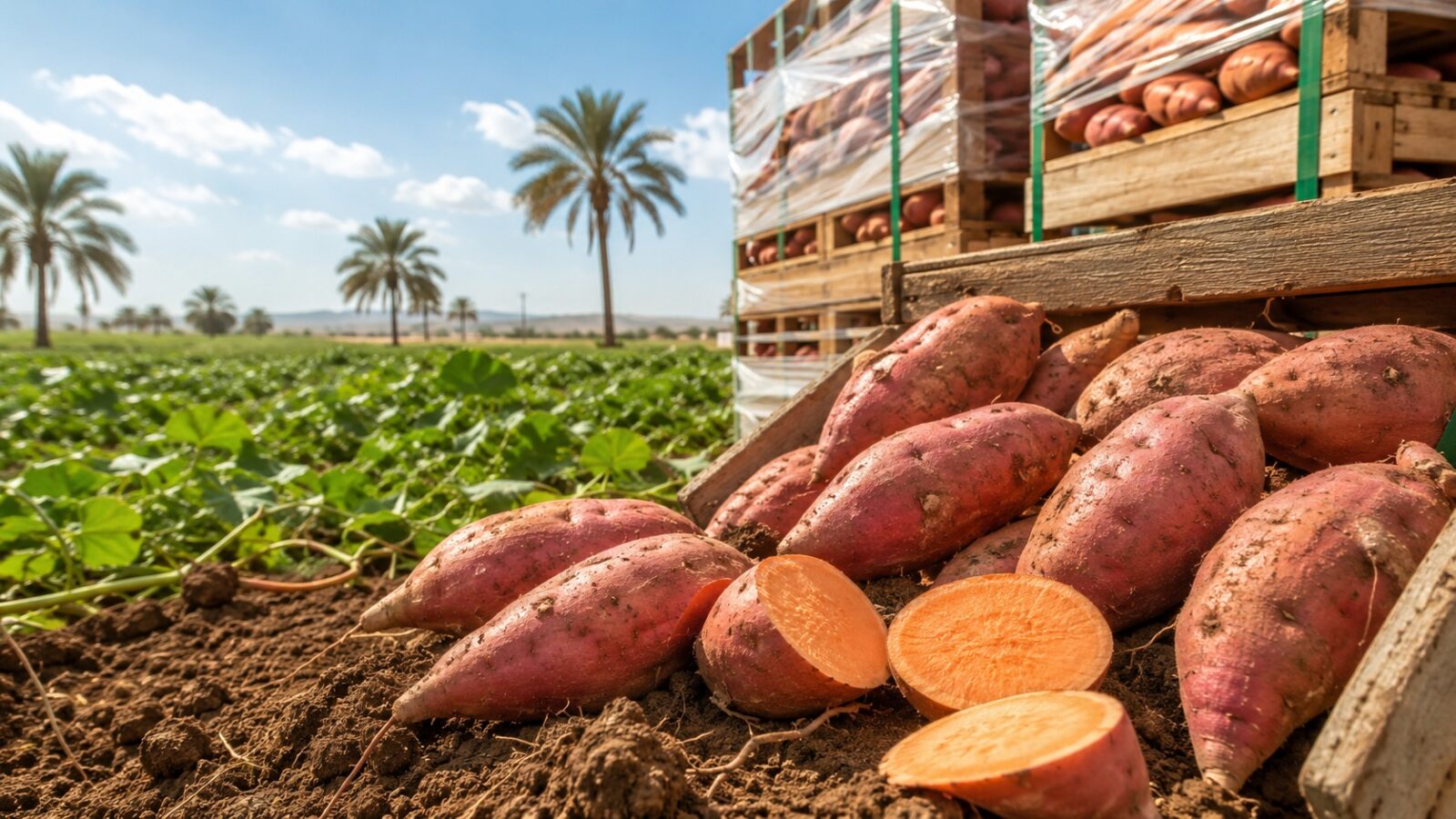
Sweet potato is one of Egypt’s standout horticultural export success stories — orange-fleshed roots that have made the country the leading supplier to European supermarkets, overtaking the United States. A warm climate, sandy reclaimed-desert soils ideal for clean roots, and good storage behaviour let Egypt supply sweet potato for much of the year. This guide is the hub for importers: what Egypt grows, when it ships, the markets it serves, the specifications buyers ask for and the compliance behind every consignment.
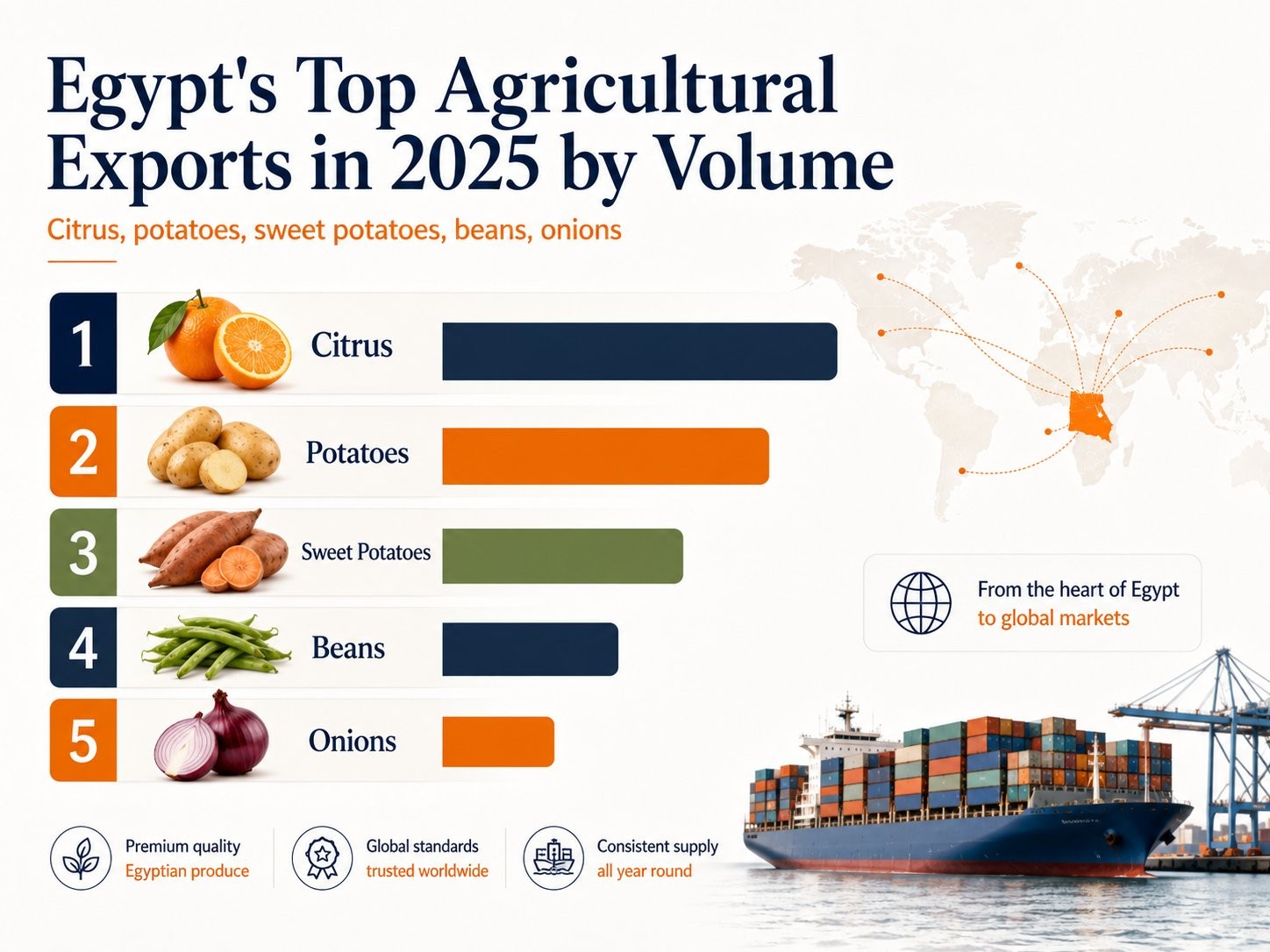
Quick answer: Egypt is the European Union’s leading supplier of sweet potato — overtaking the United States in 2023/24 — producing around 440,000 tonnes a year (USDA, 2024) and exporting roughly 266,000–310,000 tonnes worth about US$182 million (2024), its third-largest agricultural export. The main export is the orange-flesh sweet potato (notably the Beauregard type). Harvest runs roughly September to December, with export peaking August to January; after curing, roots store well and ship for much of the year. Sweet potato trades under HS code 0714.20. It is chilling-sensitive — cured warm and stored around 13–15°C, never refrigerated cold. Markets include the EU, UK, the Gulf and Russia. (Sources: USDA FAS, 2024; ITC Trade Map, 2025.)
| Type | Character | Main market |
|---|---|---|
| Orange flesh (Beauregard type) | Sweet, moist, deep orange; copper skin | EU & UK retail (the export mainstay) |
| White / cream flesh | Drier, less sweet, pale flesh | Selected & ethnic markets |
| Purple skin / white flesh (Japanese type) | Purple skin, sweet white flesh | Specialty retail |
| Purple flesh | Deep purple flesh, niche | Specialty retail |
The main harvest runs from about September to December. Because sweet potatoes are cured and then store well for months, Egypt supplies them for much of the year from controlled storage — a major advantage over crops with a short fresh window. Production spans reclaimed-desert and Delta regions such as Beheira, Nubaria and Sharqia. Export peaks from around August to January; exact windows shift year to year with planting and weather.
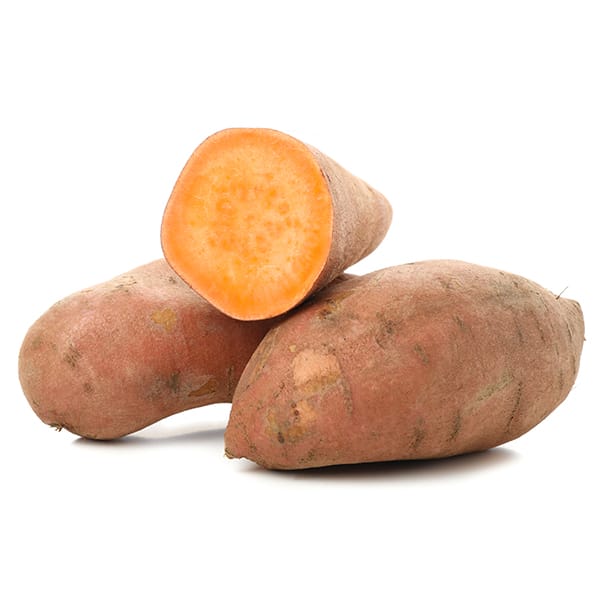
Sweet potato is traded under HS code 0714.20.
Fresh sweet potato requires a phytosanitary certificate (the key quarantine pest is the sweet potato weevil, Cylas formicarius, with soil and pest freedom important), compliance with destination MRLs (EU: Regulation (EC) No 396/2005), and GLOBALG.A.P. certification with ISPM 15 wood packaging and traceability. Sweet potato generally faces fewer residue red-flags than some crops, and Egyptian sweet potato is not on the EU’s enhanced official-controls list (Regulation (EU) 2019/1793) — but soil/quarantine cleanliness and correct curing are central to clean shipments.
The main harvest runs September to December, but after curing they store for months, so Egypt supplies them for much of the year; export peaks from around August to January.
The orange-flesh Beauregard type, with white-flesh and purple specialty types also grown.
Mainly the EU and UK (Egypt is the leading supplier, having overtaken the USA), plus the Gulf and Russia.
Fresh sweet potato falls under HS code 0714.20.
Cured after harvest, then stored warm at about 13-15 degrees C – it is chilling-sensitive and damaged by cold refrigeration.
How to cite this page. Reusing a figure from this guide? Please cite it and link to this page as the source.
PEI Trade. “Egyptian Sweet Potato Export: The Complete Guide.” peitrade.com, 2026. https://peitrade.com/egyptian-sweet-potato-export-guide/
Source Egyptian sweet potato with PEI Trade. We supply orange-flesh Beauregard-type and specialty sweet potatoes to EU, UK, Gulf and Russian buyers, with GLOBALG.A.P. handling, phytosanitary documentation, proper curing and chilling-sensitive storage. Contact: [email protected] · WhatsApp +20 109 911 1918 · www.peitrade.com