Address
Work Hours
Monday to Friday: 7AM - 7PM
Weekend: 10AM - 5PM

Address
Work Hours
Monday to Friday: 7AM - 7PM
Weekend: 10AM - 5PM



Key definition: Every fruit and vegetable has its own optimal cold chain storage temperature, and using the wrong one causes chilling injury or rapid decay. As a quick reference: mangoes store at 12°C, oranges at 5–7°C, lemons at 10–13°C, table grapes near 0°C, and onions and garlic at 0°C but at low 65–70% humidity. Chilling-sensitive crops such as mango, tomato, cucumber and sweet potato must never be stored below their threshold.
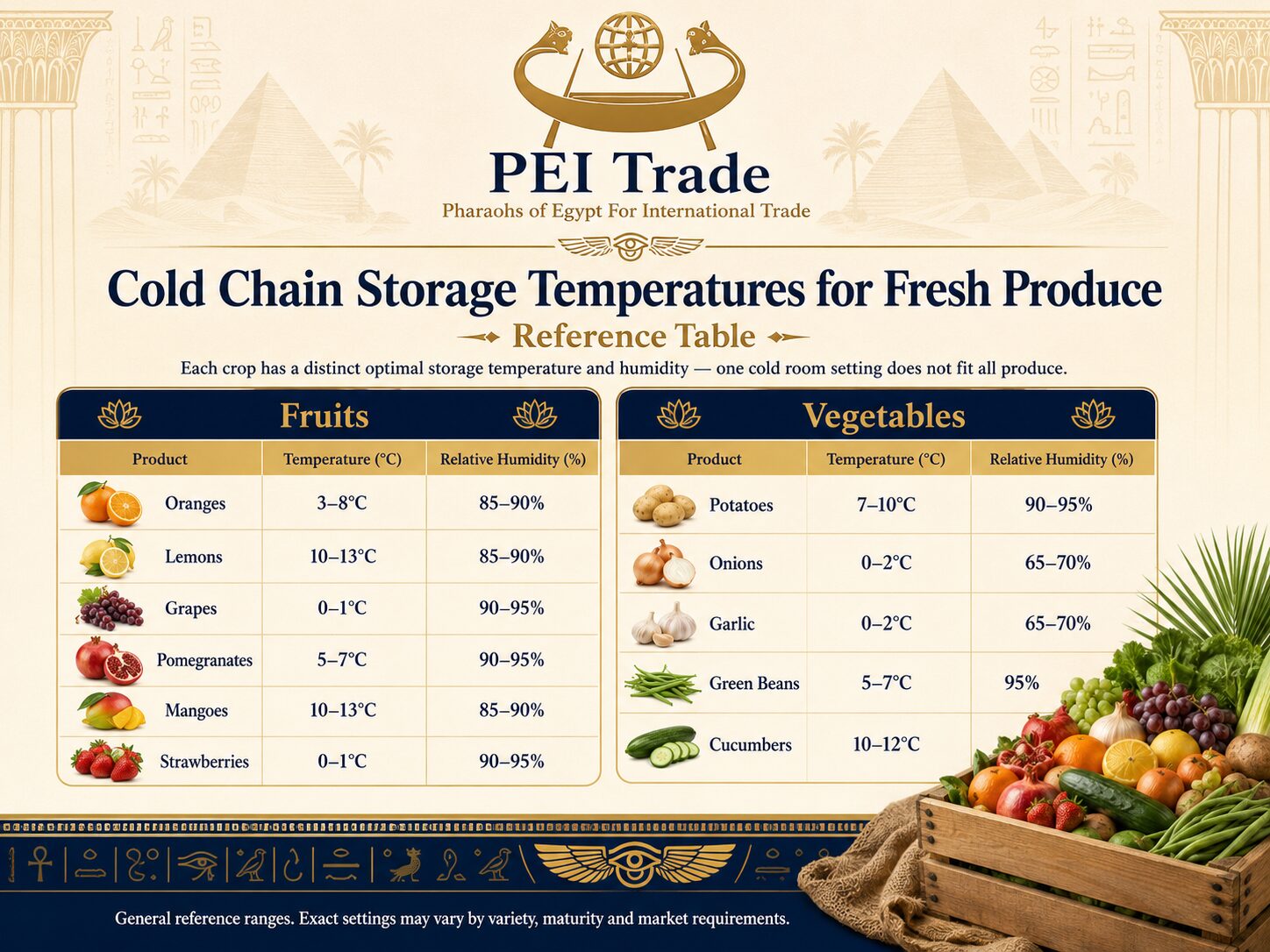
Temperature is the single most powerful tool for extending the shelf life of fresh produce. Lowering temperature slows respiration, ripening, water loss, and microbial growth — but only down to each crop’s safe threshold. Cool a chilling-sensitive fruit such as mango or a tropical vegetable such as sweet potato below that threshold and it suffers chilling injury: pitting, surface browning, failure to ripen, off-flavours, and accelerated decay once it returns to ambient temperature.
This page is a quick reference for the optimal storage temperature and relative humidity of the main fruits and vegetables Egypt exports. It complements our detailed Citrus Export Cold Chain Guide (which covers citrus cold chain stages, reefer settings, and monitoring in depth) and the cold chain section of our Egyptian Mango Export Requirements page. Temperatures here follow widely used postharvest standards, notably USDA Agriculture Handbook 66.
| Fruit | Storage Temp | RH | Approx. Shelf Life | Chilling Sensitive |
|---|---|---|---|---|
| Mangoes | 12°C (10–13°C) | 85–90% | 2–3 weeks | Yes — below 10°C |
| Oranges (Navel/Valencia) | 5–7°C | 85–90% | 8–12 weeks | Below 3°C |
| Mandarins | 4–6°C | 90–95% | 4–8 weeks | Below 3°C |
| Lemons & Limes | 10–13°C | 85–90% | 3–6 months | Yes — below 10°C |
| Grapefruit | 10–13°C | 85–90% | 6–8 weeks | Yes — below 10°C |
| Table Grapes | -0.5 to 0°C | 90–95% | 4–8 weeks | No (use SO₂ pads) |
| Pomegranates | 5–7°C | 90–95% | 2–3 months | Below 5°C |
| Strawberries | 0–1°C | 90–95% | 7–10 days | No |
| Figs | 0°C | 90–95% | 1–2 weeks | No |
| Dates (fresh) | 0°C | 85–90% | Weeks–months | No |
| Watermelons | 10–15°C | 85–90% | 2–3 weeks | Yes — below 10°C |
| Melons (Cantaloupe) | 2–5°C | 90–95% | 2–3 weeks | Variety-dependent |
| Apricots & Peaches | -0.5 to 0°C | 90–95% | 1–3 weeks | Internal breakdown at 2–5°C |
Note the split within citrus: oranges and mandarins are stored cold (4–7°C), while lemons, limes and grapefruit need warmer storage (10–13°C). Storing lemons with oranges in the same cold room is one of the most common and costly errors — see our Complete Guide to Egyptian Citrus Export for the full citrus breakdown.
| Vegetable | Storage Temp | RH | Approx. Shelf Life | Chilling Sensitive |
|---|---|---|---|---|
| Potatoes (table) | 7–10°C | 90–95% | Several months | Below 4°C (cold sweetening) |
| Onions | 0°C | 65–70% | 1–8 months | No — needs LOW humidity |
| Garlic | 0°C | 65–70% | 6–7 months | No — needs LOW humidity |
| Tomatoes (mature green) | 10–13°C | 90–95% | 1–3 weeks | Yes — below 10°C |
| Green Beans | 5–7°C | 95% | 7–10 days | Below 5°C |
| Sweet Potatoes | 13–15°C | 85–90% | 4–7 months | Yes — never refrigerate |
| Peppers (Capsicum) | 7–10°C | 90–95% | 2–3 weeks | Yes — below 7°C |
| Cucumbers | 10–12°C | 90–95% | 10–14 days | Yes — below 10°C |
| Globe Artichokes | 0°C | 90–95% | 2–3 weeks | No |
| Carrots | 0°C | 95–100% | Several months | No |
| Leafy Greens / Lettuce | 0°C | 95–100% | 2–3 weeks | No |
For product-specific cold chain advice or a quote, contact our export team at [email protected].
Mangoes should be stored at around 12°C (within a 10–13°C range) at 85–90% relative humidity, giving roughly 2–3 weeks of shelf life. Below about 10°C mangoes suffer chilling injury — skin pitting, browning, and failure to ripen normally.
Lemons and limes are chilling-sensitive and are held at 10–13°C, while oranges and mandarins are stored cold at 4–7°C. Storing lemons below 10°C causes pitting and membrane staining, so they must be kept separate from cold-stored citrus.
Onions and garlic are the main exception to the high-humidity rule. They need low relative humidity of 65–70% at around 0°C. High humidity causes sprouting, root growth, and neck rot.
No. Sweet potatoes are chilling-sensitive and should be stored at 13–15°C. Refrigeration below about 13°C causes internal damage, hard core, and off-flavours.
The recommended temperatures and humidity levels follow widely used postharvest standards, notably USDA Agriculture Handbook 66 (The Commercial Storage of Fruits, Vegetables, and Florist and Nursery Stocks), adjusted for commercial export practice.
PEI Trade. “Cold Chain Storage Temperatures for Fresh Produce.” PEI Trade Export Knowledge Base. https://peitrade.com/knowledge-base/cold-chain-storage-temperatures/