Address
Work Hours
Monday to Friday: 7AM - 7PM
Weekend: 10AM - 5PM

Address
Work Hours
Monday to Friday: 7AM - 7PM
Weekend: 10AM - 5PM


How relative humidity control, dehumidification and fresh air exchange settings are chosen on Egyptian produce reefers, crop by crop, and what happens when they are left on default.
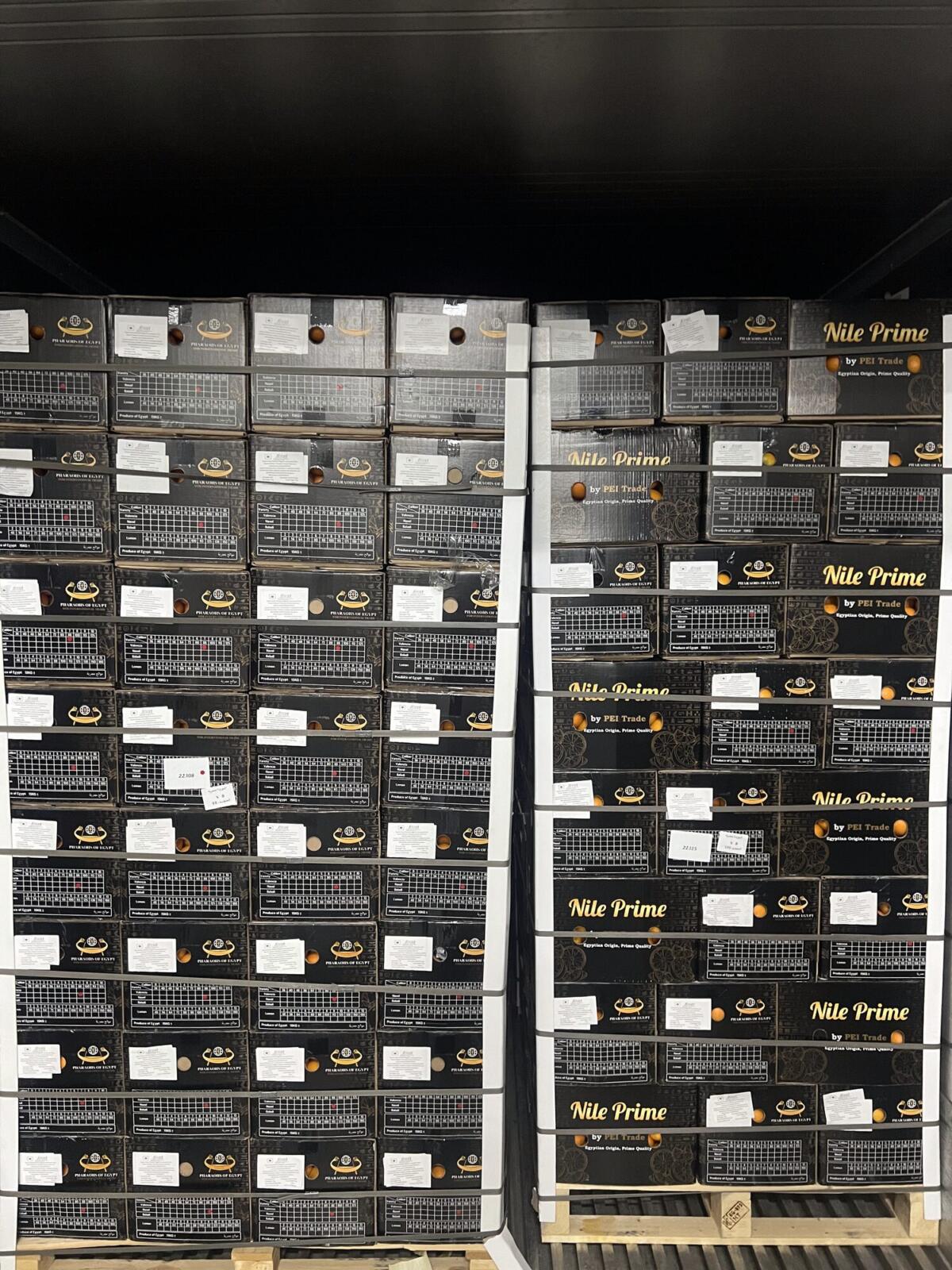
Almost every reefer booking specifies a temperature. Far fewer specify the two settings that decide whether the fruit arrives dry, wet or shrivelled: relative humidity and fresh air exchange. Carriers apply defaults when nothing is stated, and the default is rarely right for the crop in the box. This is how we set both on Egyptian produce shipments.
A modern reefer unit does not humidify. It dehumidifies. When you set a relative humidity target, the machine is permitted to run the compressor beyond what the temperature alone requires in order to condense moisture out of the return air. If you set a humidity target lower than the cargo naturally produces, you get extra drying and extra weight loss. If you leave humidity control switched off entirely, the box settles wherever the cargo and the set point put it, which for most fresh produce is high, around 90 to 95 percent.
For the great majority of Egyptian fruit and vegetable shipments, high is what you want. The moisture the fruit loses is the moisture you are paid for, a point covered in detail in our reference on transit weight loss by crop.
Fresh air exchange, sometimes called the vent setting, replaces air inside the container at a stated rate in cubic metres per hour. Respiring produce generates carbon dioxide and ethylene, and both accumulate in a sealed box. Opening the vent flushes them out. It also lets warm, humid outside air in, which the unit must then cool, so the setting is a genuine trade-off rather than a free safety margin.
As a working guide, citrus and pomegranate run at 15 to 25 cubic metres per hour, mango at 20 to 35, onions and garlic wide open at 40 to 75 or on ventilated dry containers with fixed vents, and frozen cargo fully closed at zero. Ethylene-producing and ethylene-sensitive crops loaded together need the higher end of the range, and in most cases should not be loaded together at all. Our ethylene sensitivity reference sets out which combinations are workable.
Set point, humidity target and fresh air exchange rate should all appear on the shipping instruction and on the loading record, not just in an email. If the container arrives with the wrong vent position and the trace later shows elevated carbon dioxide, a documented instruction is what separates a supportable claim from an argument. Where the choice of box itself is open, our guide to reefer or ventilated dry container covers the first decision.
If you would like these three settings written into your next Egyptian shipment against your own arrival specification, send us the crop, the destination port and the transit time. Message the export desk on WhatsApp at +20 10 9911 1918.
