Address
Work Hours
Monday to Friday: 7AM - 7PM
Weekend: 10AM - 5PM

Address
Work Hours
Monday to Friday: 7AM - 7PM
Weekend: 10AM - 5PM


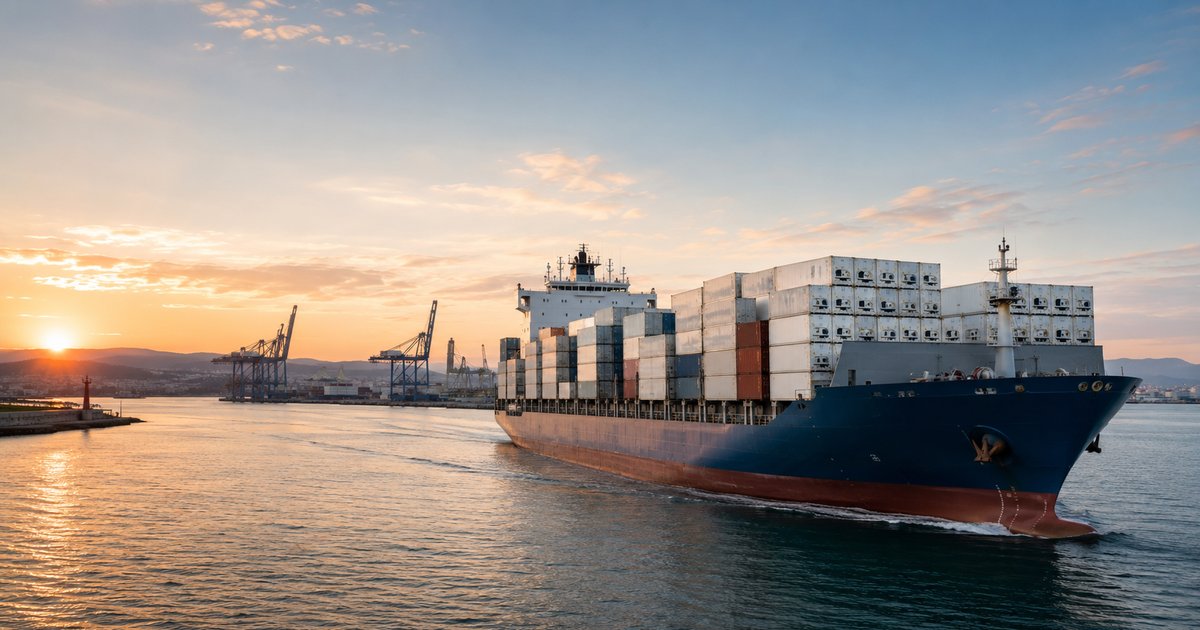
Not every Egyptian export crop needs a refrigerated container. A crop by crop reference on which produce moves in a ventilated dry box, which needs a reefer, and where the freight saving stops being worth it.
The choice of reefer or dry container is decided by two things: how much heat the crop generates in the box, and how long it will sit inside. Cured onions, garlic, dates and dried products move safely in a ventilated dry container on short routes. Everything with a live respiration rate and a target arrival condition, which covers all fresh fruit, greenhouse vegetables, roots held above their chilling threshold and every frozen product, needs a reefer. The freight difference is real, but so is the cost of a claim, and the line between the two sits at a specific number of transit days per crop.
The table gives the working position for each Egyptian export crop. Transit limits are the practical ceilings we work to, not absolute maximums, and they assume the produce was properly cured or precooled before stuffing.
| Crop | Box | Carrying temp | Dry box transit ceiling | Note |
|---|---|---|---|---|
| Onion, cured | Ventilated dry or reefer | 0 to 2 C in reefer | About 10 days | Mesh bags, no shrink film, curing must be complete |
| Garlic, cured | Ventilated dry or reefer | Around 0 C in reefer | About 12 days | Sprouting risk rises sharply in a warm box |
| Dates, dried and semi-dry | Dry container | Ambient | No practical limit | Soft and fresh dates such as Barhi need a reefer |
| Dried herbs, spices, pulses | Dry container | Ambient | No practical limit | Desiccant bags against container sweat on long hauls |
| Potato, table | Reefer | 4 to 8 C | Not recommended | Cold sweetening below 4 C, greening under any light |
| Sweet potato | Reefer | 13 to 14 C | Not recommended | Chilling injury below 12 C, must be cured first |
| Taro | Reefer | 7 to 10 C | Not recommended | High humidity, corms shrivel in a dry box |
| Citrus | Reefer | 4 to 8 C by variety | Never | Decay and rind disorders develop quickly above set point |
| Mango | Reefer | 10 to 12 C | Never | Ripens in transit without cooling, arrives unsellable |
| Pomegranate | Reefer | 5 to 7 C | Never | Husk scald develops in warm and in over cold conditions alike |
| Greenhouse vegetables | Reefer | 7 to 10 C | Never | Short shelf life leaves no margin for a warm leg |
| IQF and frozen | Reefer | Minus 18 C or colder | Never | Any excursion above minus 15 C is a quality event |
A ventilated dry box has passive vents in the side rails. It exchanges air with the outside, and that is all. It cannot remove field heat, it cannot hold a temperature, and on a Red Sea or Gulf routing in September the interior can sit well above the outside air. Cured onions tolerate this because a properly cured bulb has a dry neck and a low respiration rate. Fresh fruit does not. The common failure is a buyer moving a crop from reefer to dry box after one successful shipment in February, then repeating it in June with the same supplier and losing the load.
A dry container costs less than a reefer on the same lane, and it also avoids reefer plug charges at the terminal and on the vessel. On a short Gulf or East Mediterranean routing with cured onions, the saving is worth having. On a 20 day sailing to Southeast Asia it is not, because the arrival condition of the bulbs decides whether the buyer takes the load at contract price. Onions and garlic are the two crops where the calculation is genuinely open. Our reference on Egyptian onion and garlic export grades and bag formats covers the packing side of that decision, and the reefer set points reference by crop gives the temperature, humidity and ventilation settings once you have chosen the refrigerated route.
Write the container type into the sales contract alongside the Incoterm, not into a separate email. Under Incoterms 2020, an FOB or CFR sale leaves the carriage arrangement with a named party, and a container type substitution made at the booking desk to save a few hundred dollars is a dispute waiting to happen. One line is enough: 40 ft high cube reefer, set point stated, fresh air exchange stated, or ventilated dry container with vents open.
PEI Trade is the exporter, not a neutral reviewer. Figures above are working values from our own loading practice and should be confirmed against your carrier’s recommendations and your own arrival experience on the lane.
Send us the crop, the destination port and the sailing you are looking at, and we will tell you whether a dry container is defensible on that lane or whether it is a false economy. WhatsApp +20 10 9911 1918.
