Address
Work Hours
Monday to Friday: 7AM - 7PM
Weekend: 10AM - 5PM

Address
Work Hours
Monday to Friday: 7AM - 7PM
Weekend: 10AM - 5PM


Egyptian Navel oranges combine seedless convenience with high sugar levels, and Egypt is one of the world’s larger citrus exporters. For buyers sourcing fresh oranges for retail shelves, the Egyptian Navel season runs from December through April.
This comprehensive guide covers everything procurement managers, importers, and fresh produce buyers need to know about sourcing Egyptian Navel oranges—from detailed specifications and size grades to seasonal availability, quality standards, and export logistics. For broader context on all Egyptian citrus varieties, see our Complete Egyptian Citrus Export Guide.
Whether you’re comparing Egyptian Navel oranges to Valencia oranges for your product mix or seeking a reliable supplier for European retail, this guide provides the technical details you need to make informed sourcing decisions.
Egyptian Navel oranges hold their position in Europe and the GCC on a combination of natural characteristics and growing conditions. The factors below are the ones buyers write into a specification.
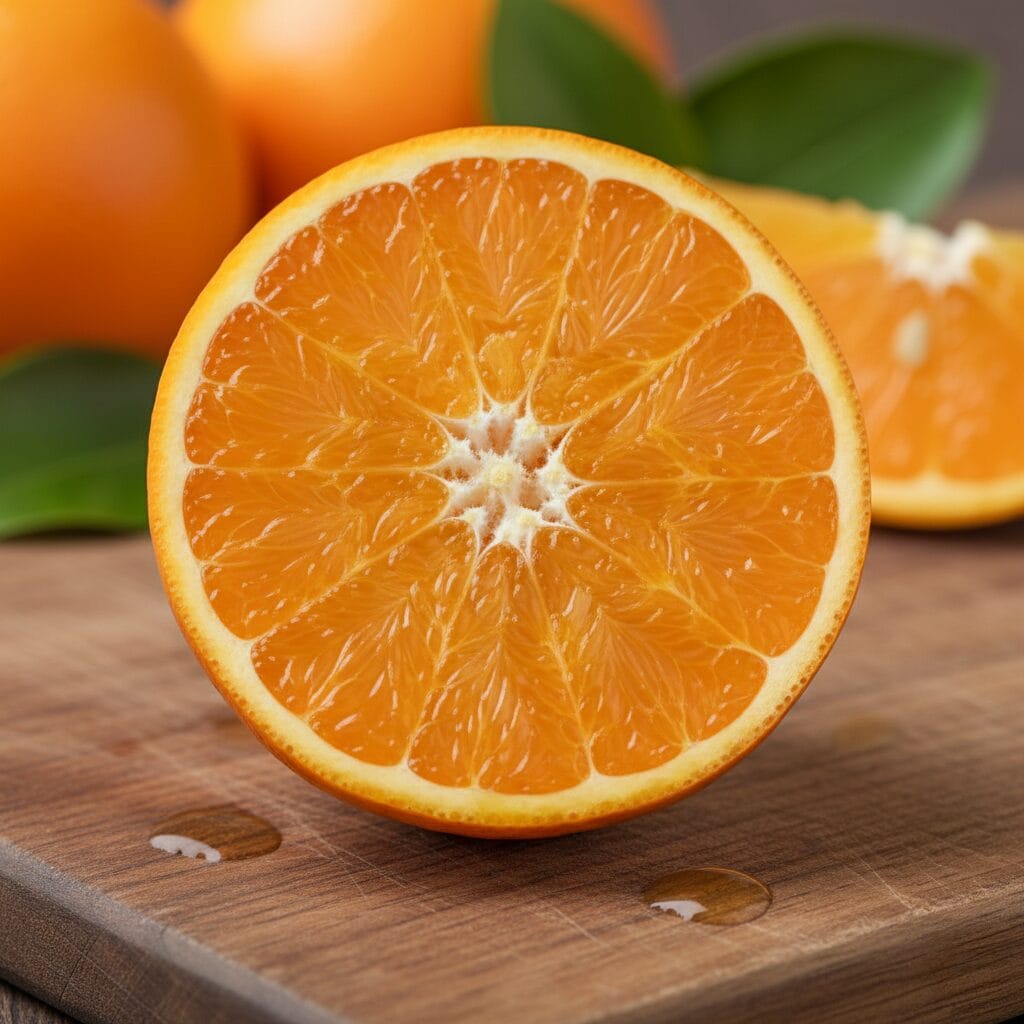
The defining characteristic of Navel oranges is their complete seedlessness. Unlike Valencia oranges which contain 3-6 seeds, Navel oranges develop without any seeds due to their unique botanical structure. This seedless quality makes them the preferred choice for fresh consumption, as consumers can enjoy the fruit without the inconvenience of removing seeds.
For retail buyers, seedless oranges simplify product positioning and marketing. The seedless label is a significant selling point and supports a higher retail price. Navel is seedless by botanical structure rather than by grading, so the characteristic does not vary from one lot to the next.
Egyptian Navel oranges achieve optimal Brix levels of 11-13° during peak season, with acidity ranging from 0.8-1.2%. This sugar-acid ratio creates the perfectly balanced sweet-tart flavor profile that consumers prefer for fresh eating.
The warm Mediterranean climate and mineral-rich Nile Delta soils contribute to this exceptional flavor development. Egyptian Navels typically reach 12-13° Brix during January through March—the peak quality window—when fruit has fully matured on the tree and developed maximum sweetness.
Brix is measured by sampling during packing, and the readings for a lot can be provided on request. Sampling describes the lot rather than every fruit in it, so a buyer working to a firm Brix floor should state it in the specification, where it is checked against the sample readings before loading.
Navel oranges feature a thick, easy-to-peel skin measuring 4-6mm compared to the thinner 2-4mm peel of Valencia oranges. This thicker peel provides multiple advantages for export markets:
Extended Shelf Life: The thick peel acts as a natural protective barrier, reducing moisture loss and extending shelf life to 8-12 weeks under proper cold chain management. This durability is essential for the 2-4 week shipping time to European destinations.
Damage Resistance: Thicker skin withstands handling during packing, transport, and retail display better than thin-skinned varieties. Fewer damaged fruits mean less shrinkage and better margins for importers.
Easy Peeling: Despite its thickness, Navel orange peel separates easily from the fruit segments. Consumers can peel the fruit by hand in seconds without juice spray or mess—a key convenience factor for fresh consumption.
The characteristic “navel” at the blossom end of these oranges is actually a second, undeveloped fruit growing inside the primary orange. This formation is unique to Navel varieties and serves as a visual identifier of authenticity.
The navel formation also contributes to the variety’s seedless nature—the same developmental quirk that creates the navel prevents seed formation. For buyers, the visible navel provides instant variety verification without cutting the fruit.
Understanding size classifications and quality grades is essential for specifying orders and meeting market requirements. Egyptian Navel oranges follow international standards with size expressed as “count per carton.”
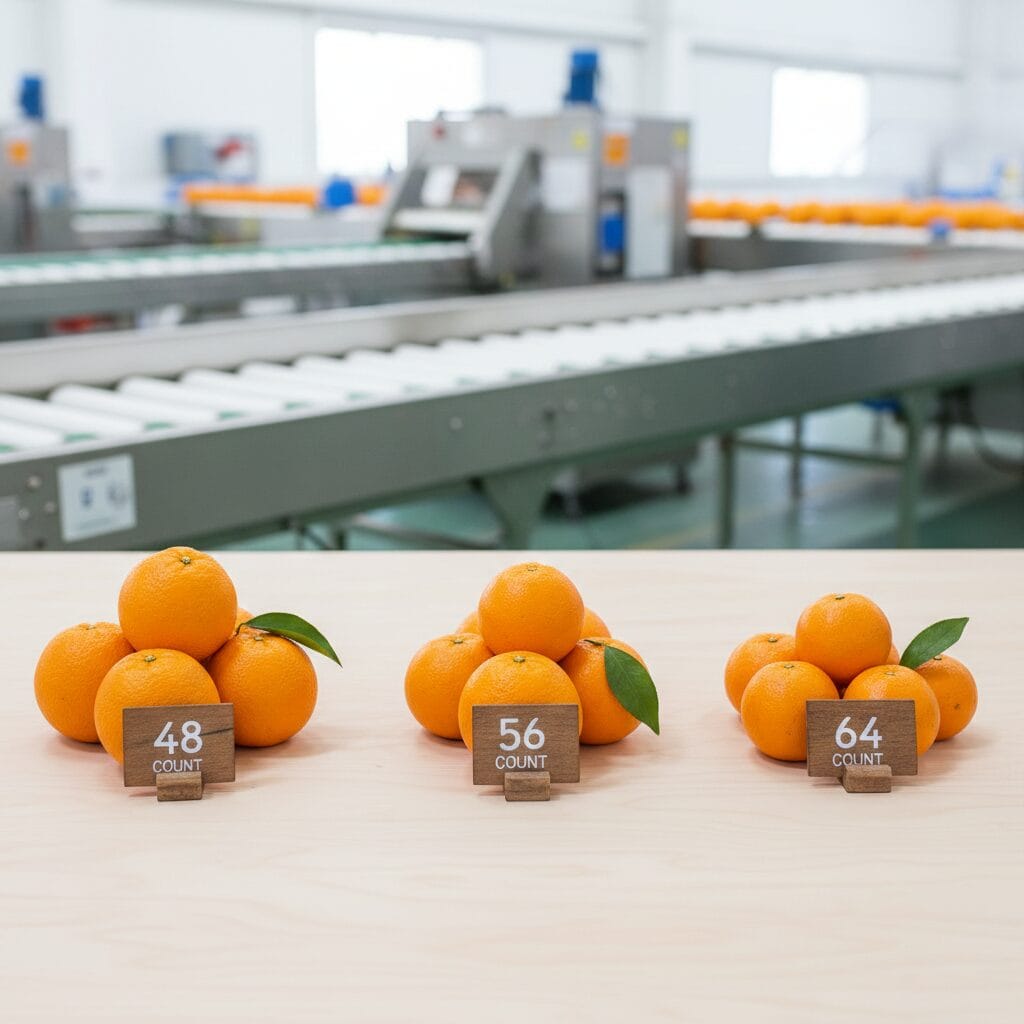
Navel orange sizes are expressed as the number of fruits packed per standard 15kg export carton. Lower count numbers indicate larger fruit sizes. The following table details all available size grades:
| Count | Fruits per 15kg Carton | Approximate Weight per Fruit | Market Application |
|---|---|---|---|
| 36 | 36 | 400-420g | Premium gift fruit, specialty retail |
| 40 | 40 | 360-400g | Premium retail, foodservice |
| 48 | 48 | 300-330g | Supermarket retail (most popular EU) |
| 56 | 56 | 255-285g | Standard retail, wholesale |
| 64 | 64 | 220-250g | Standard retail, wholesale |
| 72 | 72 | 195-220g | Economy retail, catering |
| 88 | 88 | 160-180g | Economy retail, juicing |
| 100 | 100 | 140-160g | Juicing, processing |
| 113 | 113 | 125-140g | Processing, economy markets |
European Market Preferences: Counts 48, 56, and 64 dominate European retail specifications, with 48 and 56 being most requested by UK and German supermarkets. These medium-large sizes balance visual appeal with value perception for consumers.
GCC Market Preferences: Gulf markets often prefer larger sizes (36-48 count) for premium positioning and gift-giving occasions, particularly during holiday periods.
Egyptian Navel oranges for export are graded according to international standards aligned with Codex Alimentarius and EU marketing regulations:
Class I — note that Extra Class is a separate, stricter tier above Class I, not another name for it:
Class II (Standard Grade):
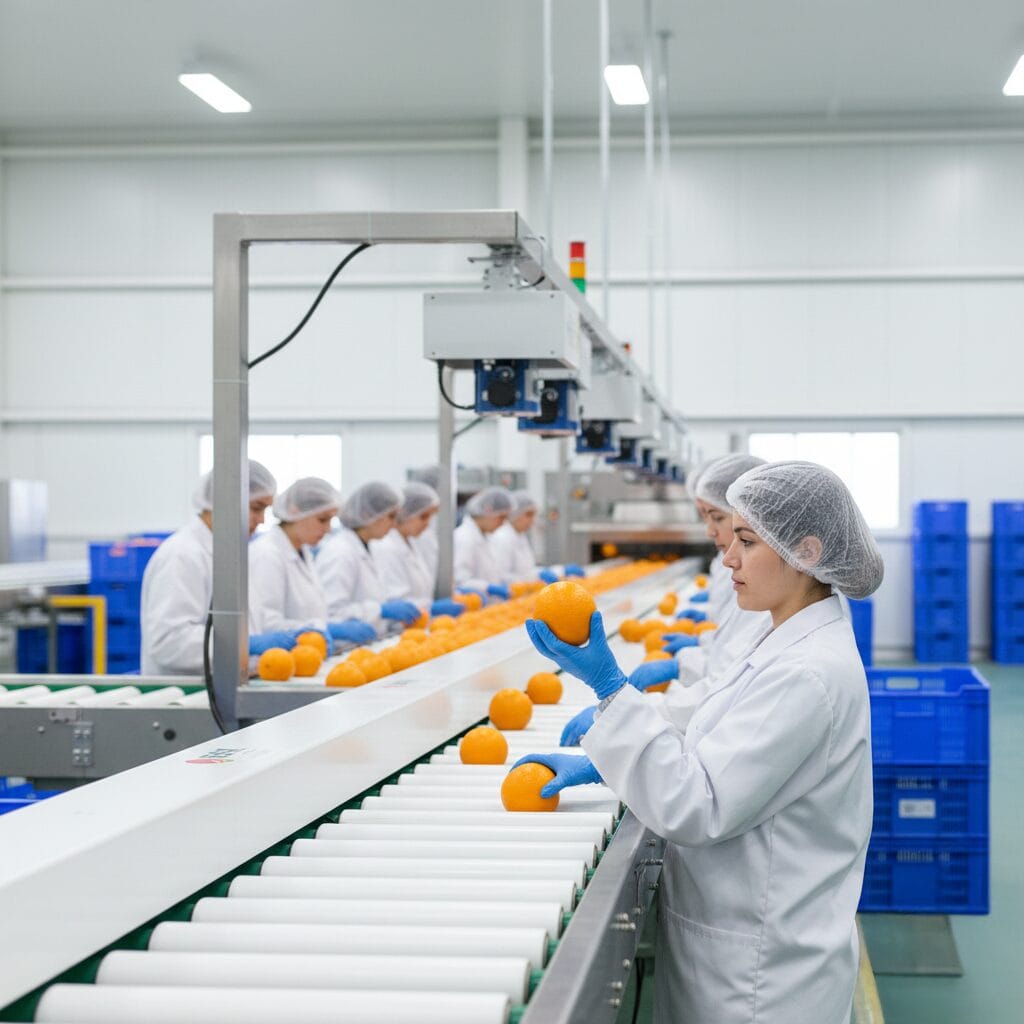
Optical sorting grades the fruit by size and by visible quality as it passes the line, and the settings are set to the contract specification before each run. Manual inspection backs it up on the grading table.
Mature Navel oranges develop their characteristic orange color through temperature-dependent pigment changes. Egyptian growing conditions typically produce excellent color development, with peak-season fruit achieving deep orange hues.
Early Season (December): Fruit may show 60-70% orange color with some green patches. Internal quality (Brix, acidity) is fully developed even when external color is incomplete. Some markets accept this “color break” stage.
Peak Season (January-March): Full orange color development (80-95% coverage). Optimal appearance for retail display. This period delivers the best combination of internal quality and external appearance.
Late Season (April): Excellent color but fruit begins drying. Peel may feel lighter due to moisture loss. Still acceptable quality but reduced shelf life compared to peak season.
Technical specifications for Egyptian Navel oranges:
| Parameter | Minimum | Optimal Range | Peak Season |
|---|---|---|---|
| Brix (Sugar Content) | 10° | 11-13° | 12-13° |
| Acidity | 0.6% | 0.8-1.2% | 0.9-1.1% |
| Brix/Acid Ratio | 9:1 | 10-14:1 | 11-13:1 |
| Juice Content | 30% | 35-45% | 40-45% |
| Peel Thickness | 3mm | 4-6mm | 4-5mm |
| Seeds | 0 | 0 | 0 (Seedless) |
Strategic timing of orders ensures access to peak quality fruit at optimal pricing. Understanding the Egyptian Navel orange season helps buyers plan their sourcing calendar effectively.
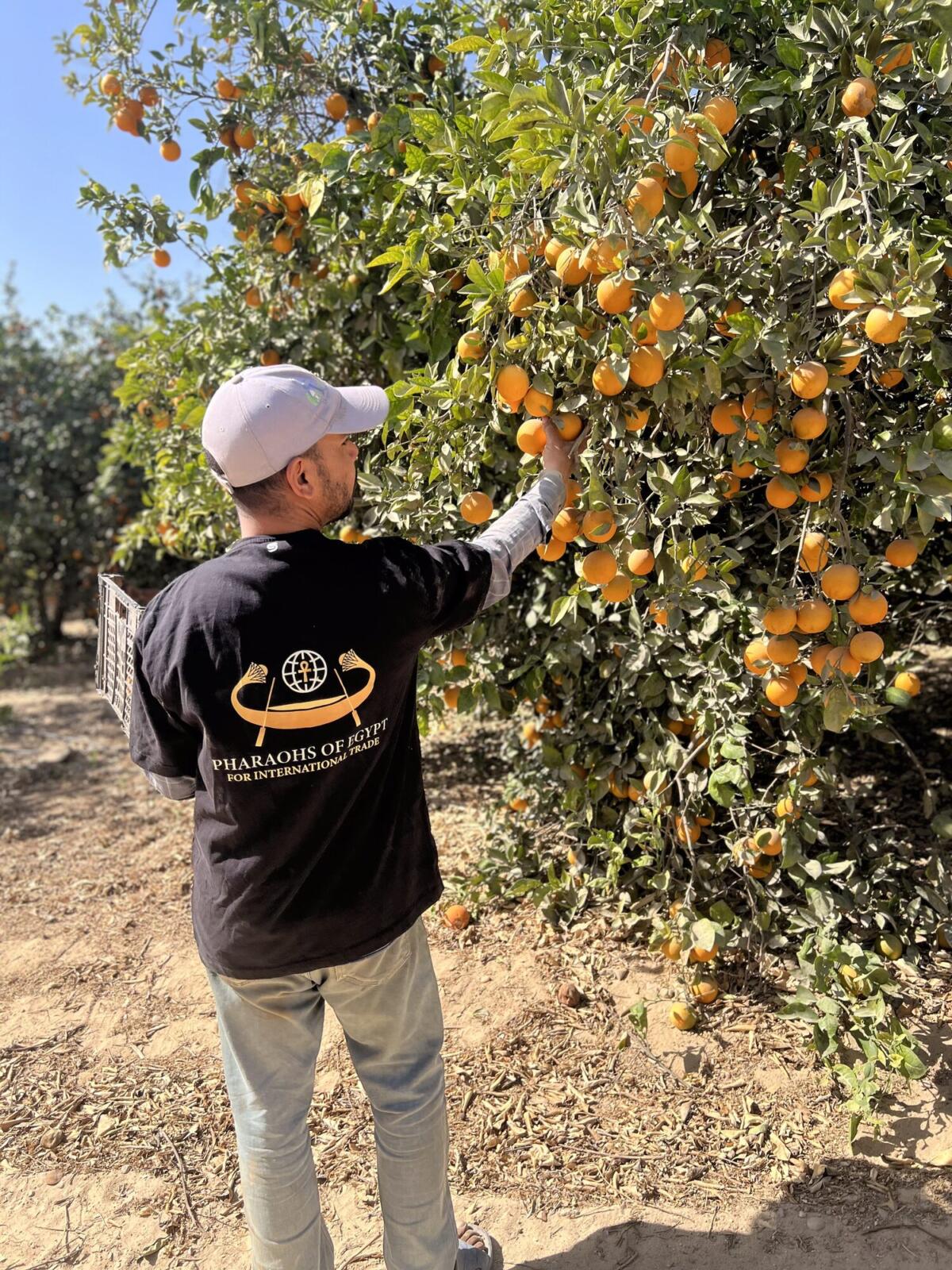
Egyptian Navel orange harvest spans five months, with quality characteristics evolving throughout the season:
December (Early Season): First Navel oranges reach export maturity. Brix levels typically 10-11°, developing sweetness. Color may be 60-70% orange. Pricing often at season-high due to limited initial supply and strong demand. Best for buyers prioritizing early market entry over peak sweetness.
January-February (Peak Season): Optimal quality window. Brix reaches 12-13°, full orange color development, perfect sugar-acid balance. Highest volumes available. Competitive pricing due to abundant supply. This is the recommended ordering window for quality-focused buyers.
March (Late Peak): Excellent quality continues. Brix remains strong at 11-12°. Fruit fully colored. Volumes begin declining as harvest progresses. Good value period balancing quality and availability.
April (Season End): Final Navel harvest. Quality remains acceptable but shelf life reduced. Peel may feel lighter as fruit loses moisture on tree. Pricing may increase as supply tightens. Last opportunity for Navel oranges before transitioning to Valencia season.
For detailed month-by-month planning across all citrus varieties, download our citrus seasonality calendar.
The three-month peak period (January-March) represents the optimal sourcing window for Egyptian Navel oranges. During these months:
Buyers seeking annual supply contracts should structure their Navel orange programs around this peak window, potentially booking volumes in advance to secure allocation during high-demand periods.
Understanding seasonal differences helps buyers select fruit appropriate for their market positioning:
| Characteristic | Early Season (December) | Peak Season (Jan-Mar) | Late Season (April) |
|---|---|---|---|
| Brix Level | 10-11° | 12-13° | 11-12° |
| Color | 60-70% orange | 85-95% orange | 95-100% orange |
| Firmness | Very firm | Firm | Slightly softer |
| Shelf Life | 10-12 weeks | 10-12 weeks | 6-8 weeks |
| Pricing | Firmer than peak season | Standard market | Variable |
| Availability | Limited | Abundant | Declining |
Egyptian Navel oranges are cultivated across several distinct agricultural regions, each contributing unique characteristics to the national harvest. Understanding regional differences helps buyers appreciate Egypt’s production capacity and diversity.
The Nile Delta represents Egypt’s historic citrus heartland, with Beheira and Sharqia governorates producing the majority of export-quality Navel oranges.
Beheira Governorate: Egypt’s largest citrus-producing region, accounting for approximately 35-40% of national production. The rich alluvial soils deposited by the Nile over millennia provide exceptional mineral content. Moderate temperatures and Mediterranean influence create ideal growing conditions. Well-established irrigation infrastructure supports consistent water supply.
Sharqia Governorate: The eastern Delta region contributes significant Navel production with slightly earlier harvest timing than Beheira. Sandy-loam soils produce fruit with excellent color development. Strong agricultural infrastructure and proximity to Cairo facilitate logistics.
Delta-grown Navel oranges are known for balanced sweetness, reliable quality, and excellent shelf life—the characteristics that built Egypt’s export reputation.
The Nile Valley south of Cairo provides a secondary production zone with distinct climatic characteristics:
Climate Differences: Warmer temperatures and lower humidity than the Delta accelerate fruit maturity. Upper Egypt Navels may harvest 2-3 weeks earlier than Delta fruit. Intense sunshine promotes high sugar development.
Quality Characteristics: Upper Egypt fruit often achieves slightly higher Brix levels due to heat accumulation. Smaller average fruit size compared to Delta production. Strong color development from temperature swings between day and night.
This region helps extend Egypt’s overall Navel season and provides additional volume during peak demand periods.
Egypt has expanded citrus cultivation into newly reclaimed desert areas, including portions of the Western Desert and Sinai approaches. These modern agricultural projects feature:
Reclamation area production is growing but still represents a smaller percentage of total Navel output compared to traditional regions. These areas help meet expanding global demand for Egyptian citrus.
Proper packaging protects fruit quality during the journey from Egyptian orchards to international destinations. Multiple packaging options accommodate different market requirements and logistics needs.
The 15kg telescopic carton is the international standard for citrus export, used for the vast majority of Egyptian Navel orange shipments:
The 15kg carton balances handling efficiency (manageable weight for workers) with logistics optimization (standard pallet configurations). A 40 ft high-cube reefer holds 21 pallets on our standard stow — 20 standard 100 x 120 cm pallets at 80 cartons each plus one Euro 80 x 120 cm pallet at 64 — which is 1,664 cartons.
Smaller 10kg cartons serve premium positioning and markets requiring reduced package weights:
Some European retailers specify 10kg cartons for certain product lines or smaller store formats.
For buyers requiring retail-ready packaging, several options are available:
Mesh Bags (8-10kg): PE mesh bags with handles, placed inside protective cartons for shipping. Excellent ventilation, allows visual inspection, supermarket-ready upon arrival. Growing preference in GCC markets.
Flow-Wrap Trays: Pre-counted oranges (4, 6, or 8 count) on trays wrapped in printed film. Higher cost but eliminates in-store repacking. Suitable for premium positioning.
Custom Branded Cartons: Private label programs available for buyers requiring own-brand packaging. Minimum order quantities apply for custom printing.
For comprehensive packaging specifications, materials standards, and labeling requirements, see our detailed packaging standards guide.
Maintaining proper temperature from harvest to destination is critical for delivering fresh, high-quality Navel oranges. Temperature abuse at any stage can significantly reduce shelf life and quality.
Egyptian Navel oranges require storage and transport temperatures between 5-7°C (41-45°F). This temperature range:
Warning: Temperatures below 3°C can cause chilling injury in Navel oranges, resulting in peel pitting, off-flavors, and accelerated decay after removal from cold storage. Always maintain minimum 5°C to avoid cold damage.
Relative humidity in cold storage and transport should be maintained at 85-90%. This level:
Modern reefer containers automatically maintain humidity within proper ranges when temperature is correctly set.
Under proper cold chain management, Egyptian Navel oranges achieve excellent shelf life:
Total potential shelf life of 8-12 weeks allows ample time for shipping, distribution, and retail sale while maintaining quality.
For comprehensive cold chain protocols, temperature monitoring systems, and troubleshooting guidance, refer to our cold chain guide.
Egyptian Navel oranges serve diverse international markets, each with specific requirements and preferences. Understanding market characteristics helps suppliers tailor offerings appropriately.
Europe represents the largest destination for Egyptian Navel oranges, with established trade relationships and clear quality expectations:
United Kingdom: Major supermarket chains (Tesco, Sainsbury’s, Asda, Morrisons) source Egyptian Navels for winter citrus programs. Class I quality, counts 48-64 preferred. GLOBALG.A.P certification mandatory for major retailers. Strong ethical sourcing requirements.
Netherlands: Key distribution hub for European citrus trade. Rotterdam-based importers redistribute throughout EU. Both Class I and Class II grades active. Strong demand for counts 48-72 for diverse channel distribution.
Germany: Quality-focused market with stringent specifications. Discounters (Aldi, Lidl) and premium retailers (Edeka, REWE) both active. Competitive pricing environment. GLOBALG.A.P essential, additional certifications valued.
EU Requirements: Phytosanitary certification, EU MRL compliance for pesticide residues, proper labeling with origin marking, and a certificate of origin in the form the importer’s customs broker requires. Duty treatment depends on the tariff line and the arrangement in force on the date of entry; your broker applies whatever rate your market allows.
Gulf Cooperation Council countries represent a growing market with premium positioning potential:
Saudi Arabia: Largest GCC market by volume. Strong demand during winter months. Preference for larger sizes (36-56 count) for family consumption and gifting. Price sensitivity varies by retail channel.
United Arab Emirates: Premium market with diverse expatriate population. Dubai serves as regional distribution hub. High-end retail demands Class I quality. Hospitality sector provides additional demand channel.
Qatar: Smaller but premium market. High per-capita citrus consumption. Strong quality expectations. Sailing time from Egypt is short, which helps arrival condition.
GCC Requirements: GSO standards compliance, Arabic labeling preferred (though English accepted), competitive with Turkish and South African suppliers during overlap periods.
Eastern European markets provide additional volume opportunities:
Russia: Significant market when trade conditions permit. Price-competitive environment. Both Class I and Class II grades accepted. Longer shipping time requires excellent cold chain management.
Poland, Romania, Bulgaria: Growing markets with developing retail sectors. Often served through Netherlands distribution. Increasing quality expectations as retail modernizes.
| Market | Preferred Sizes | Quality Grade | Key Certification | Indicative Sailing Time |
|---|---|---|---|---|
| UK | 48, 56, 64 | Class I | GLOBALG.A.P mandatory | 10-14 days |
| Netherlands | 48-72 | Class I & II | GLOBALG.A.P preferred | 10-14 days |
| Germany | 48, 56, 64 | Class I | GLOBALG.A.P mandatory | 12-14 days |
| Saudi Arabia | 36-56 | Class I | GSO compliance | 5-8 days |
| UAE | 40-56 | Class I | GSO compliance | 5-7 days |
| Russia | 48-72 | Class I & II | Phytosanitary | 18-21 days |
The sailing times above are indicative port-to-port ranges for planning, not a booked commitment. Ranges for every destination we serve, and the things that quietly add a week to a voyage, are in our transit times from Egyptian ports guide.
Meeting international certification requirements is essential for accessing premium markets and satisfying buyer specifications. PEI Trade maintains comprehensive certifications to serve global customers.
GLOBALG.A.P (Good Agricultural Practices) certification is the world’s leading farm assurance program and mandatory for supplying major European retailers.
What It Covers:
PEI Trade Status: All PEI Trade citrus farms maintain current GLOBALG.A.P certification with annual third-party audits. Certification numbers provided upon request for buyer verification through the GLOBALG.A.P database.
Every citrus export shipment requires a Phytosanitary Certificate issued by Egypt’s Ministry of Agriculture quarantine department, certifying:
PEI Trade coordinates all phytosanitary inspection and certification as part of standard export services. Certificates accompany each container shipment.
European Union regulations set maximum permitted levels for pesticide residues on imported produce. Egyptian Navel oranges must comply with EU MRLs to enter the European market.
PEI Trade Approach:
Test reports available upon request to verify MRL compliance before shipment.
PEI Trade combines owned agricultural operations, modern facilities, and export expertise to deliver consistent quality Egyptian Navel oranges to international buyers.
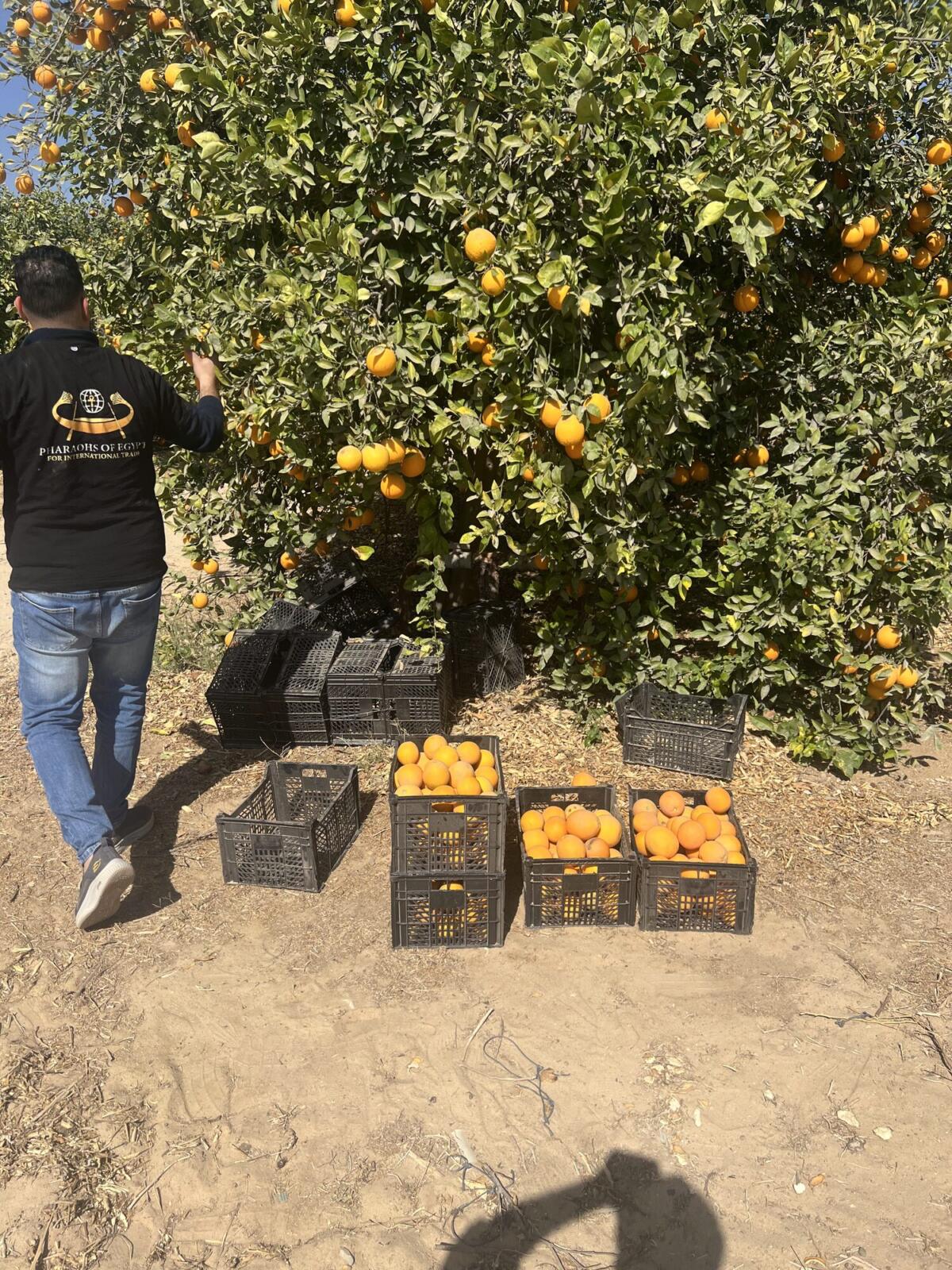
Owned Citrus Farms (500+ Hectares): Our directly managed orchards in prime growing regions ensure complete quality control from planting through harvest. Alongside our own orchards we work with contracted growers directly, without a trading layer in between, so volume and grade hold through the season.
Packhouse Facilities: Optical sorting grades for size, colour and visible defects, with manual inspection on the line behind it. Capacity 300 tons a day at peak.
Quality Assurance: Multi-stage inspection process from field selection through final carton verification. Brix testing ensures sugar content meets specifications. Cold chain monitoring throughout storage and shipping.
Export Experience: 15+ years serving European, GCC, and Asian markets. Established relationships with shipping lines ensure reliable container allocation. Documentation expertise prevents customs delays.
Certifications: GLOBALG.A.P certified farms and HACCP certified packhouse operations. Full traceability from orchard block to individual carton. Third-party audit reports available.
Ready to order? View our Oranges product page for quick specifications and inquiry options.
European retail buyers most commonly request counts 48, 56 and 64 per 15 kg carton. Count 48 at 300 to 330 g per fruit is the large-fruit end of retail, while counts 56 and 64 carry the bulk of standard retail placement. UK supermarkets often specify count 56 as their core size, and German discounters may accept wider ranges including count 72.
Transit from Alexandria or Port Said to Rotterdam is quoted per service and per routing rather than published here, because a direct sailing and a transhipment route are not the same number and both move with the season. The market table on this page gives indicative ranges for planning, and our transit times from Egyptian ports guide gives port-to-port ranges for every destination. PEI Trade books with major lines, confirms the routing and schedule on the booking, and provides tracking so buyers can follow the shipment.
Yes, samples can be arranged for buyers evaluating Egyptian Navel oranges for a new supply programme. Air-freight samples are available with costs normally carried by the buyer. For established customers, sample cartons can travel with a regular shipment to check new-season fruit.
Terms are agreed per contract rather than published, because they depend on the buyer, the volume and the season. The instruments available — letters of credit, telegraphic transfer, cash against documents and open account — and who carries the risk under each are set out in our payment methods reference.
Yes, private label and custom packaging are available for buyers with consistent volume. Custom carton printing carries a minimum per design, because the board is printed in a run, and it needs lead time before the first shipment. Standard PEI Trade cartons are available for all order sizes.
Ready to source Egyptian Navel oranges for your market? Send PEI Trade’s export desk your specification and we will come back with a quotation.
Still shortlisting suppliers? Our ranked guide to orange export companies in Egypt sets out the five criteria worth qualifying any Egyptian exporter on.
To request a quote, please provide:
Contact PEI Trade:
Email: [email protected]
WhatsApp: +20 109 911 1918
Office: +20 109 911 1918
Website: www.peitrade.com
Send us your specification and you get a price back, or message the desk on WhatsApp. Our team is ready to support your citrus sourcing needs from inquiry through delivery.