Address
Work Hours
Monday to Friday: 7AM - 7PM
Weekend: 10AM - 5PM

Address
Work Hours
Monday to Friday: 7AM - 7PM
Weekend: 10AM - 5PM


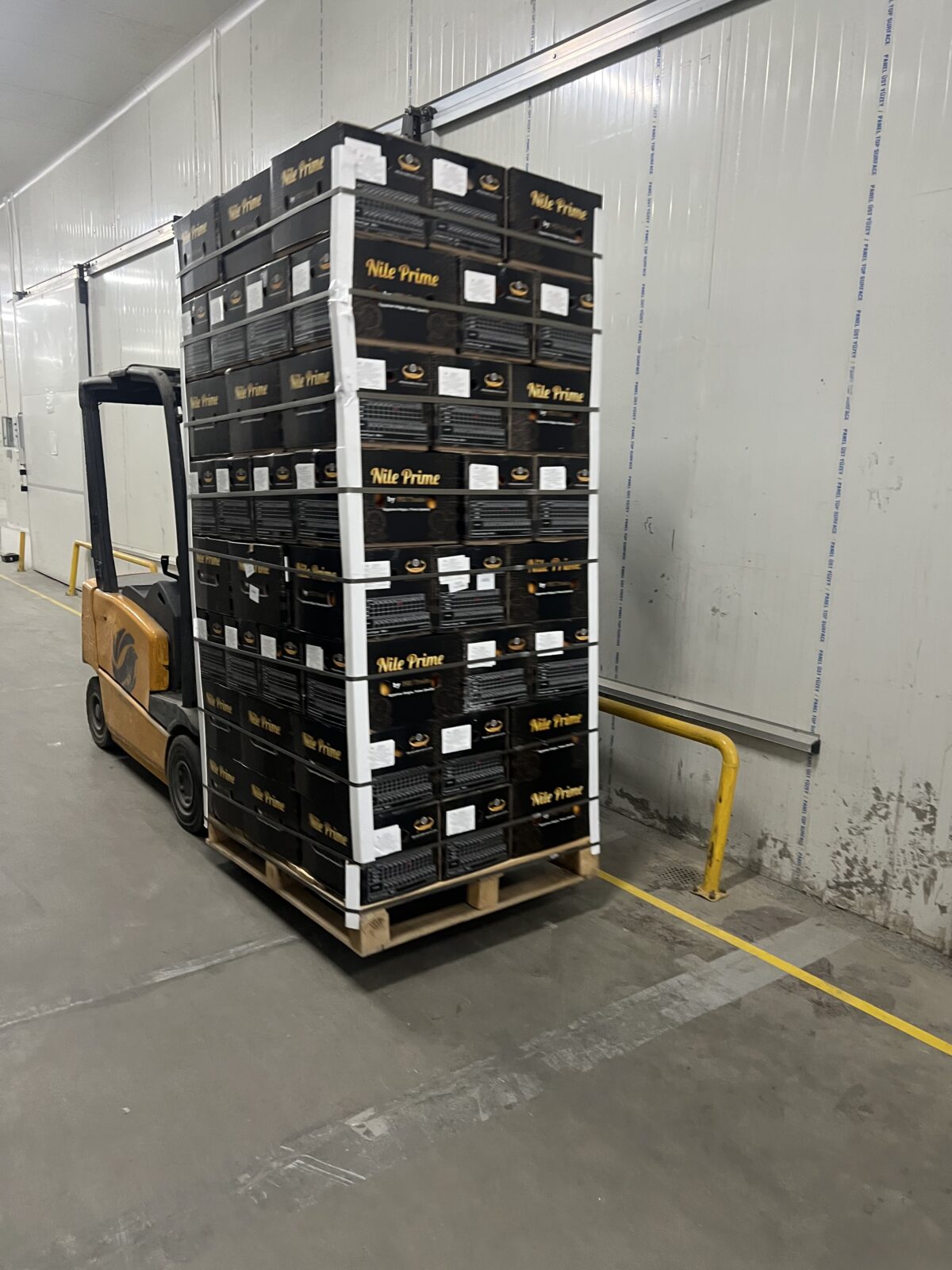
This page does not publish an orange price, because a published price is wrong within the week. It explains what an Egyptian orange FOB offer is built from, what moves it inside a single season, and the nine things a complete quote has to state before two offers can honestly be compared.
This page does not contain a price for Egyptian oranges, and that is deliberate. A fresh-produce price is a weekly number set by the size curve coming off the trees, the freight position that month and the exchange rate on the day the offer is written. Any page that publishes a fixed figure for a season is publishing a number the seller cannot hold, and a buyer who plans against it will be wrong by the time the container is booked. What does not move week to week is the structure of the price: the cost lines it is built from, the variables that push each line up or down, and the fields a quote has to state before you can compare it with another one. That is what this page covers.
An FOB offer at an Egyptian port is not one number, it is nine or ten cost lines added together. A buyer who knows which lines are in there can tell the difference between an offer that is cheap because the exporter is efficient and one that is cheap because something has been left out.
| Cost line | What it pays for | What moves it |
|---|---|---|
| Fruit at the farm gate | The orchard price per ton of unsorted fruit | Crop volume, week within the season, competing demand from the juice industry and the domestic market |
| Pack-out loss | The fruit that enters the packhouse and does not leave in an export carton | The single most underestimated line. Rind condition, the calibre you asked for against the calibre the orchard is producing, and how tight your specification is |
| Packhouse operation | Drenching, waxing, drying, grading, sizing, labelling, labour | Largely fixed per ton. Rises when a specification needs hand sorting or a non-standard label |
| Carton, liner and label | The packaging itself | Board price, whether the pack is telescopic or one-piece, and whether the carton carries your brand rather than a generic one |
| Pallet, corner boards and wrap | The unit load | Pallet footprint, whether heat-treated wood is required for the destination, and whether pallets are returned or sold |
| Pre-cooling and cold storage | Pulling field heat out before the container is stuffed | How long the fruit waits for a vessel. A delayed sailing converts this from a small line into a large one |
| Inland haulage to port | Reefer truck from packhouse to terminal | Distance from the growing region to the loading port, fuel, and whether the trip is one way or round |
| Port and terminal charges | Gate, handling, plug-in, terminal handling at origin | Which port, and congestion in peak weeks |
| Documents and inspection | Phytosanitary certificate, certificate of origin, any residue analysis or third-party inspection the destination requires | The destination market, not the fruit. Some markets require documents that others do not |
| Exporter margin | The exporter’s own compensation and risk | Competition, and how much of the quality risk the exporter is carrying under the payment terms agreed |
Two lines in that table deserve a buyer’s attention more than the rest. Pack-out loss is where a tight specification becomes expensive without anyone raising the per-carton price: ask for a narrow count range in a season when the orchard is producing a wide one and the exporter either charges more or quietly ships you the wider range. Pre-cooling and cold storage is where a schedule slip becomes a cost — fruit waiting for a vessel is fruit being paid for twice.
The commonest mistake in comparing two orange offers is comparing an FOB number with a CFR number and concluding one exporter is cheaper. The Incoterm decides which of the cost lines above, plus which of the sea-freight lines, are inside the figure you are looking at. FOB stops at the ship’s rail at the Egyptian port. CFR adds the ocean freight to your named destination port. CIF adds marine insurance on top of that. None of the three includes import duty, destination terminal handling, customs clearance or delivery to your warehouse, and none of them is a landed cost.
We have written the transfer of cost and risk out in full elsewhere rather than repeat it here — see where cost and risk actually transfer on FOB, CFR, CIF and DAP, and, for the freight half of a CFR number, how to read an ocean freight quote. The single operational rule: never compare two offers until both are restated on the same Incoterm and the same named port.
1. Where you are in the season. Citrus is not priced flat across its window. The opening weeks of a variety and the closing weeks of it behave differently from the middle, because in the opening weeks volume is short and in the closing weeks the size curve and the rind have moved on. A buyer asking for the same specification in week two and week twelve is asking for two different things.
2. The count you ask for against the count the orchard is making. Orange price is quoted per carton, but the carton holds a count, and the orchard produces a distribution of sizes rather than a single one. Whichever counts are scarce that week carry a premium over the ones that are abundant, and the premium is not stable — it inverts between seasons. This is the variable that most often explains why two exporters quoting the same variety give different numbers.
3. Variety. Navel and Valencia are different products with different windows, different rind behaviour and different buyers, and they do not track each other. See the Navel guide and the Valencia guide for what separates them.
4. Freight season. Ocean freight out of Egypt is not constant through the year, and reefer capacity tightens when several origins are shipping at once. On a CFR or CIF offer this moves the headline number without the fruit changing at all.
5. The currency the offer is written in. The cost lines in the table above are largely incurred in Egyptian pounds and the offer is usually written in dollars or euros. An offer’s validity period exists mainly because of this.
An offer missing any of these is not a cheaper offer, it is an incomplete one. The gap is where the disagreement will happen later.
| Field | If it is missing |
|---|---|
| Variety, named | “Oranges” is not a specification. Navel and Valencia arrive in different months and behave differently on the shelf |
| Quality class | The tolerance for defects is undefined, so an arrival dispute has no reference point. See quality classes and their tolerances |
| Count or calibre range | You have agreed a price per carton without agreeing how many fruit are in it |
| Carton format and net weight | A per-carton price is not comparable between two different carton weights. Convert both to a per-kilo basis before comparing |
| Pallet configuration and cartons per container | The freight per carton is undefined, so a CFR number cannot be checked. Our standard stow is 21 pallets in a 40 ft high-cube reefer — 20 standard 100 x 120 cm at 80 cartons plus one Euro 80 x 120 cm at 64 — which is 1,664 cartons and 24,960 kg net |
| Incoterm and the named port | “CIF” without a port is not an offer. The port is half the number |
| Shipment window | A price with no shipment week is a price for fruit that may not exist yet |
| Offer validity | An offer with no expiry is not being held for you, whatever it looks like |
| Payment terms | Terms are part of the price. See TT, letters of credit, CAD and how risk is shared |
If you are still deciding who to ask, our ranked guide to orange export companies in Egypt sets out the criteria to qualify a supplier on before the numbers arrive.
Five questions, in this order. They are cheap to ask and they resolve most apparent price gaps without anyone moving a number.
There is one more structural question that sits above all five: whether you are buying at a fixed price at all, or on a consignment or price-after-sale basis, which changes who carries the market risk between loading and sale. We have set the three models out side by side in pricing models on Egyptian produce contracts.
PEI Trade exports Egyptian citrus and is not a neutral party to a price negotiation. We do not publish a price list, and we would treat any orange price list published for a whole season as a number that cannot be held. What is on this page is the structure of the offer, not the level of it. For a figure against your own variety, count, carton and shipment week, ask us for a quotation.
Send the variety, the count range, the carton format, the destination port, the shipment weeks you need and the payment terms you work on, and we will come back with an offer that states all nine fields above. If part of that is not settled yet, send what you have and we will tell you which of the missing fields will move the number most. Send your specification here, email [email protected], or message the desk on WhatsApp.
Because a fresh-produce price is a weekly number. It is set by the size curve coming off the trees, the freight position that month and the exchange rate on the day the offer is written. A fixed figure published for a whole season is a number the seller cannot hold, and a buyer planning against it will be wrong by the time the container is booked.
Most often the count range: the orchard produces a distribution of sizes, and whichever counts are scarce that week carry a premium over the ones that are abundant. After that it is the Incoterm and the carton net weight. Restate both offers on the same Incoterm, the same named port and a per-kilo basis before concluding that one is cheaper.
No. FOB stops at the ship’s rail at the Egyptian port. CFR adds the ocean freight to your named destination port and CIF adds marine insurance on top. None of the three includes import duty, destination terminal handling, customs clearance or delivery to your warehouse, so none of them is a landed cost.
A complete offer states the variety, the quality class, the count or calibre range, the carton format and net weight, the pallet configuration and cartons per container, the Incoterm with a named port, the shipment window, the offer validity and the payment terms. An offer missing any of those is not a cheaper offer; the gap is where the disagreement happens later.
Because most of the cost lines behind it are incurred in Egyptian pounds while the offer is written in dollars or euros. The validity period exists mainly to bound that exposure, and a quotation with no expiry is not being held for you whatever it looks like.
