Address
Work Hours
Monday to Friday: 7AM - 7PM
Weekend: 10AM - 5PM

Address
Work Hours
Monday to Friday: 7AM - 7PM
Weekend: 10AM - 5PM


What an export carton specification should state for Egyptian produce: board grade and flute, carton style, vent area, net weight and stacking strength, crop by crop.
Export carton specifications decide whether a pallet arrives square or collapsed. The carton is the only structural element between the fruit and eleven days at sea, and it is the element most often left vague in a contract. This page sets out what the specification should state for Egyptian produce, crop by crop, so the packhouse and the buyer are working from the same sheet.
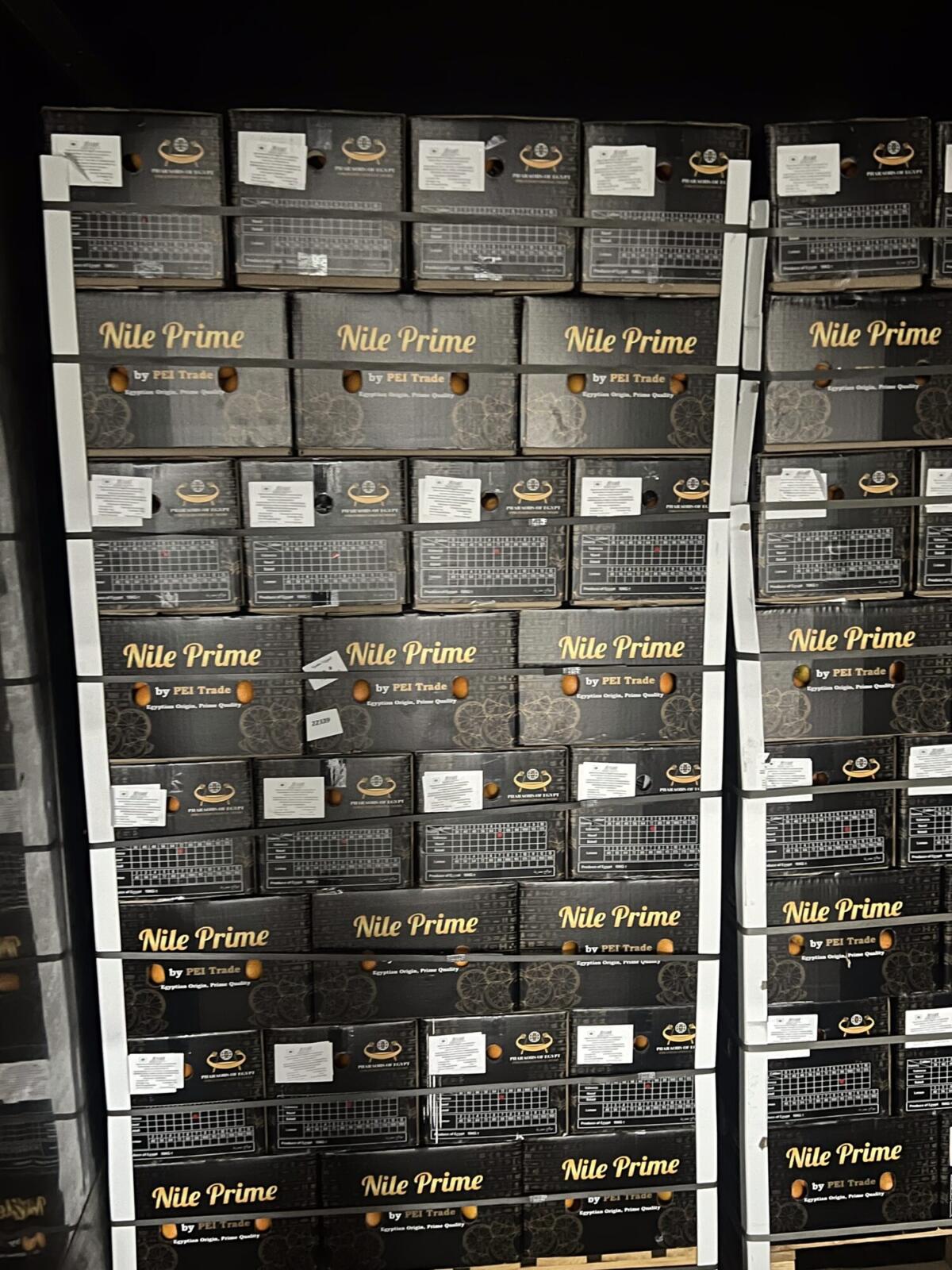
Six fields cover almost every dispute: net weight, carton style, board grade and flute, external dimensions, vent area, and the pallet pattern the carton is designed for. Omit the pallet pattern and you get a carton that fits nothing. Omit the vent area and forced-air cooling runs slow at the pallet core.
| Crop | Net weight | Carton style | Board | Vent area |
|---|---|---|---|---|
| Orange, Valencia and Navel | 15 kg | Two-piece telescopic | C flute single wall | 4 to 6 percent of side wall |
| Mango, Keitt and Kent | 4 to 6 kg | One-piece die-cut with tray | B flute or BC double wall | 5 percent, ends and sides |
| Pomegranate, Wonderful | 4 to 5 kg | Open-top with liner | B flute single wall | 5 percent |
| Table grape | 4.5 to 5 kg | Open-top, punnets or bags inside | B flute, wax-resistant coating | 2 to 3 percent, film does the rest |
| Onion and garlic | 10 to 20 kg | Mesh bag or ventilated carton | BC double wall if cartoned | Open mesh, or 8 percent |
| Sweet potato | 10 to 15 kg | Telescopic or bulk bin | BC double wall | 6 to 8 percent |
A reefer runs at 90 to 95 percent relative humidity for the whole voyage. Corrugated board absorbs that moisture and loses a substantial share of its compression strength before the container is opened. A carton tested dry in the factory is not the carton that reaches the border. This is why single wall B flute is adequate for a 4 kg mango carton stacked eight high, and why a 15 kg citrus carton stacked ten high is normally specified in C flute with a moisture-resistant coating, or in BC double wall on long routes.
Ask the supplier for the edge crush value and the box compression value, and ask whether they were measured conditioned at high humidity or dry. The second answer is the one that matters. Corner boards and vertical strapping recover part of the loss, but they do not substitute for board grade.
Vent holes are worth nothing if the carton above sits with its vents offset. Forced-air cooling pulls air horizontally through the pallet, so the specification should state vent position as well as vent area, and the stacking pattern should be column stack rather than interlocked wherever cooling speed matters. Interlocking gains stability and loses airflow. On crops that are pre-cooled before loading, airflow wins.
Vent area on the ends of the carton matters more than on the sides, because the ends face the airflow once cartons are stacked in rows. A common working target is 5 percent of the panel area, split between two or four openings rather than one large cut, which would weaken the panel.
The carton spec belongs in the product specification signed before the first order, alongside size, grade and tolerance. Changing it later means a new print run and a new die, which on most Egyptian board suppliers carries a minimum order in the tens of thousands of units. Agreeing it once, early, is cheaper than discovering at loading that the buyer expected a telescopic lid.
Two related references: citrus export packaging standards covers the citrus formats in detail, and palletisation and ISPM 15 covers what happens once the cartons leave the packing station.
PEI Trade is the exporter, not a neutral reviewer. To request a carton specification sheet for a specific crop and destination, message the export desk on WhatsApp at +20 10 9911 1918 with the crop, net weight and destination port.
