Address
Work Hours
Monday to Friday: 7AM - 7PM
Weekend: 10AM - 5PM

Address
Work Hours
Monday to Friday: 7AM - 7PM
Weekend: 10AM - 5PM


Which cooling method each Egyptian crop needs before it goes into a reefer, with target pulp temperatures, seven-eighths cooling times and the moisture loss each method costs.
Forced-air cooling removes field heat in two to eight hours by pulling chilled air through the vents of a stacked pallet, and it is the method most Egyptian fruit needs before a reefer door closes. The reefer itself is not a cooler. A 40 ft reefer machine is sized to hold a temperature, not to pull 28 kg of mango down from 32 C, so fruit loaded warm arrives soft whatever the set point says. Cooling method, pulp temperature at dispatch and cooling time are the three numbers an importer should ask for by name.
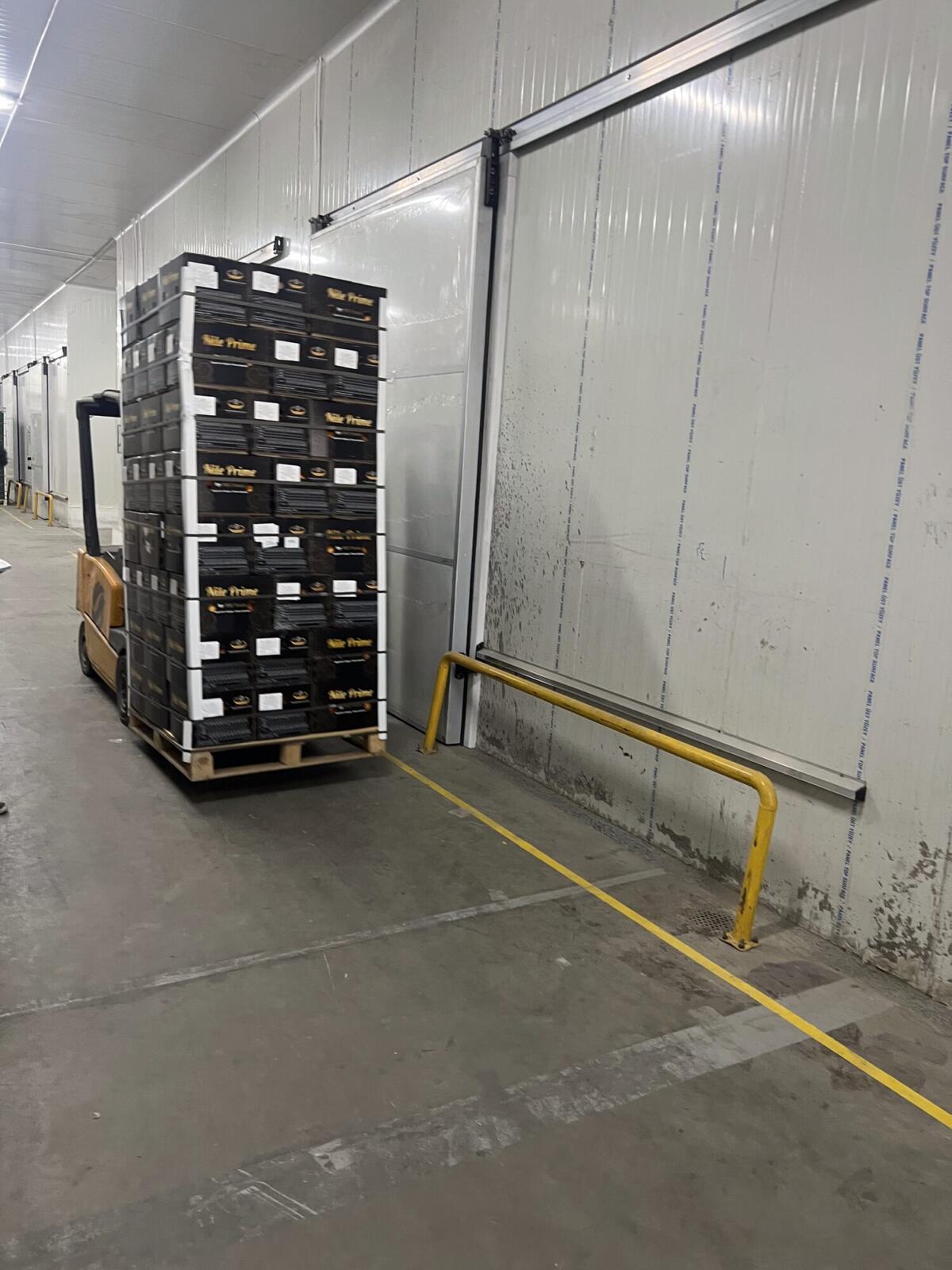
Forced-air cooling suits vented cartons of fruit: mango, table grape, pomegranate, fig, strawberry and stone fruit. Hydro-cooling runs chilled water over the product and works in twenty to forty minutes, but only on crops that tolerate wetting, mainly green beans, carrots, broccoli and sweet corn. Room cooling means standing pallets in a cold store and waiting twenty-four to seventy-two hours, which is acceptable for roots, tubers and cured bulbs and unacceptable for soft fruit. Vacuum cooling drops leafy product to temperature in under thirty minutes by boiling off surface moisture at low pressure, and it costs roughly one per cent of weight for every 5 to 6 C removed.
| Crop | Method | 7/8 cooling time | Pulp temp at dispatch |
|---|---|---|---|
| Mango (Keitt, Kent, Naomi) | Forced-air | 6 to 9 hours | 10 to 12 C |
| Orange, Navel and Valencia | Room or forced-air | 24 to 48 hours | 4 to 6 C |
| Mandarin, Murcott | Room | 24 to 36 hours | 5 to 8 C |
| Table grape | Forced-air | 4 to 6 hours | 0 to 1 C |
| Pomegranate, Wonderful | Forced-air | 8 to 12 hours | 5 to 7 C |
| Strawberry | Forced-air | 1 to 2 hours | 0 to 1 C |
| Green bean, sugar snap | Hydro-cooling | 20 to 40 minutes | 5 to 7 C |
| Iceberg lettuce, fresh herbs | Vacuum | 20 to 30 minutes | 1 to 2 C |
| Potato | Room | 48 to 72 hours | 7 to 9 C |
| Sweet potato (after curing) | Room | 48 to 72 hours | 13 to 14 C |
| Onion and garlic (cured) | Ambient or room | Not applicable | 0 to 2 C or ambient dry |
Forced-air cooling only moves air through the fruit if the cartons let it. The working target is a total vent area of about 5 per cent of the carton face, with the vents aligned when cartons are stacked so a continuous channel runs through the pallet. Misaligned cartons, a shrink-wrapped pallet or a pallet skin applied before cooling will all defeat the tunnel, and the outer cartons then cool while the core stays warm. A pulp thermometer pushed into a carton at the centre of the pallet, not at the corner, is the only honest check.
Three clauses cover most of the risk. First, name the cooling method and the maximum pulp temperature at gate-in, measured at the pallet core. Second, require the cooling record, meaning start time, end time and the temperature trace, to travel with the shipping documents. Third, set the interval between harvest and the start of cooling. On mango and fig that interval should be under six hours; on citrus, twenty-four hours is workable because the peel buffers the fruit. Once cooling is done, the reefer takes over, and the set point matters. Our reference on reefer set points by crop covers carrying temperature, humidity and fresh air exchange, and the Egyptian produce export calendar shows when each crop is available to book.
PEI Trade is the exporter, not a neutral reviewer. The cooling times above reflect our own packhouse practice and standard postharvest ranges, and they will vary with tunnel design, ambient temperature and carton format.
Send us the crop, the destination port and the month you want to load, and we will come back with the cooling method used, the pulp temperature we can commit to at gate-in and the carton format that carries it. WhatsApp +20 10 9911 1918.
