Address
Work Hours
Monday to Friday: 7AM - 7PM
Weekend: 10AM - 5PM

Address
Work Hours
Monday to Friday: 7AM - 7PM
Weekend: 10AM - 5PM


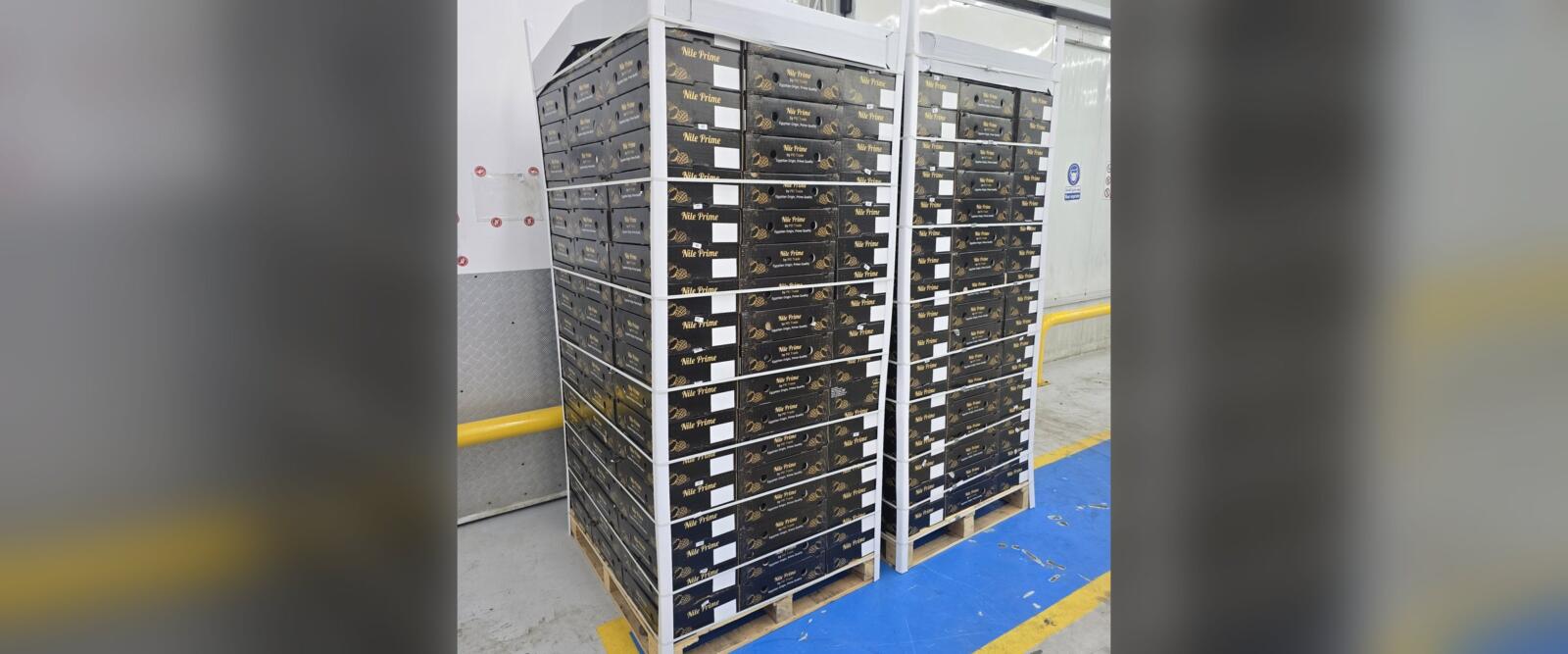
What moves an Egyptian mango FOB quote — variety, count, grade, season and freight — and how to get a current, firm number for your container.
Last updated: 28 July 2026. This page does not publish price figures. Egyptian mango FOB moves every week with variety, count, grade and vessel space. For a firm number against your size, packing and loading week, ask us directly.
Most enquiries we receive start with “what is the price of Egyptian mango per kg?” — and there is no single answer, because the same container differs by variety, fruit size, carton format and which week of the season it loads. What follows is the honest version: how a quote is built, the four factors that move it, and what to send us so you get a real number back the same working day.
Three conventions matter before you compare any two offers:
Mango FOB moves week to week with variety, count, grade, available volume and vessel space. A number printed here in August is misleading by October, and a supplier who publishes a fixed figure is either quoting stale fruit or quoting something they cannot hold. So we do not publish one.
What we can do is tell you what moves the number, and give you the current one for your variety, count and destination port on the same working day you ask.
Two things worth adding on variety. Egypt’s premium indigenous varieties — Ewais (Owaisi) and Sokary above all — are priced on scarcity and reputation rather than on calibre, and the exportable volume is small relative to demand from the Gulf and from diaspora buyers, so they clear at the top of the market when they are available at all. And Tommy Atkins, the durable early variety, sits at the value end for the opposite reason: it is the volume traveller. If you are choosing between varieties rather than pricing one you have already picked, the Egyptian mango varieties guide compares them on taste, fibre, shelf life and target market.

This is the biggest single lever. The first and last containers of any variety carry a scarcity premium over the same fruit at peak volume — how much depends entirely on how thin that particular week is, which is why we quote it live rather than publish a multiplier. The direction is well documented: Egyptian exporters have been deliberately tilting their programmes toward late varieties precisely because late-season demand and prices are strongest. Late Keitt out of Bahariya in October and November is the clearest case — the same variety as August Keitt, at a materially higher number, because almost nothing else is left in the country. Plan against the Egyptian mango season calendar if your buying window is flexible.
Larger counts cost more per kilogram, not less. Large, uniform, unblemished fruit is the scarce part of any block, so a low count per carton prices above a high count of the same variety and grade. Export programmes generally work above 300 g, and Kent — which frequently reaches 450 to 700 g — carries a size premium for exactly that reason. Class II and processing-grade fruit sits well below export grade and is worth asking about if your market tolerates it.
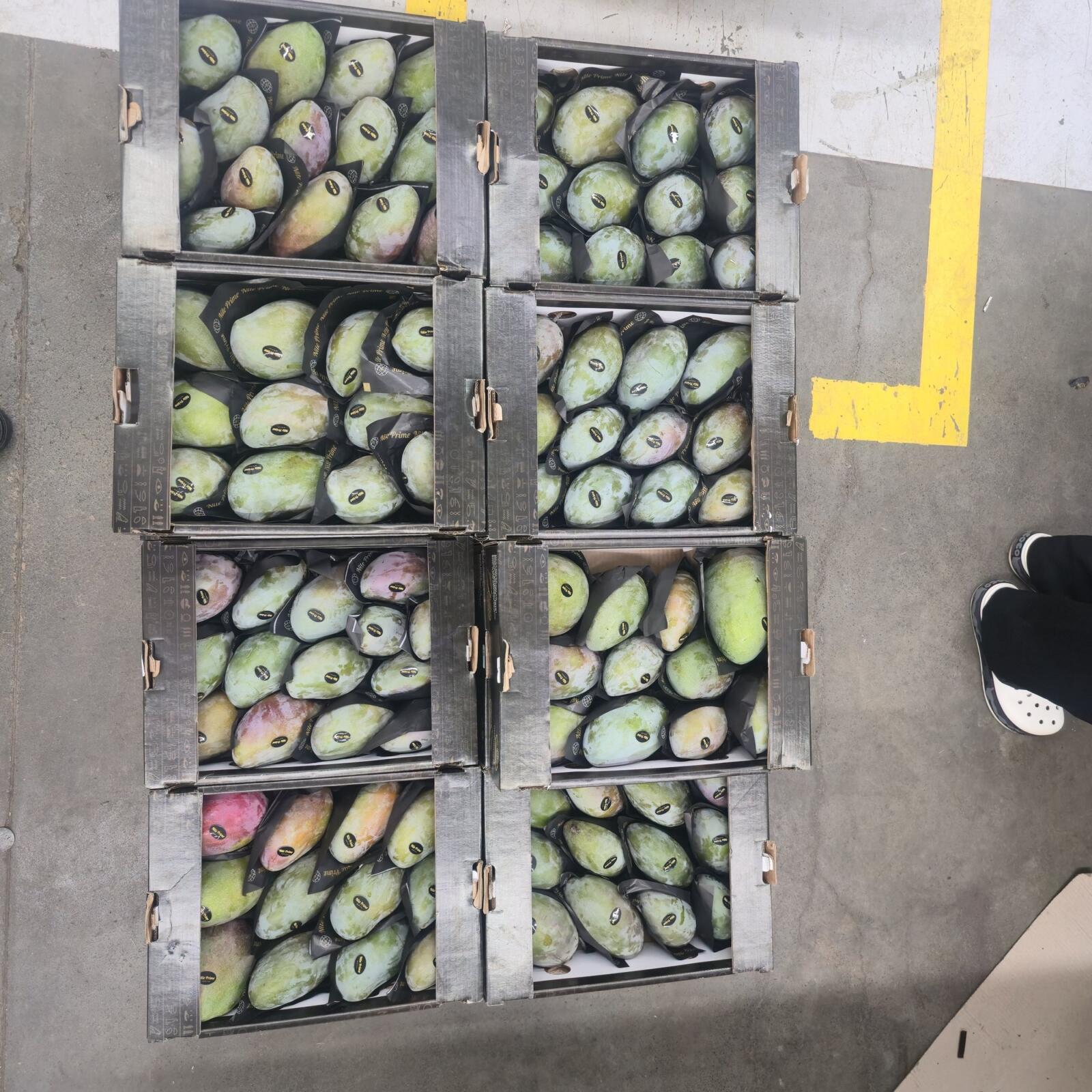
Open-top telescopic cartons, single-layer trays with fruit nets, printed retail-ready packaging and pallet configuration all sit inside the per-kg number. Single-layer tray packing for retail costs more per kilogram than a standard bulk-packed carton, because it uses more material and more labour per kilo of fruit — the uplift is quoted per specification rather than as a standing figure. If you need your own brand printed on the carton, say so at enquiry stage: it affects both price and lead time.
Sea freight in a 40 ft high cube reefer is the default and the cheapest per kg — 20 industrial pallets, 18.7 to 20.8 tonnes of mango depending on carton weight, as set out in our reefer loading guide. Air freight is used for Ewais and Sokary into the Gulf early in the season and multiplies the landed cost, but it buys days instead of weeks. Destination also carries its own compliance cost — treatment, inspection and documentation requirements differ by market and are covered in the export requirements guide.
The Egyptian season runs from around July to early November, with the bulk of volume in August and September and late varieties extending shipments into October and November. Supply drives the curve.
| Month | Varieties at volume | Supply position | Buyer note |
|---|---|---|---|
| June | None at export volume | Pre-season — the export season has not opened | No commercial programmes; the first workable volume is July |
| July | Ewais, Zebda, Sokary, Tommy Atkins | Volume building quickly | The first workable sea-freight bookings |
| August | Zebda, Sokary, Naomi, Kent, early Keitt | Peak — most varieties at full volume simultaneously | Widest choice and best value; book programmes here |
| September | Kent, Naomi, Keitt | Still peak, but local varieties finishing | The market shifts to the international types |
| October | Keitt, late Kent | Tightening as the country runs down | Bahariya carries supply; premium for a guaranteed late position |
| November | Late Keitt only (Bahariya) | Tightest of the season | Very limited; confirm the block before you sell forward |
For the volume and destination-market context behind this curve — Russia at close to 30% of Egypt’s fresh mango exports, the Gulf led by Saudi Arabia, and Rotterdam as the EU gateway — see the 2026 Egyptian mango export report.
Send these six lines and you will have a real number the same day:
If any of that is still open, the Egyptian mango export guide walks through the decisions in order.
We do not publish a per-kg figure, because it changes every week. What a kilogram of Egyptian mango costs depends on variety, fruit size or count, grade, carton format, loading week and destination port, and the same container prices differently at the peak of the season and in the shoulder weeks. Send us the variety, count range, carton format, quantity, loading week and destination port and we will give you the current FOB or CFR number the same working day.
We do not publish a per-tonne figure. Per-tonne quoting is common for processing-grade fruit, while retail programmes are usually quoted per kg or per carton, and in every case the number moves week to week with variety, calibre, grade, available volume and vessel space. Tell us the variety, count, quantity in tonnes or reefers, loading week and destination port, and we will quote the current number against that specification.
August and September carry the bulk of the season’s volume, with the largest number of varieties at full supply simultaneously. July and November sit at the opposite end because only one or two varieties are picking and volume is thin, which is why exporters increasingly time their programmes toward the late window where demand and prices are strongest.
Yes. Large, uniform, blemish-free fruit is the scarce fraction of any harvest, so lower counts per carton price above higher counts of the same variety and grade. Export programmes generally work above 300 g, and Kent frequently reaches 450 to 700 g. If your market does not need large fruit, moving down a size code is one of the easiest ways to reduce your landed cost.
We quote FOB an Egyptian port, per kilogram of net fruit weight, unless you ask otherwise. CFR and CIF add ocean freight and insurance, which vary by destination and by shipping line, and are quoted separately once we know your discharge port.
Weekly, and sometimes faster during the shoulder weeks. That is exactly why this page carries no figures: anything printed here would be out of date before you could use it. Ask for a live quote before you commit to a sale.
Tell us the variety, size, carton format and loading week, and we will come back with a firm FOB or CFR figure valid for that week — plus what is actually available in the packhouse right now.
Disclaimer: this page publishes no price figures. Any quote we issue is valid only for the loading week stated, excludes freight, insurance, inspection and destination charges unless stated, and must be confirmed in writing before contracting.
