Address
Work Hours
Monday to Friday: 7AM - 7PM
Weekend: 10AM - 5PM
Address
Work Hours
Monday to Friday: 7AM - 7PM
Weekend: 10AM - 5PM


Egypt is a major winter supplier of fresh peppers — glossy, blocky sweet bell peppers (capsicum) in green, red, yellow and orange, plus chili and pointed types — reaching the EU, UK, Russia and the Gulf when European production has slowed. Backed by a strong protected-cultivation (greenhouse) sector, Egypt supplies fresh peppers counter-seasonally and dried products year-round. This guide is the hub for importers: what Egypt grows, when it ships, the markets it serves, the specifications buyers ask for and the compliance behind every consignment.
Quick answer: Egypt is among the world’s top pepper (Capsicum) producers — roughly the sixth-largest globally (FAO, 2023), with sweet-pepper output on the order of 450,000 tonnes a year — and a significant fresh exporter. The main export is the sweet bell pepper (capsicum) in green, red, yellow and orange, alongside chili / hot peppers and dried products (paprika, chili). The fresh season runs roughly October/November to May/June (peak November–February), counter-seasonal to Europe; greenhouse production extends it. Fresh peppers trade under HS code 0709.60 and dried Capsicum under HS 0904.21/0904.22. Peppers are chilling-sensitive and stored around 7–8°C. Markets include the EU, UK, Russia and the Gulf. (Sources: FAO, 2023; ITC Trade Map, 2025.)
| Type | Character | Main market |
|---|---|---|
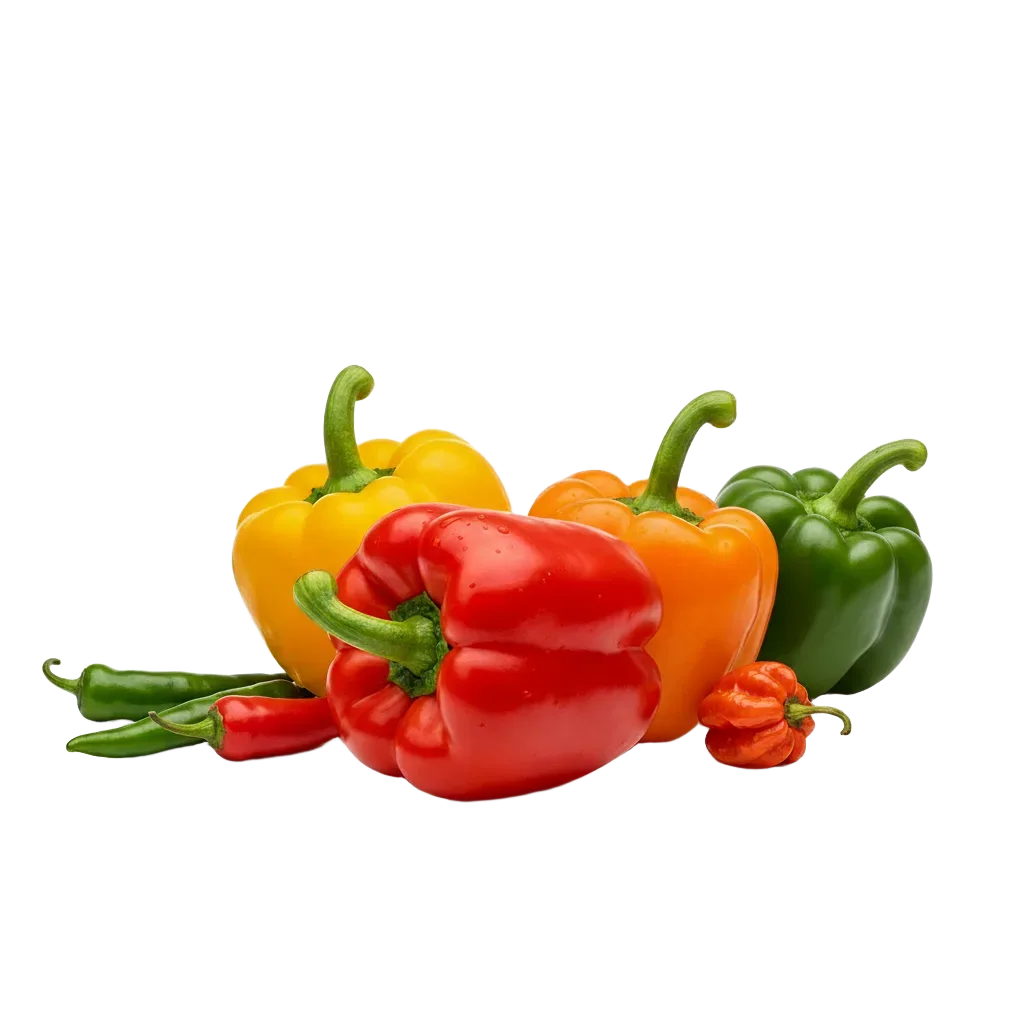
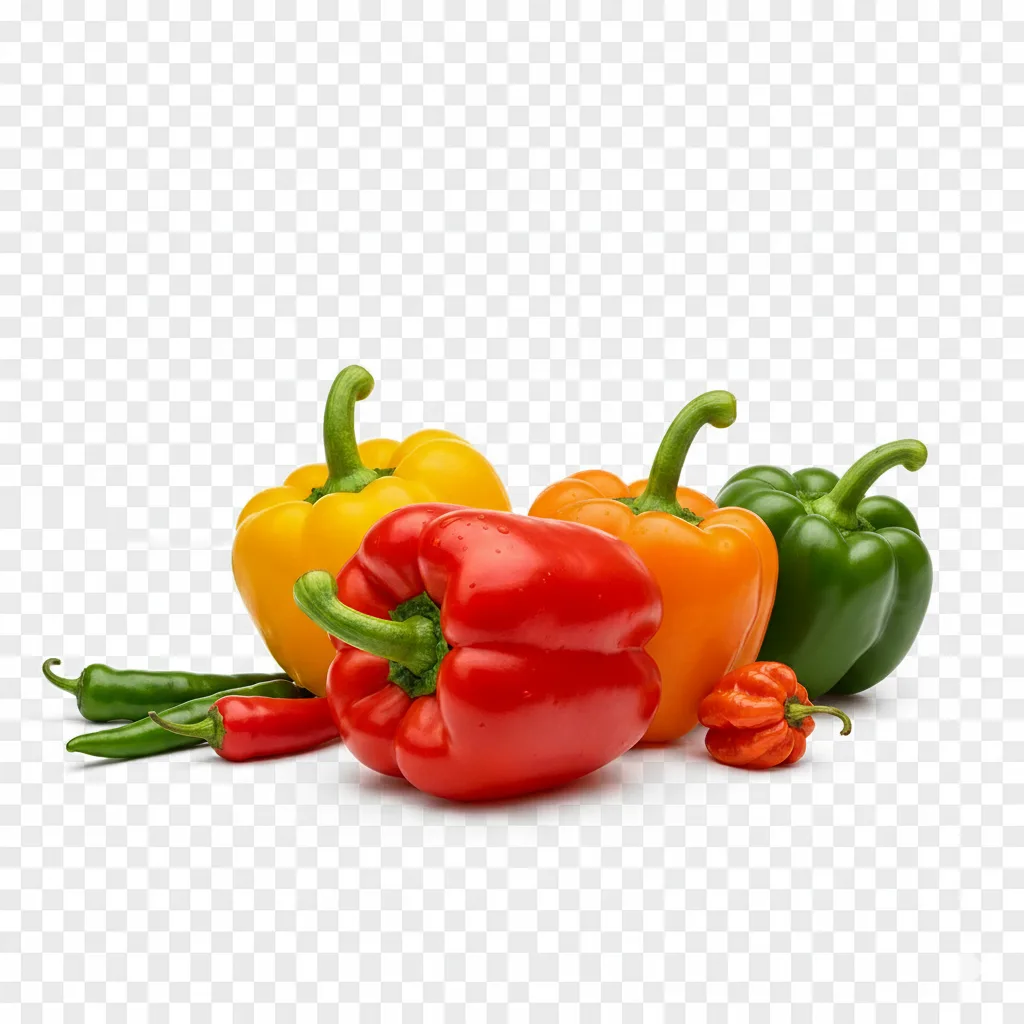
| Sweet bell (capsicum) | Blocky; green, red, yellow, orange | EU, UK, Russia, Gulf (the mainstay) |
| Sweet pointed (Ramiro type) | Elongated, sweet | EU specialty retail |
| Chili / hot peppers | Green & red, various heat levels | EU, Gulf, ethnic markets |
| Dried (paprika, chili) | Dried whole / crushed / ground | Food processing — global |
Egyptian peppers are exported fresh (bell, pointed and chili) and dried — as paprika, chili flakes and powder — for the food-processing industry. Fresh bell peppers are the largest segment; dried products add year-round value.
The fresh export season runs from about October/November to May/June, peaking November to February — the European off-season. Greenhouse (protected) production keeps quality high and stretches availability. Growing is concentrated in reclaimed-desert greenhouse zones such as Nubaria, Beheira and Ismailia. Exact windows shift year to year with planting and weather.
Fresh peppers are traded under HS code 0709.60; dried Capsicum under HS 0904.21/0904.22.
Fresh peppers require a phytosanitary certificate (key pests include false codling moth, Thaumatotibia leucotreta, and Mediterranean fruit fly, plus thrips and whitefly), and strict compliance with destination MRLs (EU: Regulation (EC) No 396/2005). Egyptian peppers are not on the EU’s enhanced official-controls list (Regulation (EU) 2019/1793) — the Capsicum entries on that list apply to other origins (such as Rwanda, Thailand, India and Ethiopia), not Egypt — so Egyptian peppers face standard rather than increased border checks, though rigorous residue management remains essential. GLOBALG.A.P. with ISPM 15 packaging and traceability is the baseline. Dried chili and paprika carry additional food-safety concerns — aflatoxins and unauthorised dyes (e.g. Sudan) — requiring HACCP and testing.
The fresh export season runs roughly October/November to May/June, peaking November-February – counter-seasonal to Europe; greenhouse production extends availability.
Mainly sweet bell peppers (capsicum) in green, red, yellow and orange, plus sweet pointed and chili/hot peppers and dried paprika/chili.
The EU and UK (the main fresh winter market), Russia and Eastern Europe, and the Gulf; dried products go to global processing.
Fresh peppers fall under HS 0709.60; dried Capsicum under HS 0904.21/0904.22.
A phytosanitary certificate, strict MRL compliance, GLOBALG.A.P. and ISPM 15 for fresh; plus aflatoxin and dye testing with HACCP for dried products.
How to cite this page. Reusing a figure from this guide? Please cite it and link to this page as the source.
PEI Trade. “Egyptian Peppers Export: The Complete Guide.” peitrade.com, 2026. https://peitrade.com/egyptian-peppers-export-guide/
Source Egyptian peppers with PEI Trade. We supply fresh bell peppers in all colours, pointed and chili peppers, and dried paprika/chili to EU, UK, Russian and Gulf buyers, with GLOBALG.A.P. handling, phytosanitary documentation and chilling-sensitive cold-chain discipline. Contact: [email protected] · WhatsApp +20 109 911 1918 · www.peitrade.com