Address
Work Hours
Monday to Friday: 7AM - 7PM
Weekend: 10AM - 5PM
Address
Work Hours
Monday to Friday: 7AM - 7PM
Weekend: 10AM - 5PM


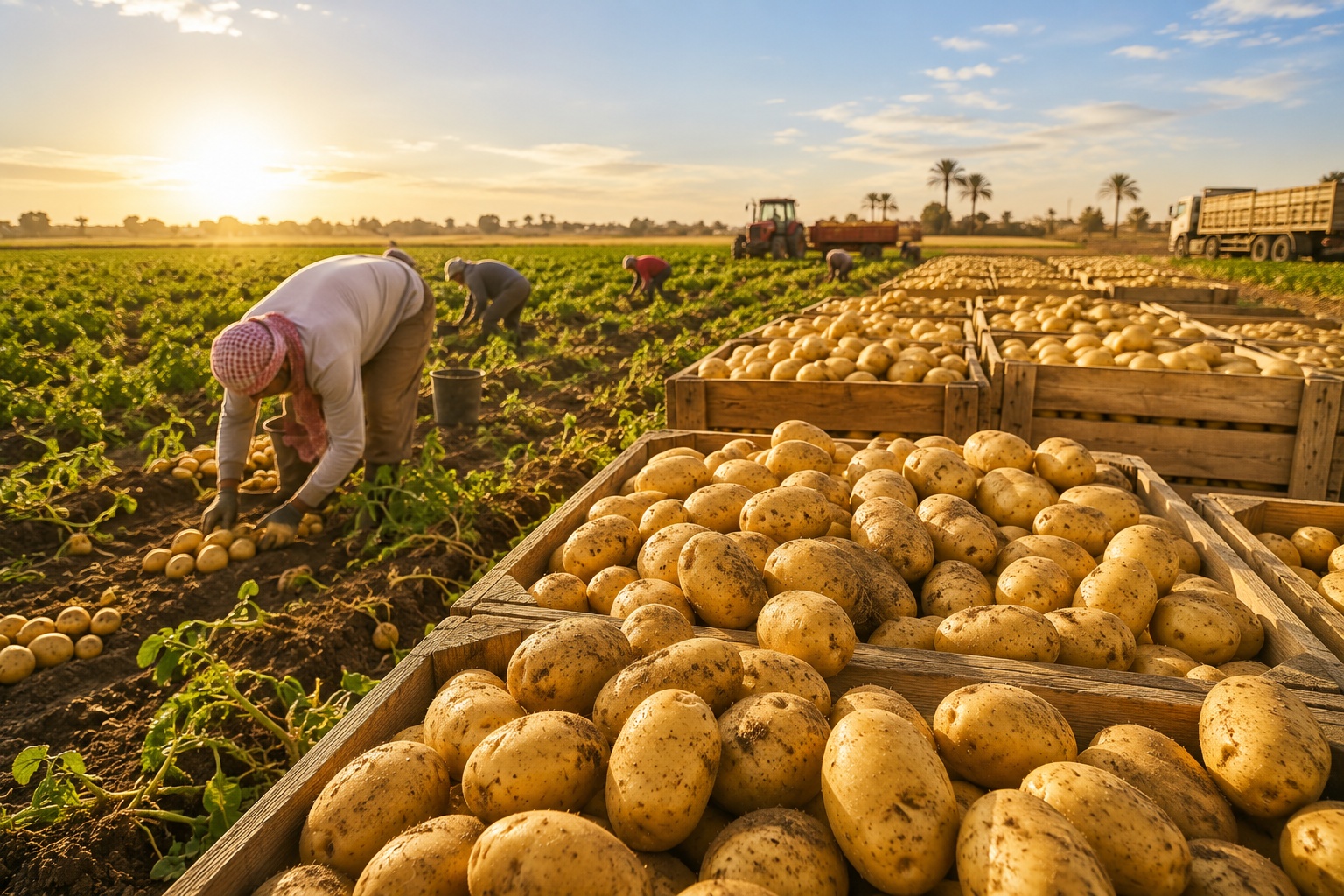
Egypt’s potato calendar is built on two crops a year, which gives importers a long, dependable supply window through the first half of the year and — thanks to cold storage — well beyond it. This guide sets out the Egyptian potato export season month by month: the two crops, when each ships, and which markets each window serves, so you can plan volume programs and bookings with confidence.
Quick answer: The Egyptian fresh potato export season runs from about late December / January to June, with peak quality in February–March and cold storage extending shipments to around October. The large winter (Nili) crop is the export backbone; a smaller summer (spring) crop follows. Shipments to Arab and Gulf markets begin first (late December), Russia early in the year, and the EU mainly from late February through May. (Sources: industry trade reporting; PotatoPro, 2025–2026.)
Understanding the calendar starts with the two planting cycles:
Together these crops, grown across the Nile Delta and reclaimed-desert regions, keep Egyptian potatoes available across most of the year.
Windows below are typical and shift with seed-import levels, weather and the timing of Europe’s own crop. Confirm the exact program window with your supplier before booking.
| Month | Crop / availability | Main destinations |
|---|---|---|
| December (late) | Winter (Nili) harvest begins; first shipments | Arab & Gulf countries |
| January | Winter crop in full; export ramps up | Russia, Gulf, Arab markets |
| February | Peak quality begins; EU window opens late Feb | Russia, EU, UK, Gulf |
| March | Peak quality; strong demand | EU, UK, Russia, Gulf |
| April | Winter crop tail; summer crop begins | EU, UK, Russia, Gulf |
| May | Summer crop; EU demand continues through May | EU, UK, Gulf, Asia |
| June | Summer crop; fresh season winds down | Gulf, Asia, local market |
| July–October | Cold-storage supply extends availability | Gulf, Asia, opportunistic |
The season opens as the winter (Nili) crop is harvested. First shipments head to Arab and Gulf countries around late December, with Russia — the leading volume buyer — coming on stream early in the year. This is a high-volume window: the winter crop is large, and demand is strong wherever other origins are short.
February and March bring peak quality, and this is when the European window opens. EU buyers typically import Egyptian potatoes from late February through May to bridge the gap until their own early crop is ready, since stored European potatoes lose quality over time. For an importer, this is the prime period for both quality and choice, with Russia, the EU, the UK and the Gulf all active.
From May the summer crop carries supply, and once the fresh season winds down in June, cold storage extends shipments into around October. Volumes ease compared with the peak, but storage keeps Egypt in the market for Gulf and Asian buyers who want supply later in the year.
Several factors move the windows year to year. Seed-import levels are the biggest single indicator — lower imported seed compresses the summer crop and tightens late-season supply. Weather affects timing and sizing, the timing of Europe’s own harvest changes when EU demand for Egyptian potatoes starts and ends, and regional logistics can reshape Gulf flows. Cold storage smooths all of this by extending availability past the fresh harvest.
The fresh export season runs from about late December / January to June, with peak quality in February-March, and cold storage extends shipments to around October.
The large winter (Nili) crop, harvested roughly late October to April, is the export backbone; a smaller summer (spring) crop is harvested around April to July.
Mainly from late February through May, to bridge the gap until Europe’s own early crop is ready.
February and March, during the main winter-crop harvest.
Yes – cold storage extends availability into around October, supporting Gulf and Asian programs after the fresh harvest.
How to cite this page
PEI Trade. “Egyptian Potato Export Season & Calendar.” peitrade.com, 2026. https://peitrade.com/egyptian-potato-export-season/
This page is part of our Egyptian Potato Export Guide hub.
Plan your Egyptian potato program with PEI Trade. We supply across the winter and summer crops and from cold storage — to Russian, EU, UK, Gulf and Asian buyers — with GLOBALG.A.P. handling, brown-rot-free sourcing and full documentation. Contact: [email protected] · WhatsApp +20 109 911 1918 · www.peitrade.com