Address
Work Hours
Monday to Friday: 7AM - 7PM
Weekend: 10AM - 5PM

Address
Work Hours
Monday to Friday: 7AM - 7PM
Weekend: 10AM - 5PM


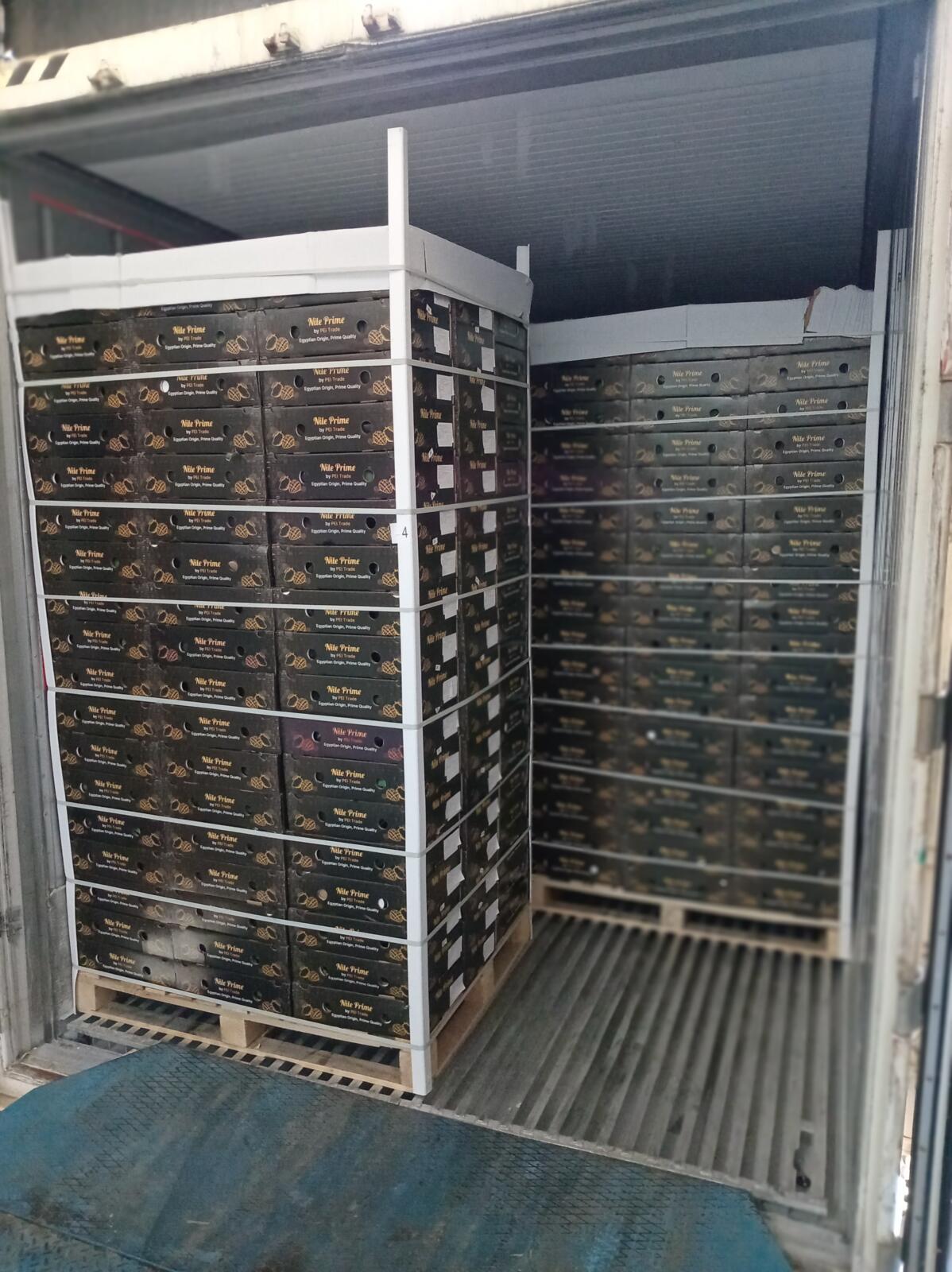
USDA market-access status, treatment rules, entry ports and transit times for Egyptian mango into the United States — and what a US buyer can source from Egypt today.
If you are a US importer searching for an Egyptian mango supplier, start with the part most supplier pages skip: fresh Egyptian mango is not currently authorised for commercial import into the continental United States. Egypt has formally requested access, USDA APHIS has run the pest risk assessment stage, and no decision authorising entry has been published as of July 2026. This page explains where that request stands, what the rules would look like if it is granted, which Egyptian mango products a US buyer can bring in today, and the port and transit realities behind the whole question.
Last reviewed: 28 July 2026. Market access changes by notice, not by season — confirm the current position in the USDA APHIS ACIR database before you contract any load.
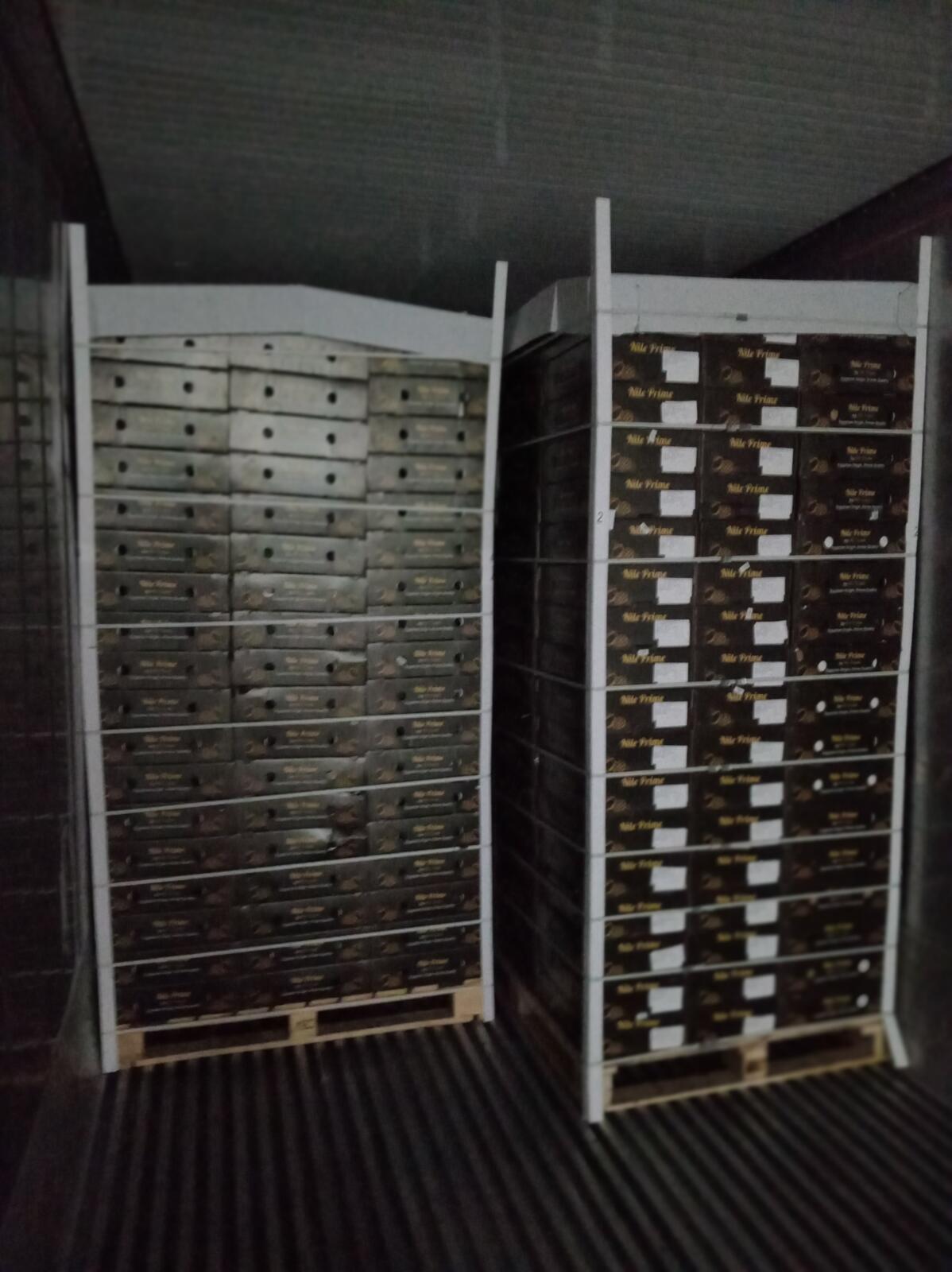
Fresh fruit does not enter the United States because a buyer wants it. It enters because APHIS — the USDA’s Animal and Plant Health Inspection Service — has completed a country-and-commodity approval and written the resulting requirements into its import rules. Until that happens for a given origin, the commodity is simply not admissible, no matter how good the fruit or how complete the exporter’s paperwork.
The approval path runs in a fixed order: the exporting government requests access; APHIS produces a pest risk assessment identifying the quarantine pests that could travel with the fruit; APHIS then determines the mitigation measures that would reduce that risk to an acceptable level; and finally it publishes a notice authorising importation and lists the requirements publicly. Egypt entered this queue for fresh mango, and APHIS opened its draft pest risk assessment for mango from Egypt to public comment through 13 October 2021. Beyond that consultation stage, no authorising notice for fresh Egyptian mango has been published, and Egypt’s own agricultural export programme still describes the Americas as a target market rather than an open one.
For context on how long this can take and what a completed decision looks like, the comparable mango approvals were each published individually: India in 2007, Pakistan in 2010, Colombia in 2021 and Grenada in 2023. Each notice named the treatment, the inspection regime and the documentation. Nothing equivalent exists for Egypt yet.
For a buyer, the practical reading is simple. A supplier who quotes you fresh Egyptian mango delivered into a US port right now is either quoting a shipment that will be refused entry, or is not telling you which origin the fruit actually comes from. The same discipline that applies to any market applies here — see our Egyptian mango export requirements guide for what a compliant programme looks like in the markets that are open.
Plant-health rules apply to living plant material and the pests it can carry. Once fruit has been dried, cooked, pulped or otherwise processed, APHIS generally stops being the gatekeeper and the FDA takes over. That distinction is where the real opportunity sits for a US buyer who wants Egyptian mango in the 2026 season.
| Product form | Status for US entry | Who regulates it | What you need |
|---|---|---|---|
| Fresh mango (whole fruit) | Not currently authorised from Egypt | USDA APHIS (plant health) | Nothing available — access decision pending |
| Frozen mango (IQF chunks, halves, cheeks) | Restricted. Frozen produce is excluded from the general authorisation for processed fruit and needs an APHIS permit; most frozen produce is restricted because some pests survive freezing, so admissibility is decided per commodity and origin | USDA APHIS + FDA | Confirm the Egypt–mango combination in ACIR first; then FDA registration and FSVP |
| Dried mango (slices, dices) | Generally admissible from all origins | FDA | Facility registration, prior notice, FSVP, labelling |
| Mango purée, pulp and concentrate | Generally admissible from all origins | FDA | Facility registration, prior notice, FSVP, labelling |
| Mango juice and nectar | Generally admissible from all origins | FDA | Facility registration, prior notice, FSVP, labelling |
| Jams, preserves and jellies | Generally admissible from all origins | FDA | Facility registration, prior notice, FSVP, labelling |
Two cautions on that table. First, frozen is the exception: APHIS’s list of generally authorised non-propagative plant products covers dried, cured, cooked and processed fruit — purées, concentrates, juices, preserves and jellies included — but explicitly excludes frozen fruits and vegetables, which stay inside the permit system. Frozen mango therefore has to be checked as its own line item rather than assumed to be clear. Second, “generally admissible” means no APHIS permit or phytosanitary certificate — it does not mean unregulated. Every one of those product forms still has to satisfy the FDA requirements set out further down this page.
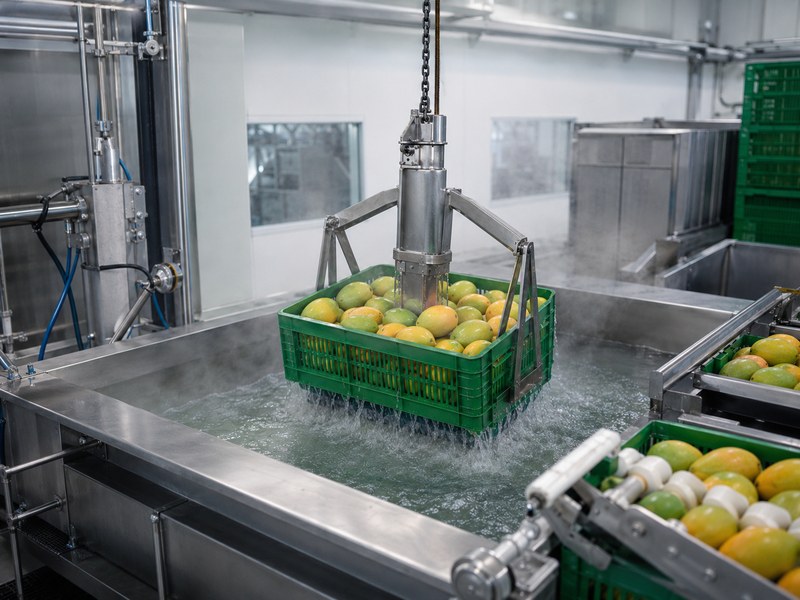
It is worth understanding the likely shape of a future protocol, because it determines cost and lead time long before the first container moves. Every mango origin that APHIS has approved has been approved on the same architecture, and Egyptian fruit would almost certainly follow it.
None of this exists for Egyptian mango yet, which is precisely why it is worth knowing now: the day a notice is published, the buyers who already understand the treatment and permit chain will be first into the lane.
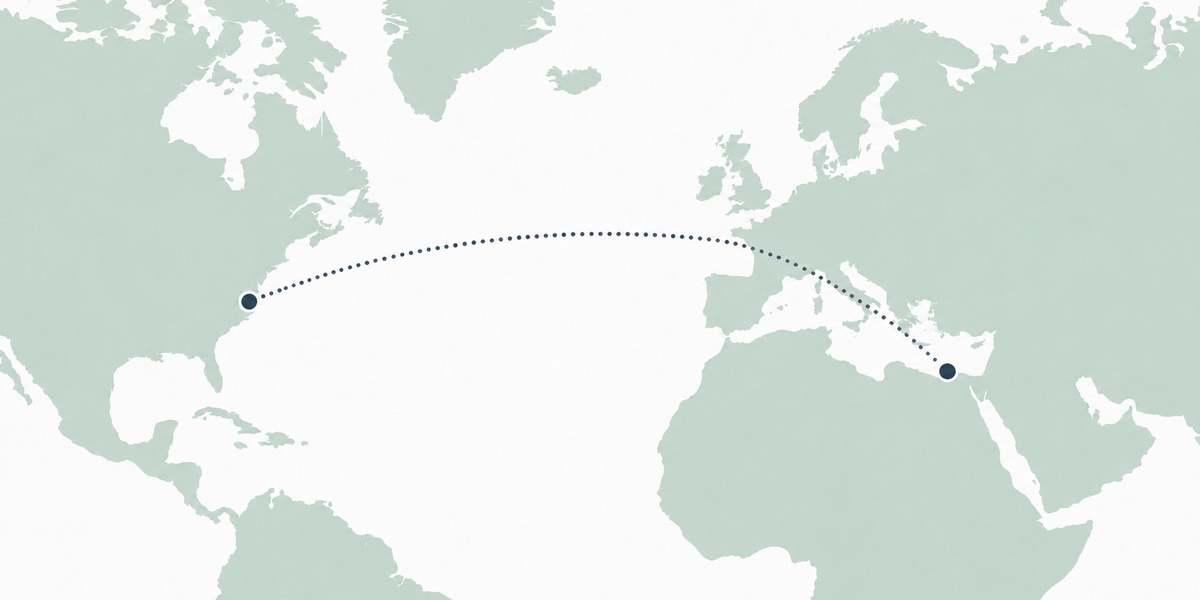
PEI Trade loads from Alexandria, Damietta, Port Said and Sokhna, in 40-foot reefer containers under Incoterms 2020. Sailings to the US East Coast are regular but slow, and the East Coast is the only sensible side of the country for perishables coming from the Eastern Mediterranean. The figures below are indicative transit times from published carrier schedules; actual days vary with the line, the rotation, seasonal demand and port congestion.
| Lane | Indicative ocean transit | Sailing frequency |
|---|---|---|
| Alexandria → New York / New Jersey | ~23–33 days | Weekly to fortnightly |
| Alexandria → Savannah | ~25–30 days | Every 2–4 weeks |
| Damietta / Port Said → US East Coast (Norfolk, Charleston, Miami) | ~25–30 days | Varies by carrier and rotation |
| Air freight from Cairo | Days rather than weeks | Daily options, premium cost |
Add treatment, loading, and US-side clearance to the ocean figure and a realistic door-to-door plan on the sea lane is in the four-to-six week range. That is survivable for a late-season, firm-fleshed variety with genuine shelf life — Keitt is the obvious candidate — and marginal for the softer, more aromatic local varieties. Our Egyptian mango varieties comparison sets out which cultivars hold up over long sea legs and which are built for short-haul lanes, and the grades and carton formats reference covers the packing that goes with them.
Market access is the legal obstacle. Timing is the commercial one, and it deserves an honest answer. The US mango market is supplied almost entirely by imports, and those imports are scheduled around a well-established relay: Mexico dominates spring through late summer, Central America and the Caribbean cover the spring shoulder, and South America carries the winter months.
Egypt’s export season runs broadly June to November, with the peak in August–November and Keitt — available roughly August to December — carrying the tail furthest into autumn. Read against the US calendar, most of the Egyptian season lands inside the period when Mexican fruit is arriving in volume, a few days’ truck ride from the buyer, at freight costs an Egyptian shipper cannot match. The genuine opening is the tail: the late-season weeks when Mexican supply thins and before the South American programmes hit full stride. That is a narrow, specific window rather than a season-long opportunity — and it is the window worth planning around. The month-by-month picture is in our Egyptian mango season calendar, and the volume and destination context is in the Egypt mango export report 2026.
For comparison, the markets where Egyptian mango genuinely wins on freight and freshness are the ones inside about ten days’ sailing — the Gulf above all. Our Egyptian mango exports to Saudi Arabia guide shows what a mature lane looks like.
Whether you are bringing in mango purée today or fresh fruit in some future season, the food-safety layer is the same and it is the US importer’s responsibility:
A supplier who can hand you documentation that supports your FSVP — audit reports, residue results, traceability records — makes this manageable. One who cannot makes it your problem. That test is the same one we set out in our mango cold chain and inspection checklist.
Not at present. Egypt requested market access for fresh mango and USDA APHIS opened its draft pest risk assessment to comment through 13 October 2021, but no notice authorising importation of fresh Egyptian mango has been published as of July 2026. Confirm the current position in the APHIS ACIR database before contracting.
It is more accurate to say it is not yet approved. US plant-health rules work on positive authorisation: a fruit from a given origin is inadmissible until APHIS completes its approval process and publishes the requirements. Egypt is in that process for mango, not excluded from it.
Dried, cured, cooked and processed fruit — including purée, pulp, concentrate, juice, preserves and jam — is generally admissible from all origins without an APHIS permit or phytosanitary certificate, and falls under FDA rules instead. Frozen fruit is specifically excluded from that general authorisation and stays inside the permit system, so frozen mango must be checked as its own case in ACIR before you contract.
US mango programmes are built on irradiation. Under the US phytosanitary treatment rules (7 CFR Part 305) the generic dose for fruit flies of the family Tephritidae is 150 Gy, the schedule for the mango seed weevil is 300 Gy, and 400 Gy is the generic dose covering all insect pests except pupae and adult Lepidoptera — the level used in the Indian mango programme. Hot water treatment is a United States requirement, not a European one. The EU asks instead for a phytosanitary certificate carrying an official declaration against fruit fly under Directive (EU) 2019/523. Any Egyptian protocol would be set out in the authorising notice.
Published carrier schedules put ocean transit from Alexandria to the US East Coast at roughly 23 to 33 days depending on the line and rotation, with sailings weekly to fortnightly. Adding treatment, loading and clearance, plan four to six weeks door to door. Air freight cuts that to days rather than weeks, at a cost that only works for high-value product.
Keitt is the natural candidate: it is the late-season variety, available roughly August to December, it is large and almost fibreless, and it travels well enough to be the default choice for Egypt’s existing sea-freight programmes to Europe, Russia and the Gulf. Softer aromatic varieties such as Owaisi and Zebda are built for short-haul markets and the juicing trade.
Tell us what you are trying to land and in which month, and we will tell you plainly whether Egypt can serve it, in which product form, and at what realistic transit. If the answer is no, we would rather say so than sell you a container that will not clear.
You can also request a quote, or start from the Egyptian mango export guide.
