Address
Work Hours
Monday to Friday: 7AM - 7PM
Weekend: 10AM - 5PM

Address
Work Hours
Monday to Friday: 7AM - 7PM
Weekend: 10AM - 5PM


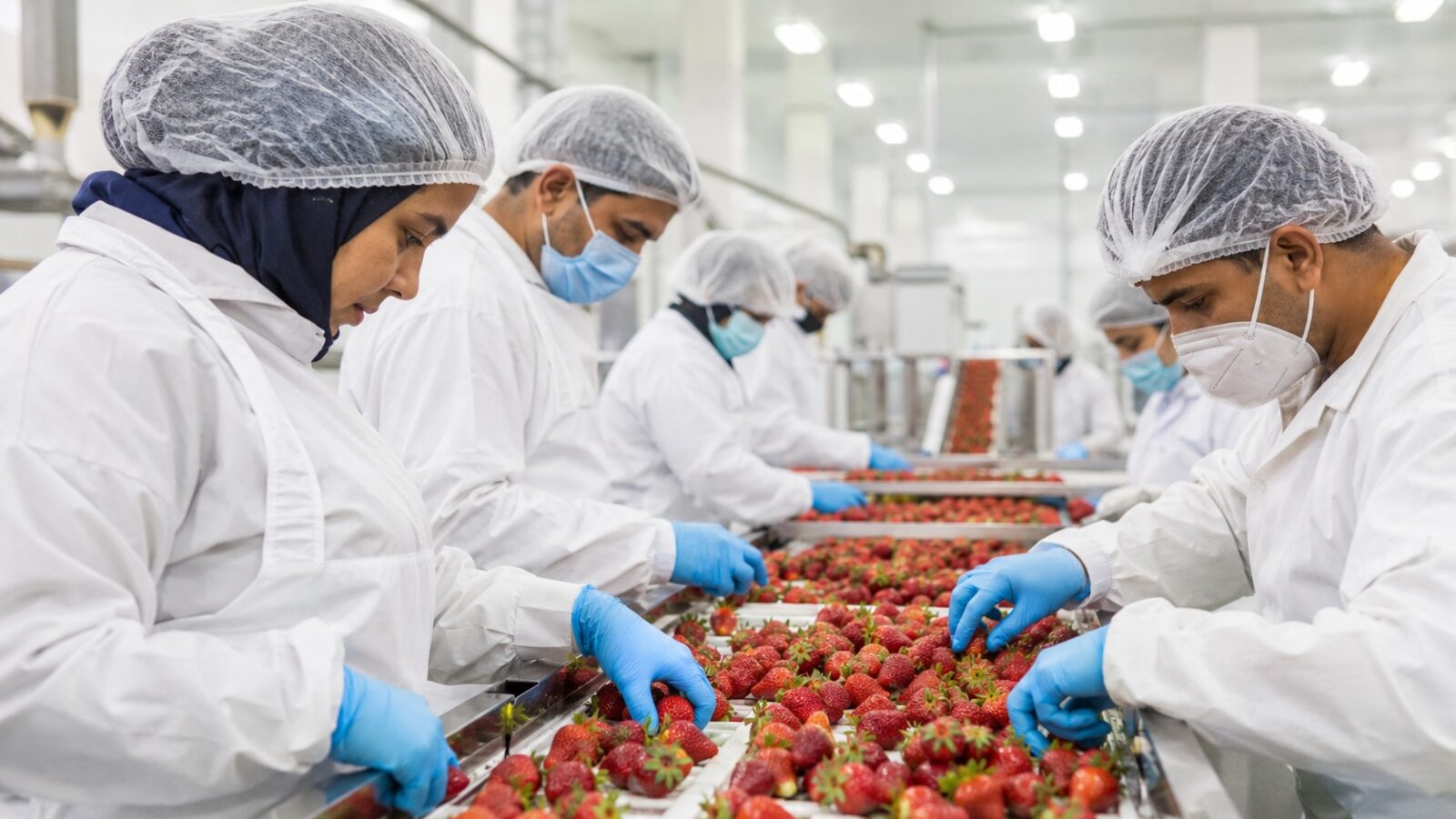
Strawberries are unusual because the compliance pathway splits in two: fresh strawberries are treated as fresh produce (plant-health and residue rules), while frozen strawberries are a processed food governed by food-safety management and microbiological controls. The EU also applies extra scrutiny to imported frozen berries for foodborne viruses. This guide sets out what an importer and exporter need for each. The frozen route carries the most value: Egypt holds first place worldwide in frozen strawberry exports.
Quick answer: Fresh strawberries need a phytosanitary certificate, compliance with EU residue limits (MRLs, Regulation (EC) No 396/2005) and GLOBALG.A.P. Frozen strawberries need HACCP plus a GFSI-recognised scheme (BRCGS, IFS or ISO 22000) and microbiological control; the EU applies increased official controls on imported frozen berries for norovirus and Hepatitis A. Fresh trades under HS 0810.10, frozen under HS 0811.10.
Fresh strawberries are handled like other fresh produce:
Frozen and IQF strawberries are a processed food product, so the framework is food safety rather than plant health:
Because frozen berries have been linked to outbreaks of norovirus and Hepatitis A, the EU applies increased official controls on imported frozen berries, meaning a share of consignments faces identity and laboratory checks at the border. For frozen berries this border-sampling rate has historically sat in the region of 5–10%, set in Annex I of Regulation (EU) 2019/1793 and revised roughly twice a year — so confirm the current rate and Egypt’s listing before shipping. In practice this makes documented hygiene, water control and virus testing essential for frozen-strawberry exporters. Destinations outside the EU set their own conditions, as Egypt found when opening new strawberry markets in Brazil and Malaysia.
| Document | Fresh | Frozen |
|---|---|---|
| Phytosanitary certificate | Required | Not applicable |
| Health / free-sale certificate | — | Often required |
| GLOBALG.A.P. certificate | Baseline | At farm level |
| BRCGS / IFS / ISO 22000 | — | Expected (processing plant) |
| Residue / micro test reports | Residue (MRLs) | Microbiological & virus |
| Certificate of Origin / EUR.1 | Required | Required |
| Invoice, packing list, B/L | Required | Required |
A phytosanitary certificate, compliance with EU MRLs (Regulation (EC) No 396/2005) and GLOBALG.A.P., plus standard commercial documents.
HACCP with a GFSI-recognised scheme (BRCGS, IFS or ISO 22000), microbiological and virus control, an unbroken minus 18 degrees C cold chain, and commercial documents.
Frozen berries have been linked to norovirus and Hepatitis A outbreaks, so the EU applies increased official controls with border sampling (historically around 5-10% of consignments).
Fresh strawberries are HS 0810.10; frozen strawberries are HS 0811.10.
No – fresh is plant-health-led (phytosanitary, MRLs, GLOBALG.A.P.); frozen is food-safety-led (HACCP, BRCGS/IFS/ISO 22000, micro testing).
How to cite this page
PEI Trade. “Egyptian Strawberry Export Requirements: Fresh & Frozen.” peitrade.com, 2026. https://peitrade.com/egyptian-strawberry-export-requirements/
This page is part of our Egyptian Strawberry Export Guide hub.
Export Egyptian strawberries the compliant way with PEI Trade. Phytosanitary and GLOBALG.A.P. documentation for fresh; HACCP / BRCGS-level food safety, micro and virus control for frozen — with EU/UK-ready paperwork. Contact: [email protected] · WhatsApp +20 109 911 1918 · www.peitrade.com