Address
Work Hours
Monday to Friday: 7AM - 7PM
Weekend: 10AM - 5PM
Address
Work Hours
Monday to Friday: 7AM - 7PM
Weekend: 10AM - 5PM


 ByMagy
Exporting Egyptian fruits to Europe offers lucrative opportunities for importers seeking high-quality produce. However, the European market enforces some of the strictest regulations worldwide regarding pesticide residues.
Non-compliance can lead to shipment rejections, financial losses, and reputational damage. For importers, understanding these requirements and partnering with a trusted exporter like PEI Trade is crucial for successful operations in Egyptian Fruit Exports.
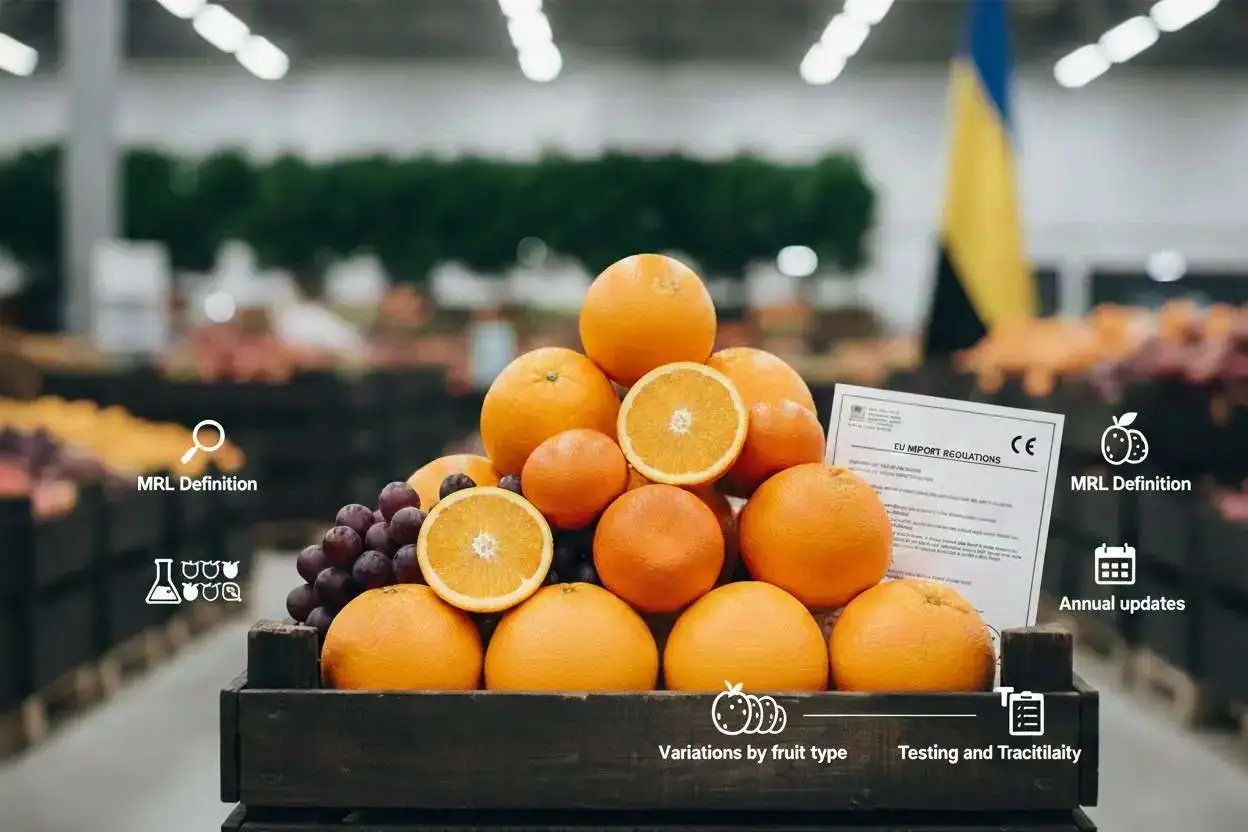
The European Union (EU) regulates pesticide residues in fruits and vegetables under strict frameworks to protect consumer health. The key regulatory body, the European Food Safety Authority (EFSA), establishes Maximum Residue Limits (MRLs) for various pesticides. Importers must be aware of the following:
By sourcing fruits from PEI Trade, importers gain confidence that all produce undergoes meticulous quality control and pesticide testing to meet European standards.
Egyptian fruits may be treated with pesticides to protect against pests and extend shelf life. While these treatments ensure higher yields, some residues can exceed EU thresholds if not carefully managed. Common pesticides and related compliance considerations include:
PEI Trade implements modern agricultural practices, including Good Agricultural Practices (GAP) and integrated pest management, to minimize residues while maintaining product quality.
To avoid regulatory issues, Egyptian Fruit Exports should follow these best practices:
PEI Trade has built a reputation as a reliable supplier of Egyptian fruits for the European market. With years of experience in exports and a deep understanding of EU regulations, PEI Trade ensures that every shipment is safe, compliant, and high-quality.
Importers benefit from:
Working with PEI Trade reduces the risk of non-compliance and ensures a smooth, profitable import process. Our strong network of certified farms and state-of-the-art packing facilities guarantees consistent quality across all shipments.
Additionally, PEI Trade continuously monitors EU regulatory updates to proactively adjust practices, ensuring that importers always receive fully compliant products.
For importers aiming to bring Egyptian fruits to Europe, understanding and adhering to EU pesticide residue limits is critical.
Partnering with a trusted exporter like PEI Trade provides peace of mind, ensuring products meet the highest safety standards while maintaining premium quality.
By combining compliance expertise, meticulous testing, and consistent supply, PEI Trade enables importers to confidently access the European market and build long-term success.
Choose PEI Trade as your trusted export partner and gain access to premium-quality produce that fully complies with EU pesticide regulations. With rigorous testing, transparent documentation, and reliable logistics, PEI Trade helps you eliminate risk and maximize profitability.
Maximum Residue Limits (MRLs) vary depending on the type of fruit and the pesticide used. Importers must ensure all shipments comply with the latest EU regulations to avoid shipment rejection.
Yes. All PEI Trade products undergo strict pre-shipment testing to ensure compliance with EU pesticide residue standards.
Yes. MRLs can vary between citrus, mangoes, pomegranates, grapes, and other fruits. PEI Trade provides compliance reports for each type of fruit.
Yes. Low-pesticide fruits generally comply more easily with EU regulations and are increasingly favored by European consumers.
Non-compliance can result in shipment rejection, financial losses, market delays, and damage to the importer’s reputation.
PEI Trade ensures premium-quality fruits, full compliance with EU pesticide limits, complete documentation, and reliable logistics support. This minimizes risk and ensures a smooth and profitable import process.