Address
Work Hours
Monday to Friday: 7AM - 7PM
Weekend: 10AM - 5PM

Address
Work Hours
Monday to Friday: 7AM - 7PM
Weekend: 10AM - 5PM


Egyptian mango varieties number more than 30 — by some counts over 100 — but only a small group are built to travel, sell, and satisfy demanding import programs. For a B2B buyer, the real question is not “how many varieties exist” but “which Egyptian mango variety fits my market, my season, and my price point.” This guide answers exactly that, variety by variety, so you can specify the right fruit before you request a quote.
Last Updated: May 2026
We have split the varieties into two groups: the international, export-grade types that dominate shipped volume, and the indigenous and premium types that Egypt is uniquely known for. A market-preference matrix at the end ties it together.
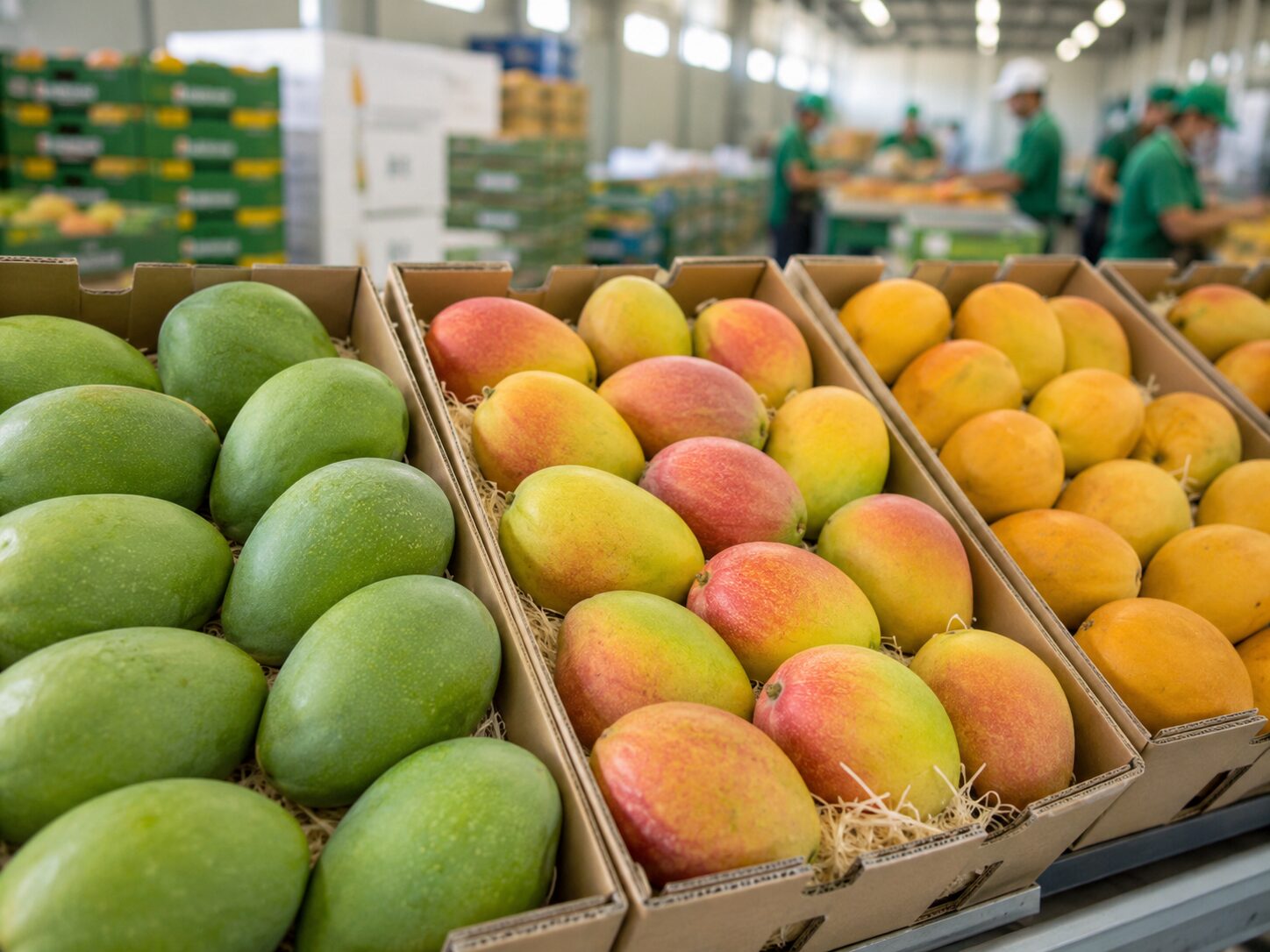
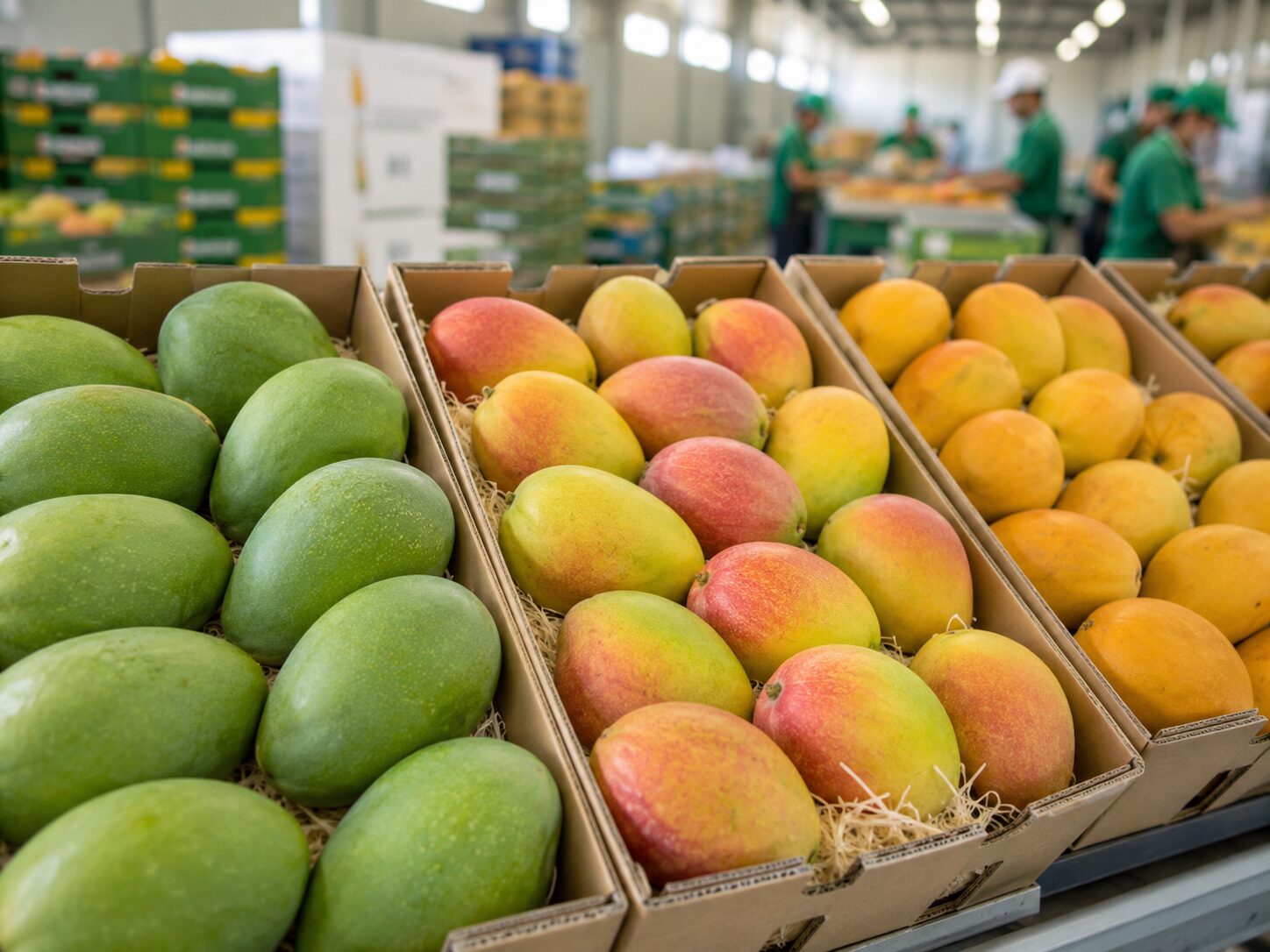
These are the workhorses of Egyptian mango export — selected for size, shelf life, and the ability to arrive in saleable condition after sea or air transit. They are what most European, Russian, and Gulf programs are built around.
| Variety | Size | Key Traits | Window | Best Markets |
|---|---|---|---|---|
| Keitt | Large | Green skin, fiberless, sweet, ships excellently | Aug–Dec | EU, Russia, GCC |
| Kent | 500–1000g | Rich, low-fiber, juicy | Mid-Jun–Aug | EU, Russia |
| Naomi | Medium–large | Golden, very attractive, good shelf life | Mid–late | EU, GCC |
| Tommy Atkins | Medium–large | Firm, durable, long shelf life | Early (Jun–Jul) | Broad / entry |
| R2E2 | Large | Long shelf life, attractive blush | Late | EU |
Keitt is the backbone of Egyptian mango export. It is large, has smooth green skin even when ripe, and is almost fiberless with a clean sweet flavor. Critically for buyers, it has the longest availability window of any Egyptian variety — roughly August to December — and it travels well, which makes it the default choice for sea-freight programs to Europe, Russia, and the Gulf. Read the full Keitt mango export guide for specifications and pricing factors.
Kent is a large, premium variety, frequently in the 500–1000 gram range, with rich low-fiber flesh that retail and ripening programs value highly. It comes earlier than Keitt and is a strong fit for European and Russian buyers who prioritize eating quality. See it alongside Naomi in our Kent and Naomi export guide.
Naomi has become a rising star in European markets thanks to its golden color, attractive appearance, and dependable shelf life. It also performs strongly in the Gulf. For buyers building a visually-driven retail program, Naomi is often the variety that wins shelf space. Details are in the Kent and Naomi guide.
Tommy Atkins is the classic early-season traveler — firm, durable, and forgiving in transit. It opens the season and suits broad or entry-level markets where robustness matters more than premium flavor. See the Tommy Atkins and Zebda guide.
R2E2 is a large, late-season variety with long shelf life and an attractive blush, used to extend programs into the tail of the season for European buyers.
Beyond the international types, Egypt’s indigenous varieties are a genuine differentiator. They are prized for flavor and carry a strong reputation among Arab consumers in particular.
Owaisi is widely regarded as the best-tasting mango in Egypt, with a complex sweet flavor and smooth texture that sets it apart from mass-market varieties. It is increasingly appearing in European trial programs as a premium offer, often beginning early in the season from Aswan before moving to Ismailia. For buyers building a specialty or premium line, Owaisi is the standout — see the Owaisi mango export guide.
Zebda is deeply rooted in Egyptian consumer culture, often bought in bulk and frozen at home for juice through the year. Because it has a soft texture and short shelf life, it stays largely in the domestic market and the juicing trade, with only limited fresh export. Where Gulf buyers want it for juicing, we can advise on what is feasible. More in the Tommy Atkins and Zebda guide.
Egypt also grows Taymour, Sokary, Hindi, Mabrouka, Sedekah, and Fagr Kalan, among others. These are local favorites valued for sweetness, and several — particularly Taymour and Sokary — see selective Gulf demand. Availability is more limited and seasonal than the international varieties.
The single most useful thing a buyer can know is that different markets reward different traits. Gulf and Arab buyers prioritize flavor and sweetness; European and Russian buyers prioritize appearance and shelf life. Use this matrix as a starting point.
| Market | Preferred Varieties | Why |
|---|---|---|
| GCC / Arab markets | Zebda (juice), Naomi, Taymour, Owaisi, Keitt | Flavor and sweetness lead the buying decision |
| EU & Russia | Keitt, Kent, Naomi | Appearance, size, and shelf life matter most |
| Entry / broad markets | Tommy Atkins | Durability and value in transit |
| Premium / specialty | Owaisi, Naomi | Distinctive taste and visual appeal |
Timing matters too: Tommy Atkins and Kent open the season from June, the main export varieties Keitt and Naomi run through the August–November peak, and Keitt carries the tail into December. Planning a program across two or three varieties lets you maintain continuous supply — see our Egyptian mango season calendar.
Across all Egyptian mango varieties, export buyers generally prefer fruit above 300 grams, with specific size counts matched to your packaging format. A few practical notes:
All export fruit is picked mature-green (mango ripens after harvest), monitored for Brix, and inspected for color and defects. For the full quality, treatment, and packaging picture, see the Egyptian mango export guide and the export requirements guide.
The main export varieties are Keitt, Kent, Naomi, Tommy Atkins, and R2E2, plus premium indigenous Owaisi and the mostly-domestic Zebda.
Owaisi (Ewais) is widely considered the best-tasting Egyptian mango and is positioned as a premium specialty offer.
European buyers favor Keitt, Kent, and the increasingly popular Naomi, driven by appearance and shelf life.
Gulf buyers favor Naomi, Taymour, Owaisi, and Keitt for eating quality, plus Zebda for juicing.
Export programs generally prefer fruit above 300 grams, with Kent often reaching 500–1000 grams; exact counts match the carton format.
Fresh Egyptian mango is seasonal (broadly June–November, peak August–November); planning across varieties extends supply.
Tell us your market and program, and we will recommend the right Egyptian mango variety, grade, and size — and arrange samples.
Start with the full Egyptian mango export guide or request a quote for your target varieties.