Address
Work Hours
Monday to Friday: 7AM - 7PM
Weekend: 10AM - 5PM

Address
Work Hours
Monday to Friday: 7AM - 7PM
Weekend: 10AM - 5PM


Transit weight loss on Egyptian produce runs from about 0.5 to 4 percent of net carton weight by crop. Loss rates, overpack practice, contract wording and when a short arrival weight becomes a claim.
Transit weight loss on Egyptian produce runs from roughly 0.5 percent to 4 percent of net carton weight between packing and delivery, and the figure depends far more on the crop and the packaging than on the length of the voyage. An importer who weighs cartons at the warehouse and finds them under the printed net weight is usually looking at normal moisture loss rather than short packing. The two are easy to confuse, and the sales contract is what decides who absorbs the difference.
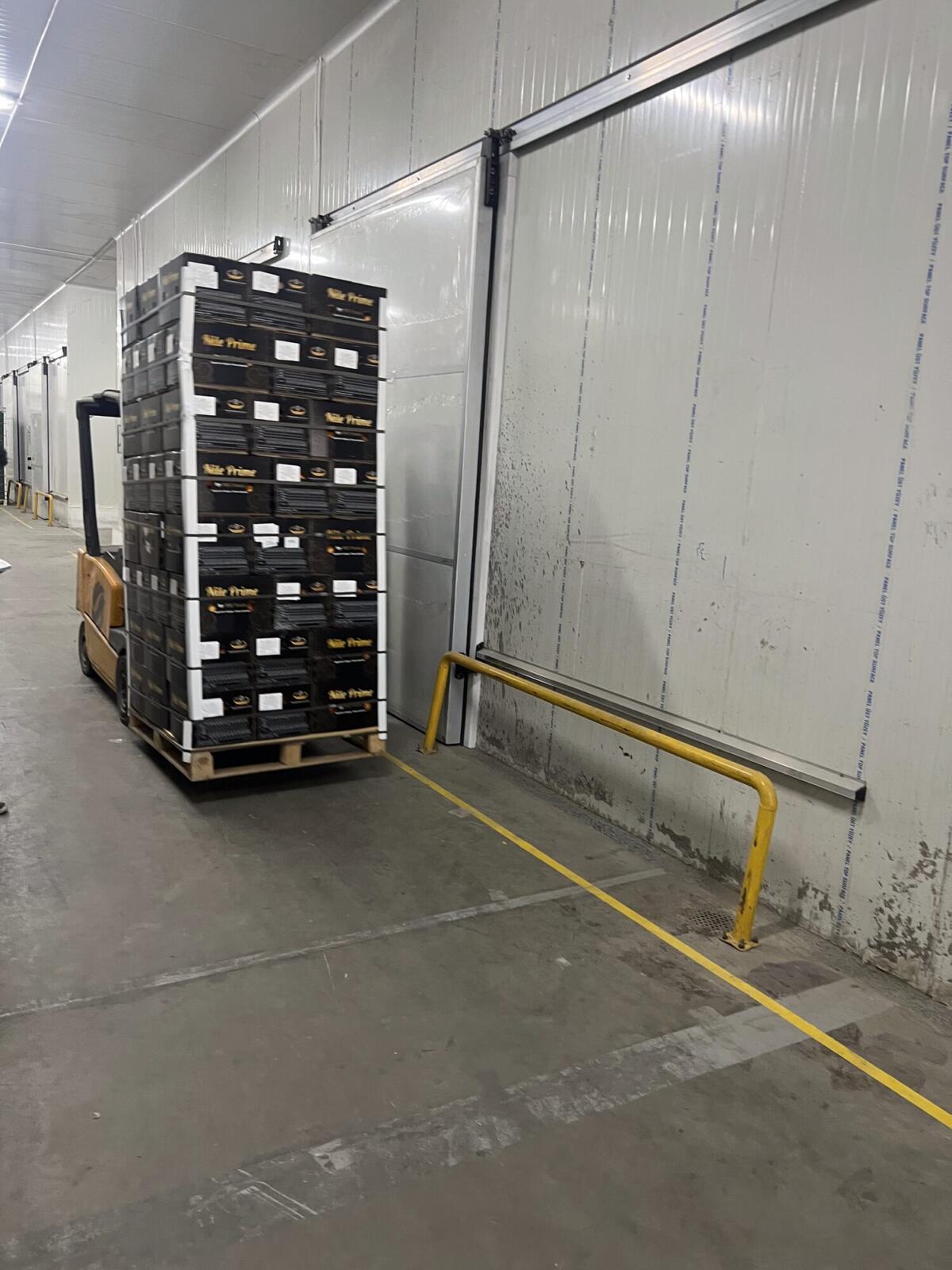
The table below gives the ranges PEI Trade works to when reconciling arrival weights with packhouse weights. Figures assume a correctly pre-cooled load, a reefer holding its set point, and 90 to 95 percent relative humidity.
| Crop and pack | Loss over 14 days | Main driver | Control |
|---|---|---|---|
| Valencia orange, 15 kg carton | 0.8 to 1.5% | Rind transpiration | Wax coating, 4 to 6 C, high humidity |
| Keitt mango, 4 kg carton | 1.5 to 3.0% | High respiration rate | Perforated liner, 10 to 12 C |
| Wonderful pomegranate, 4.5 kg | 2.0 to 4.0% | Husk desiccation | Micro-perforated liner, 5 C |
| Table grapes, 4.5 kg carton | 0.5 to 1.2% | Rachis moisture loss | Box liner and sulphur pad |
| Green beans, 5 kg carton | 2.5 to 5.0% | High surface area to mass | Vented liner, fast forced-air cooling |
| Golden onion, 25 kg mesh bag | 0.5 to 1.5% | Residual field moisture | Full curing before bagging |
| Sweet potato, 10 kg carton | 1.0 to 2.5% | Uncured periderm | Curing at 29 to 32 C for 5 to 7 days |
| IQF strawberry, 10 kg carton | Under 0.2% | Sublimation if the chain breaks | Unbroken minus 18 C, sealed poly bag |
A carton printed 4.0 kg net is normally filled to between 4.1 and 4.3 kg at the packing line. The overpack is there to absorb transit weight loss so that the carton still meets its declared weight at destination. Overpack is not a gift and it is not a substitute for correct cooling. If a packhouse ships without overpack, the carton is compliant at the gate in Alexandria and short in Rotterdam, and the exporter carries a dispute it created itself.
Overpack also has a limit. Weight added to every carton multiplies across roughly 5,000 cartons in a 40 ft high cube reefer, and payload rules still apply. See container weight and VGM on Egyptian produce exports for where the ceiling sits.
Three clauses settle almost every arrival weight argument before it starts. First, state whether the price is against shipped weight or delivered weight. Second, state a tolerance, commonly 2 percent for fresh fruit and 1 percent for cured roots and onions. Third, state how weight is verified: a stated number of cartons drawn at random on a calibrated scale, weighed within 24 hours of discharge, in the presence of both parties or a third-party surveyor.
Loss inside the contractual tolerance is a cost of moving perishable goods, not a defect. Loss above tolerance is worth investigating, and the temperature trace usually explains it. A reefer running warm, running dry through excessive fresh-air exchange, or a load that was never pre-cooled will all produce a heavier than normal loss, and each leaves a signature in the data logger. Check the set point against the crop before blaming the packhouse: the correct figures are in the reefer set point reference by crop.
Weight loss also interacts with grade. Fruit that has shed 4 percent of its water is duller, softer and more prone to shrivel, so a weight claim frequently arrives attached to a quality claim. The tolerances that apply on the quality side are set out in quality classes on fresh produce.
PEI Trade is the exporter here, not a neutral reviewer. The figures above are the ranges we work to when reconciling weights with buyers, and they should be checked against your own arrival records.
To discuss overpack policy, net weight tolerances or a specification for your next programme, message the PEI Trade export desk on WhatsApp at +20 10 9911 1918 with your crop, destination port and required carton format. Quotes are issued the same working day.
