Address
Work Hours
Monday to Friday: 7AM - 7PM
Weekend: 10AM - 5PM

Address
Work Hours
Monday to Friday: 7AM - 7PM
Weekend: 10AM - 5PM


Curing onions, garlic, sweet potato, taro and potato before export: target temperatures, humidity, duration and the weight loss to expect, crop by crop.
Curing onions is not drying them. Curing is a controlled period in which the neck tissue seals, the outer scales dry to a papery skin, and surface wounds close over. Get it right and a bag of Egyptian onions holds for months in a ventilated store. Get it wrong and the same bag develops neck rot within weeks, usually somewhere between the destination port and the buyer’s warehouse. The same principle applies to garlic, sweet potato, taro and potato, with different targets for each.
| Crop | Temperature | Humidity | Duration | Weight loss | Then store at |
|---|---|---|---|---|---|
| Onion | 30 to 35 C | 65 to 75% | 3 to 7 days | 3 to 6% | 0 to 2 C or 25 to 30 C |
| Garlic | 30 to 35 C | 60 to 70% | 7 to 14 days | 20 to 30% | 0 C or 25 to 30 C |
| Sweet potato | 29 to 32 C | 85 to 90% | 4 to 7 days | 2 to 4% | 13 to 15 C |
| Taro | 32 to 35 C | 90 to 95% | 4 to 7 days | 2 to 5% | 11 to 13 C |
| Potato | 15 to 20 C | 90 to 95% | 5 to 10 days | 1 to 3% | 4 to 8 C |
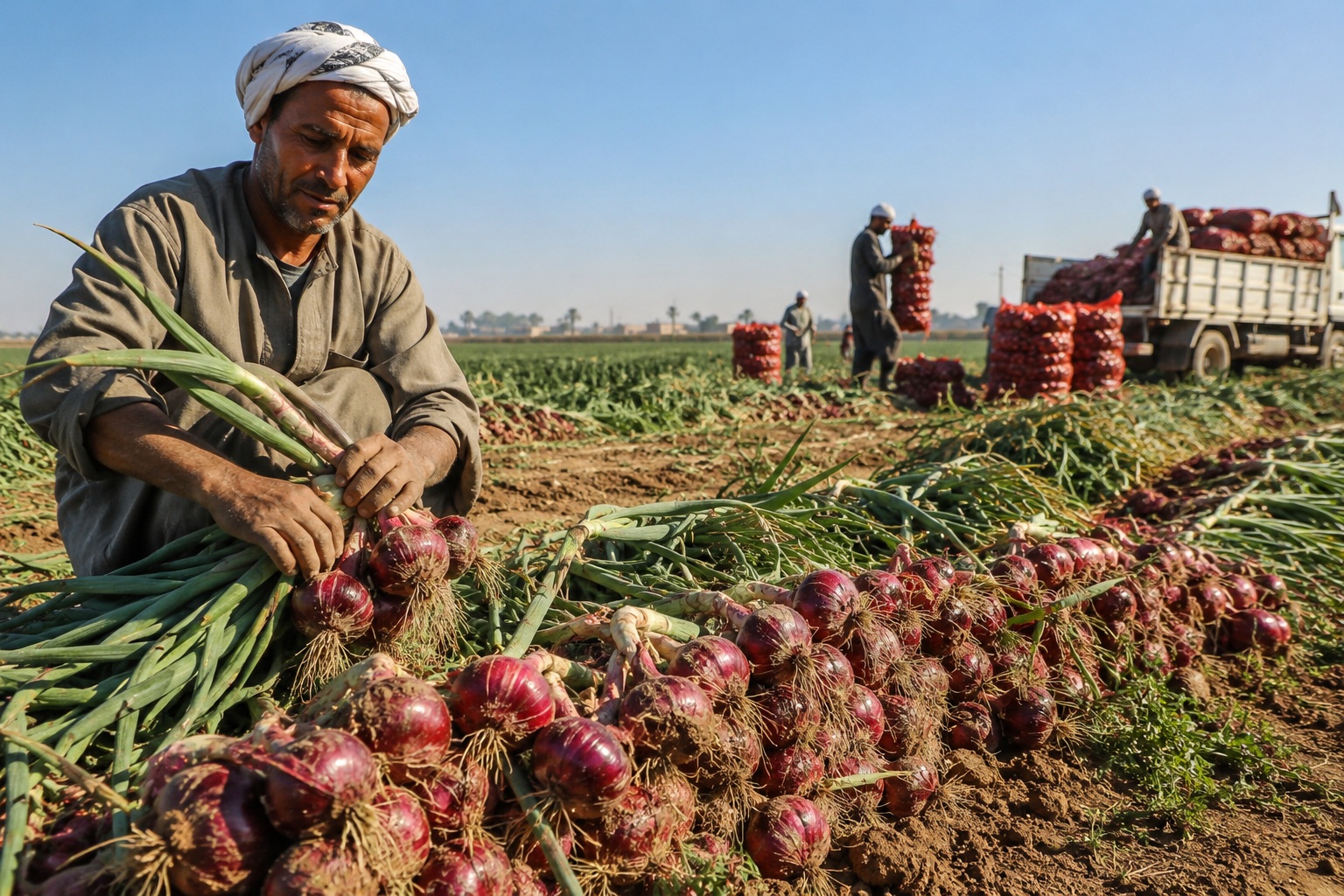
For onion and garlic the job is drying. Moisture leaves the neck and the outer scales until the neck is tight and the skin rustles, which closes the main entry route for Botrytis allii. Weight loss is the visible sign that the process worked, and on garlic it is substantial: a 20 to 30 percent loss between lifting and packing is normal, which is why garlic is quoted on cured weight and never on field weight.
For sweet potato, taro and potato the job is wound healing. Harvest damages the skin, and at high temperature and high humidity the tuber lays down a corky periderm over every cut and scrape within four to seven days. This is the opposite environment to onion curing. Ventilate a sweet potato the way you ventilate an onion and the wounds never close, so the roots arrive with soft rot spreading from every harvest scar.
Three questions separate a cured lot from a lot that was simply harvested early. Ask for the lifting date and the packing date, because the gap between them is the curing period and it cannot be compressed. Ask whether curing was done in the field, under forced air, or both, since Egyptian practice varies by region and by how tight the shipping window is. Ask for the moisture or weight-loss figure the packhouse recorded, which is the only number that proves anything.
One more point that catches buyers out. Cured onion and garlic can be held either cold at 0 C or warm and dry at 25 to 30 C, but the range in between is where sprouting starts. A container that sits at ambient in a Gulf port for a week is sitting in exactly the wrong band. Plan the discharge and the onward store together, and keep the crop on the correct side of that gap. Our references on Egyptian onion and garlic export grades and on Beauregard sweet potato packing cover the carton and bag formats that follow curing.
PEI Trade is the exporter, not a neutral reviewer. The ranges above are working targets used on Egyptian export lots and should be checked against your own arrival records.
Planning an autumn onion, garlic or root programme? Send your destination, volume and required arrival window to PEI Trade on WhatsApp at +20 10 9911 1918 and we will confirm curing dates, bag formats and loading positions.
