Address
Work Hours
Monday to Friday: 7AM - 7PM
Weekend: 10AM - 5PM

Address
Work Hours
Monday to Friday: 7AM - 7PM
Weekend: 10AM - 5PM


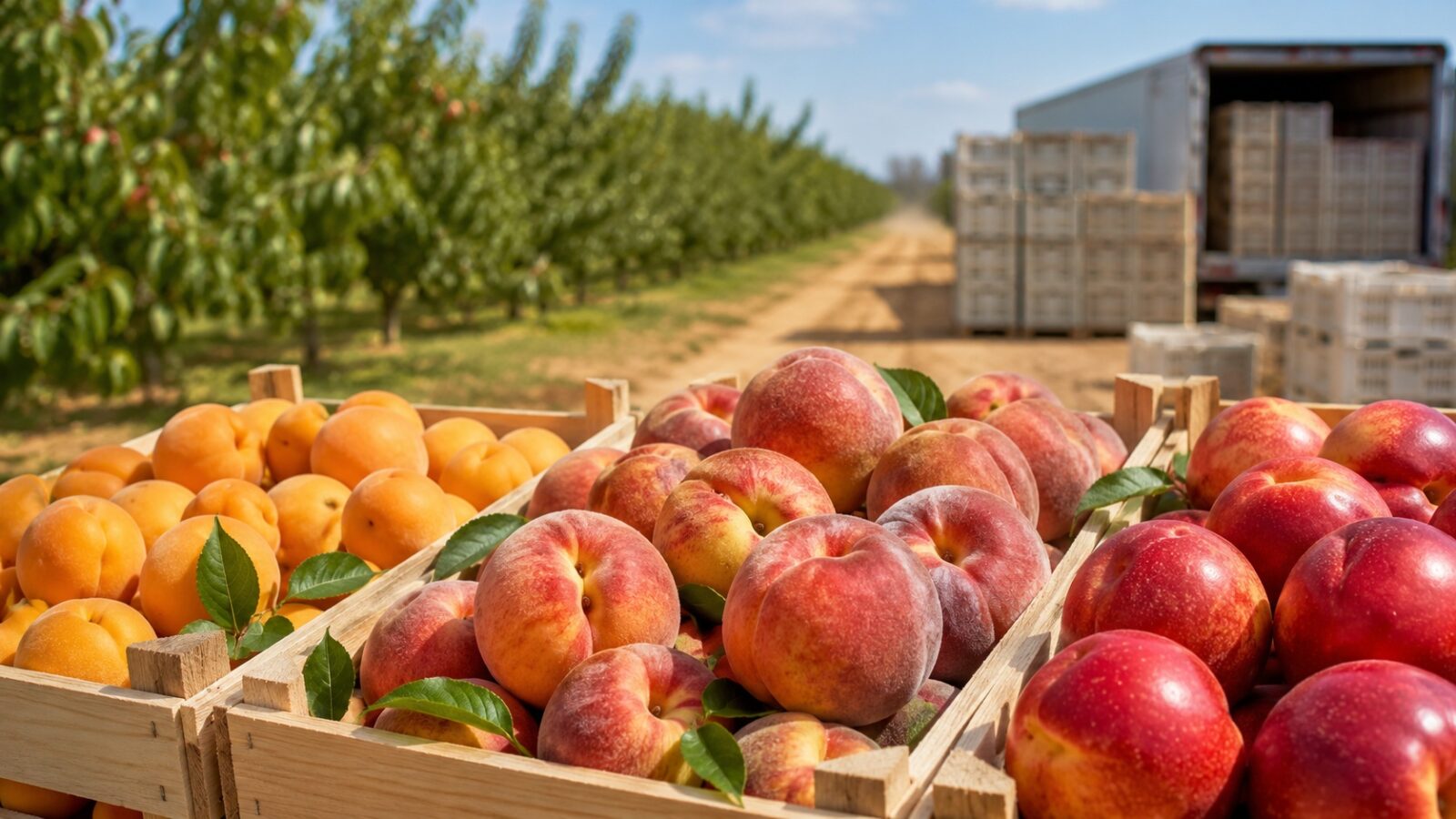
Stone fruit — apricots, peaches, nectarines and plums — are Egypt’s sweet early-summer fruits, with apricots the flagship. They are delicate, climacteric (they ripen after harvest) and bruise easily, so they reward careful maturity selection, a tight cold chain and, for premium fruit, airfreight. Egypt’s warm climate brings one of the earliest stone-fruit windows in the Mediterranean basin, reaching Europe ahead of Spain and other northern-Mediterranean origins. This guide is the hub for importers: what Egypt grows, when it ships, the markets it serves, the specifications buyers ask for and the compliance behind every consignment.
Quick answer: Egypt exports apricots (the lead crop), peaches, nectarines and plums — delicate, climacteric fruits — and is a top-ten global peach and nectarine producer (around the world’s eighth-largest). Its real edge is timing: an early Mediterranean window that puts fruit into the EU and UK from about late April–May, ahead of Spain. By fruit, apricots run roughly April–June, peaches and nectarines from about April/May onward, and plums roughly May–July. They are bruise-prone and need careful temperature management (risk of internal breakdown/“woolliness”), shipped by reefer or, for premium, airfreight. HS: apricots 0809.10, peaches/nectarines 0809.30, plums 0809.40. Markets include the EU, the Gulf and Russia. (Sources: FAO, 2023; ITC Trade Map, 2025.)
| Fruit | Character | HS code |
|---|---|---|
| Apricot (lead) | Small, sweet-tart, golden | 0809.10 |
| Peach | Fuzzy skin, juicy | 0809.30 |
| Nectarine | Smooth skin, firm-juicy | 0809.30 |
| Plum | Dark/red/yellow, sweet | 0809.40 |
Stone fruit runs from late spring into summer, with apricots typically opening the season (about April–June), peaches and nectarines from around April/May, and plums roughly May–July. Egypt’s warmth gives one of the earliest windows in the Mediterranean basin — reaching Europe before Spain and other northern-Mediterranean suppliers, which is the core commercial advantage for early-season programs. Exact windows shift year to year with cultivar and weather.
HS: apricots 0809.10, peaches/nectarines 0809.30, plums 0809.40.
Stone fruit needs a phytosanitary certificate (fruit flies, including the Mediterranean fruit fly, are the key concern), compliance with destination MRLs (EU: Regulation (EC) No 396/2005, with stone fruit under close residue scrutiny), and GLOBALG.A.P. with ISPM 15 packaging and traceability. Egyptian stone fruit is not on the EU’s enhanced official-controls list (Regulation (EU) 2019/1793), so it is not subject to increased border checks — though Mediterranean fruit fly (Ceratitis capitata) freedom and residue compliance remain central.
Apricots (the lead), peaches, nectarines and plums.
Late spring into summer: apricots about April-June, peaches and nectarines from about April/May, plums roughly May-July.
Timing – one of the earliest Mediterranean windows, reaching the EU and UK from about late April-May, ahead of Spain and other northern-Mediterranean origins.
It is delicate, climacteric and bruise-prone, with a risk of internal breakdown if temperature is mismanaged.
The EU and UK, the Gulf and Russia.
Apricots 0809.10; peaches/nectarines 0809.30; plums 0809.40.
How to cite this page. Reusing a figure from this guide? Please cite it and link to this page as the source.
PEI Trade. “Egyptian Stone Fruit Export: The Complete Guide.” peitrade.com, 2026. https://peitrade.com/egyptian-stone-fruit-export-guide/
Source Egyptian stone fruit with PEI Trade. Apricots, peaches, nectarines and plums to EU, Gulf and Russian buyers, with careful maturity selection, GLOBALG.A.P. handling, phytosanitary documentation and a tight, temperature-managed cold chain. Contact: [email protected] · WhatsApp +20 109 911 1918 · www.peitrade.com