Address
Work Hours
Monday to Friday: 7AM - 7PM
Weekend: 10AM - 5PM

Address
Work Hours
Monday to Friday: 7AM - 7PM
Weekend: 10AM - 5PM


Which Egyptian crops ship in modified atmosphere packaging, the target gas mixes by product, what MAP adds in shelf life, and where the film costs more than it returns.
Modified atmosphere packaging works by letting a sealed film reach an equilibrium the fruit itself creates. The produce respires, oxygen falls, carbon dioxide rises, and the film’s permeability holds both gases at a level that slows respiration without suffocating the tissue. On Egyptian export programmes, modified atmosphere packaging is used on a short list of crops where the transit is long enough and the product fragile enough to justify the added cost per carton.
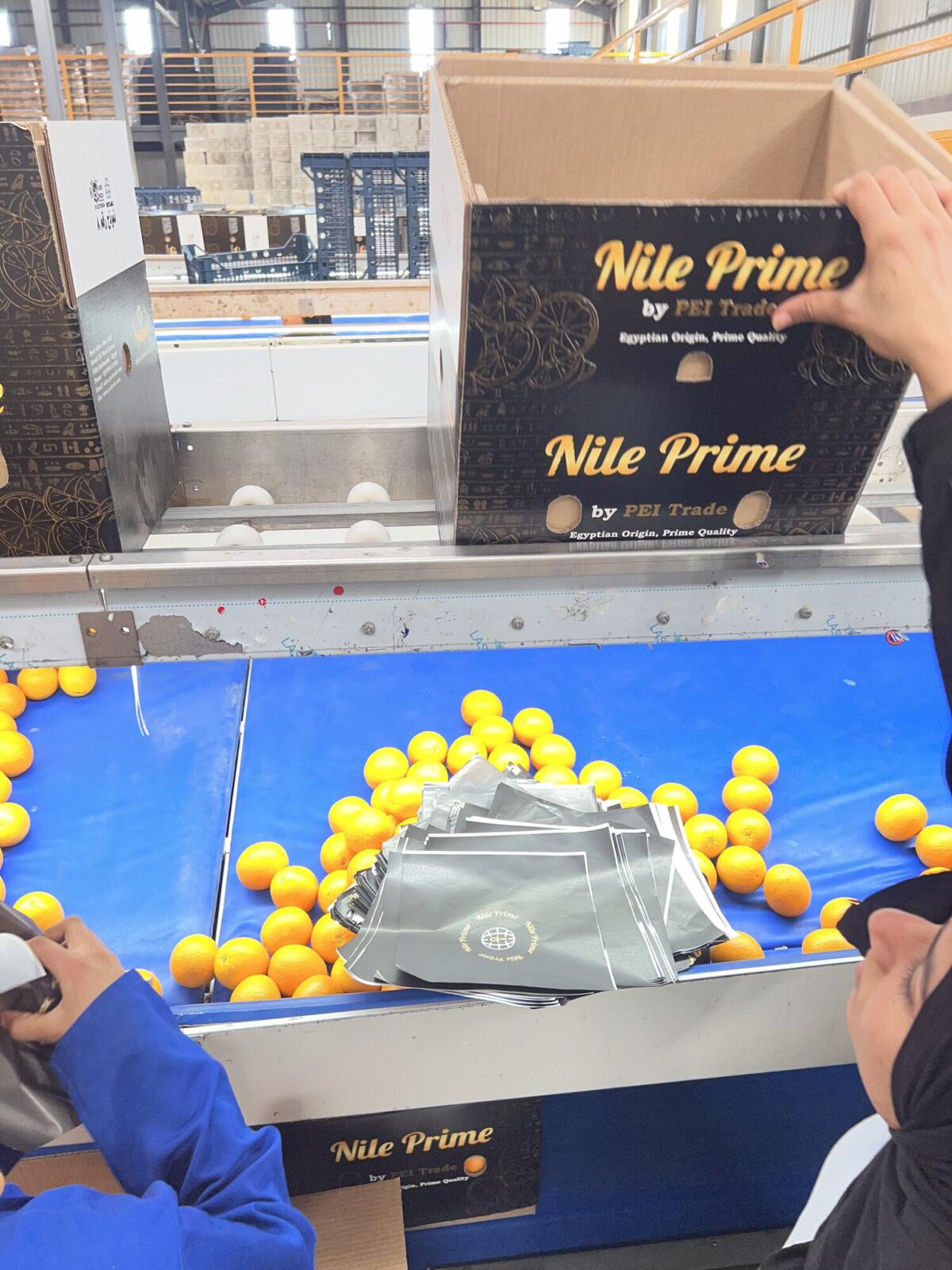
The figures below are the equilibrium ranges commonly specified on Egyptian export cartons. They are targets inside the sealed liner, not reefer settings. A container carrying MAP cartons still runs its normal set point and its vents closed or nearly closed, because opening the vents does nothing for gas inside a sealed bag.
| Crop | Target O2 | Target CO2 | Carry temp | Added days |
|---|---|---|---|---|
| Fresh strawberry | 5 to 10% | 15 to 20% | 0 to 1 C | 4 to 7 |
| Green beans, fine | 2 to 5% | 3 to 8% | 5 to 7 C | 5 to 8 |
| Table grape | 3 to 5% | 3 to 5% | 0 to 1 C | 7 to 14 |
| Pomegranate aril | 3 to 5% | 10 to 15% | 2 to 4 C | 6 to 10 |
| Fresh herbs | 5 to 10% | 4 to 8% | 1 to 2 C | 5 to 9 |
| Broccoli | 1 to 2% | 5 to 10% | 0 to 1 C | 6 to 10 |
Mango, citrus, onion, garlic and potato are shipped in ventilated cartons or mesh, not sealed film. Onion and garlic need air movement to stay dry, and a sealed liner traps the moisture that starts neck rot. Citrus under film develops off-flavours as ethanol and acetaldehyde build up in the rind. Mango ripens unevenly when carbon dioxide climbs above roughly 8 percent, and the fruit already travels well at its correct reefer set point without any packaging intervention.
Three failures account for most MAP complaints on arrival. The first is a film matched to the wrong temperature: permeability is specified at a stated carry temperature, and a load that runs two degrees warm respires faster than the film can vent, so oxygen falls to zero and the product ferments. The second is sealing warm fruit. Cartons must be pulled to temperature before the liner is closed, because a sealed bag cools very slowly and the residual field heat is then locked in. The third is a punctured or badly folded liner, which produces a carton that behaves like an ordinary one while the paperwork says otherwise.
Cost is the fourth consideration and it is a commercial one. A perforated or breathable liner typically adds a small amount per carton plus the sealing step at the packhouse. On a 10 day sailing to the Gulf that cost is usually hard to justify on a robust product. On a 20 to 26 day sailing to Southeast Asia or a long land leg after discharge, the same spend can be the difference between a saleable arrival and a claim. Match the decision to the port to port transit time rather than to the product alone.
Ask for four things in writing: the film type and its oxygen transmission rate, the temperature at which that rate is quoted, the target equilibrium gas range, and the point in the line at which the liner is sealed relative to pre-cooling. A supplier who can answer all four is running a controlled process. A supplier who answers only the first is selling you a plastic bag.
PEI Trade is an Egyptian exporter of 35 export-grade crops, not a neutral reviewer. Figures above are working targets and should be confirmed against your own arrival records and your film supplier’s data sheet.
Need a MAP specification for a specific crop and destination? Send the crop, the destination port and your required shelf life on arrival to PEI Trade on WhatsApp at +20 10 9911 1918 and we will come back with the film specification, the carton format and a price per carton.
