Address
Work Hours
Monday to Friday: 7AM - 7PM
Weekend: 10AM - 5PM

Address
Work Hours
Monday to Friday: 7AM - 7PM
Weekend: 10AM - 5PM


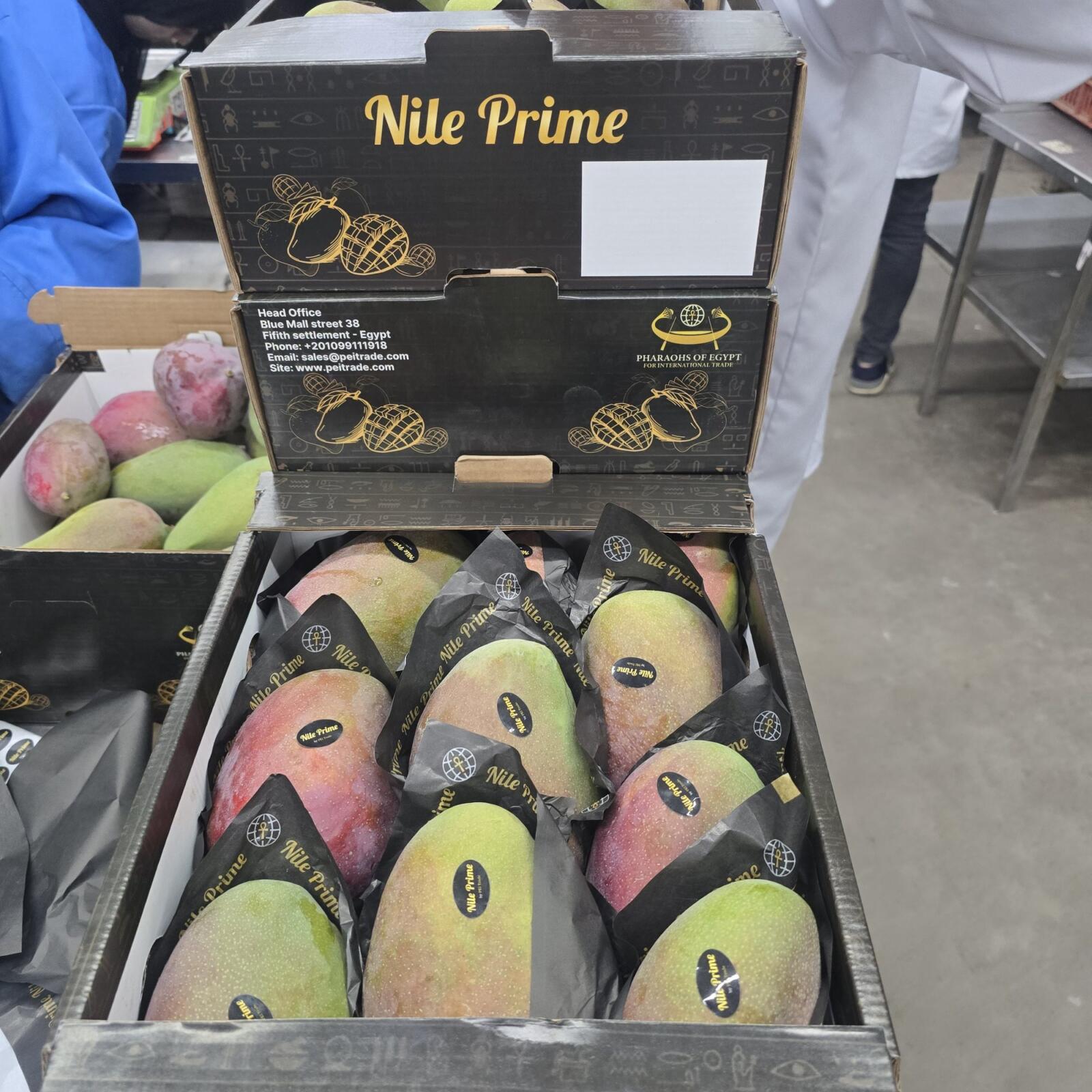
Which mango is sweetest? Measured Brix ranges for ten export varieties, from Owaisi at 18–22° down to Tommy Atkins at 12–14°.
The sweetest mangoes we pack are Owaisi at 18–22° Brix, Sedeeka at 17–20° and Zebda at 16–20°. The least sweet is Tommy Atkins at 12–14°. Those are measured ranges from our own 2026 packing records, taken with a refractometer on fruit at packing maturity — not tasting notes, and not figures copied from another site.
Key facts. Range across ten Egyptian export varieties: 12–22° Brix. Sweetest: Owaisi, 18–22°. Least sweet: Tommy Atkins, 12–14°. Typical export threshold for eating quality: about 14° Brix at packing.
Measured on the 2026 Egyptian crop. PEI Trade is the exporter, not a neutral reviewer.
Ten export varieties, ranked by measured Brix from highest to lowest. Owaisi tops the list at 18–22° on a small 300–500 g fruit; Zebda reaches 20° on fruit up to 800 g, which is why it is the variety most often asked for by name in the Gulf.
| Rank | Variety | Brix | Fruit weight | Fibre | Peak window |
|---|---|---|---|---|---|
| 1 | Owaisi (Ewais) | 18–22° | 300–500 g | Low | August–September |
| 2 | Sedeeka | 17–20° | 250–450 g | Low | August–September |
| 3 | Zebda | 16–20° | 400–800 g | Very low | August–September |
| 4 | Timour | 16–19° | 350–550 g | Low | July–August |
| 5 | Fagri Kelan | 15–18° | 500–900 g | Some | July–August |
| 6 | Kent | 14–16° | 450–700 g | Minimal | August–October |
| 7 | Shelly | 14–16° | 450–650 g | None | September–October |
| 8 | Naomi | 13–15° | 400–600 g | None | July–August |
| 9 | Keitt | 13–15° | 500–900 g | None | September–November |
| 10 | Tommy Atkins | 12–14° | 400–600 g | Some | July–September |
These are ranges, not fixed values. Brix on the same variety moves with the growing region, the season, the position of the fruit on the tree and the stage of maturity at picking. A carton of Owaisi picked early in the window can read 18° where fruit from the same orchard three weeks later reads 22°.
One degree Brix is one gram of sucrose in 100 grams of solution. On fruit it is read with a refractometer from a few drops of juice, and it reports total soluble solids — mostly sugars, but also acids and other dissolved compounds. It is the closest thing the trade has to an objective sweetness number, which is why buyers specify it.
What Brix does not measure: acidity, fibre, aroma, flesh texture or the sugar-to-acid ratio that decides whether a mango tastes rich or flat. Two mangoes at 16° Brix can taste nothing alike.
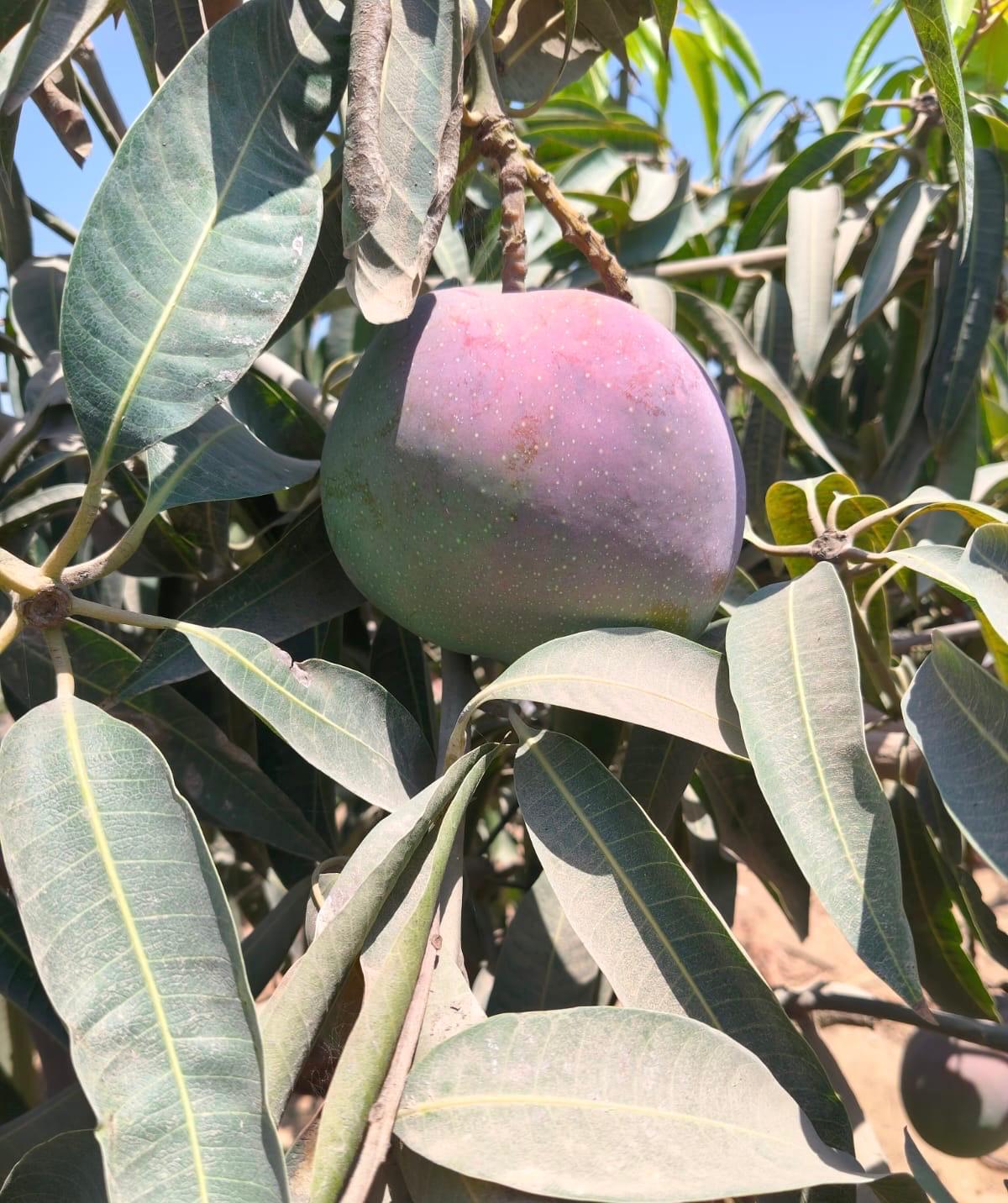
Sweetness without acidity reads as flat. The varieties that eat best are usually not the ones at the top of the Brix table but the ones that combine 16–20° with enough acid to give the sugar shape — Zebda is the clearest example, which is why it commands a premium over Owaisi in some markets despite a lower ceiling.
Fibre matters as much. Zebda and Shelly are near fibre-free; Fagri Kelan and Tommy Atkins carry some. A fibrous mango at 18° Brix will be sent back by a retail buyer that would have accepted a clean-fleshed one at 15°. Aroma is the third axis and the hardest to specify — nobody has a number for it.
Not because of the sugar. What actually limits sea freight is the maturity the fruit was picked at, its skin thickness and its flesh firmness. The sweetest mangoes tend to be the ones growers leave longest on the tree, and fruit picked later has less transit life left — that is the real relationship, and it applies to any variety.
| Variety | Brix | Sea freight | Air freight | Note |
|---|---|---|---|---|
| Keitt | 13–15° | Strong | Strong | Firm flesh, thick skin, latest window |
| Kent | 14–16° | Strong | Strong | The standard long-haul export variety |
| Naomi | 13–15° | Strong | Strong | Opens the season, holds colour |
| Zebda | 16–20° | Conditional | Strong | Needs early picking and tight temperature control |
| Owaisi (Ewais) | 18–22° | Conditional | Strong | Small fruit, short window, mostly regional and air |
| Sedeeka | 17–20° | Conditional | Strong | Smallest counts, 12 to 16 |
Practical reading: for a 20-day sea route, ask for Kent, Keitt or Naomi. For the sweetest mangoes on the list — Owaisi, Sedeeka, Zebda — use air freight, or a short sea route into the Gulf, and accept a shorter shelf life at the other end.
Brix is read with a handheld or digital refractometer on juice pressed from a cut sample, at ambient temperature, at the grading line. The reading is taken on a sample from each lot as it arrives, not on every fruit, so a Brix figure on a specification sheet is a lot average with a tolerance, not a guarantee for a single mango.
If Brix matters to a programme, it belongs in the contract as a minimum with a sampling rule attached — for example a lot minimum of 14° measured on ten fruit per pallet. A Brix number with no sampling method behind it cannot be enforced by either side.
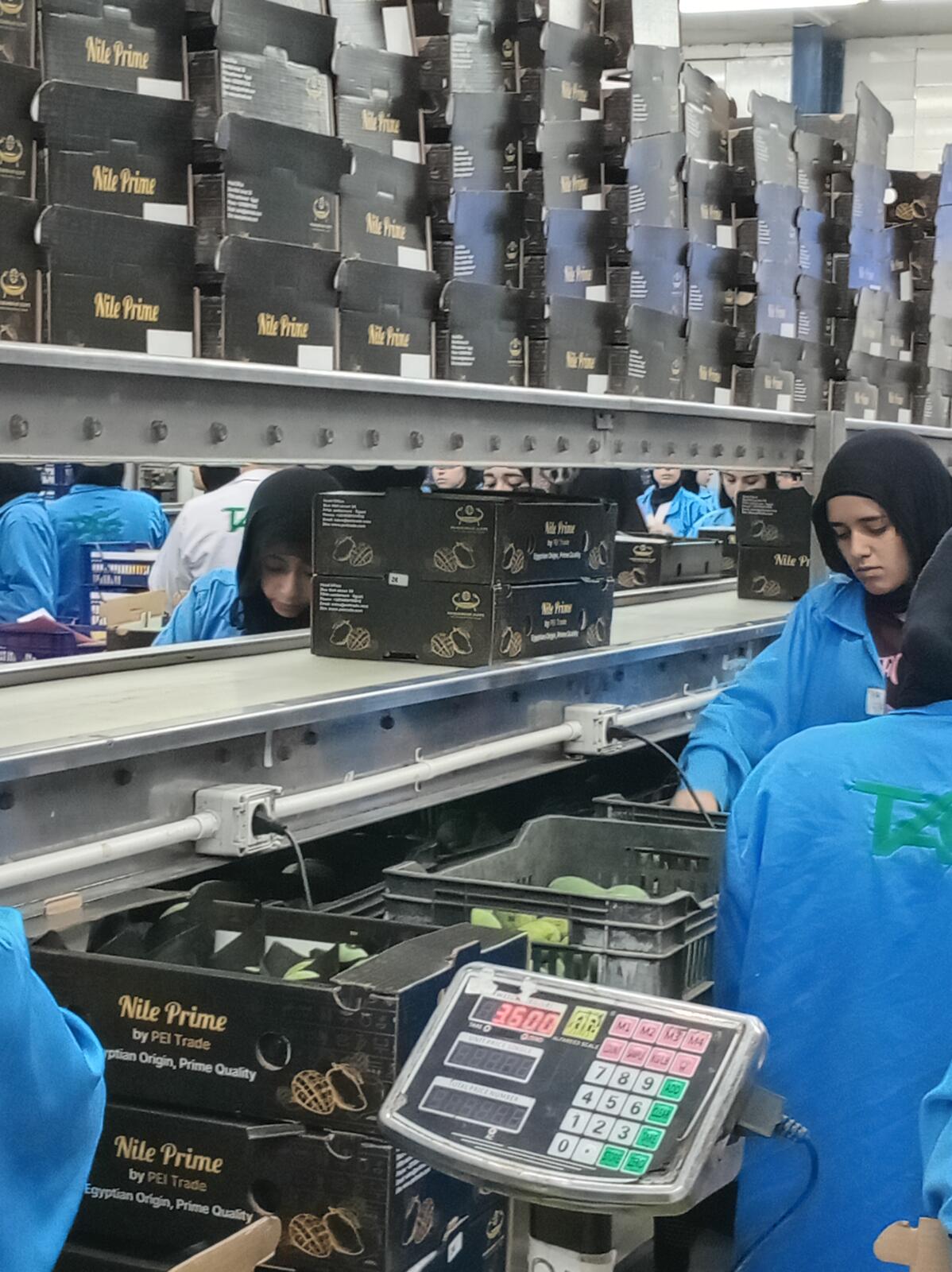
Alphonso (India), Ataulfo (Mexico) and Carabao (the Philippines) all have reputations for high sweetness, and all three are frequently named in answer to the question of which mango is sweetest. Ataulfo in particular is one of the varieties the National Mango Board lists as available on the US market through most of the year. We have not measured any of the three, so no Brix figure for them appears in the table above — publishing one we did not take would defeat the point of the page.
Egypt does not commercially grow or export Alphonso, Ataulfo or Carabao. Where they come up in a sourcing conversation they are alternative origins, not something an Egyptian exporter can supply. Our range is the ten varieties in the table, and the full detail on each is in the Egyptian mango varieties guide; the mango season calendar shows which of them is picking in a given month.
Of the ten Egyptian export varieties we measure, Owaisi (Ewais) is the sweetest at 18 to 22 degrees Brix, followed by Sedeeka at 17 to 20 and Zebda at 16 to 20. Tommy Atkins is the least sweet at 12 to 14.
About 14 degrees Brix is the practical floor for export eating quality. Between 14 and 16 is a sound commercial mango, 16 to 18 is clearly sweet, and above 18 is at the top of the range for any variety.
Not because of the sugar itself. Sweeter fruit is usually picked later, and later-picked fruit has less transit life. Kent, Keitt and Naomi at 13 to 16 degrees Brix ship best by sea; Owaisi, Sedeeka and Zebda are better suited to air freight or short sea routes.
With a refractometer, on juice pressed from a cut sample at the grading line. It is measured per lot rather than per fruit, so a Brix figure on a specification is a lot average with a tolerance.
Close, but not identical. Brix measures total soluble solids, mostly sugars. Perceived sweetness also depends on acidity, fibre and aroma, which is why two mangoes at the same Brix can taste quite different.
Brix, fruit weight, count and fibre figures are measured on the 2026 Egyptian crop and recorded in PEI Trade packing and costing records. Photographs taken at our farm and packhouse, 30 July to 2 August 2026. Last updated 25 August 2026. PEI Trade is the exporter, not a neutral reviewer.
