Address
Work Hours
Monday to Friday: 7AM - 7PM
Weekend: 10AM - 5PM

Address
Work Hours
Monday to Friday: 7AM - 7PM
Weekend: 10AM - 5PM


A buyer's checklist for evaluating an Egyptian mango supplier: certifications, packhouse and cold chain, references, payment terms and the questions to ask.
Choosing an Egyptian mango supplier is not a matter of finding the biggest name. It is a matter of finding the one whose packhouse, certifications, season coverage and payment terms match the order you actually want to place. This page is a decision framework, not a directory: the criteria that separate a supplier who delivers the container you specified from one who delivers something close to it, the questions that expose the difference before you pay, and the warning signs worth walking away from.
Most disappointing first shipments trace back to an enquiry that was too vague to be answered properly. Before you contact a single supplier, write down five things: the variety or the end use, the fruit size range your market sells, the carton format, the loading weeks you need covered, and the certification your buyer or your customs authority will demand. With those five lines a serious exporter can tell you within a day whether they are the right supplier for you. Without them, everyone will say yes.
If any of those five are still open, settle them first. The Egyptian mango varieties guide covers which variety suits which market, the season calendar shows what is actually pickable in each loading week, and the grades and carton formats reference gives you the size codes to quote in.

Score every candidate on the same eight lines. The point of the table is not to find a perfect supplier — it is to see clearly where each one is weak, and decide whether that weakness matters for your order.
| Criterion | What a strong answer looks like | How to verify it | Risk if it is weak |
|---|---|---|---|
| Certification | Valid GlobalGAP on the farms, plus a food-safety scheme (BRCGS, IFS, ISO 22000 or equivalent) on the packhouse | Ask for the certificate number and check it in the issuing body’s public database — not the PDF they email you | Retail buyers reject the consignment on paper before anyone tastes the fruit |
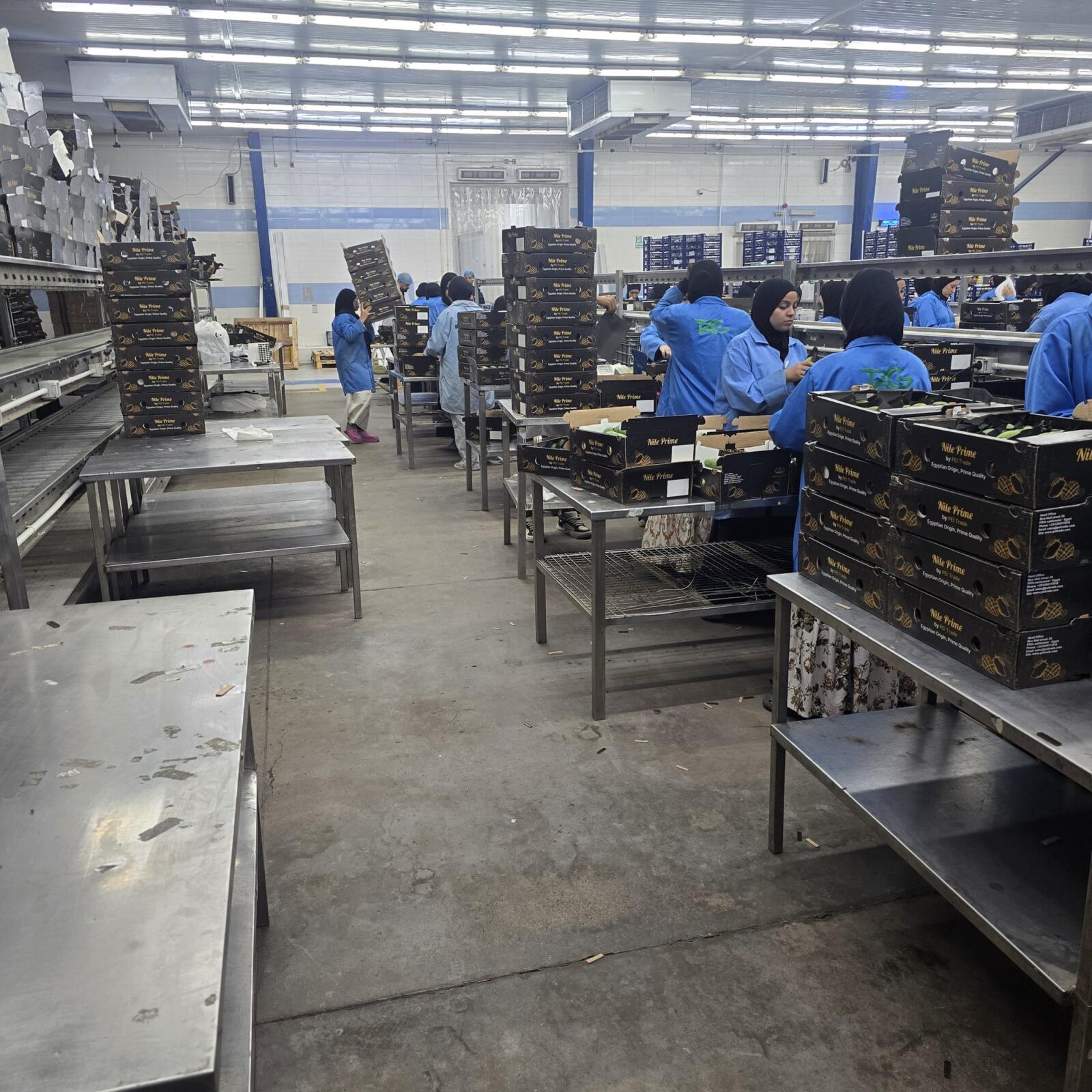
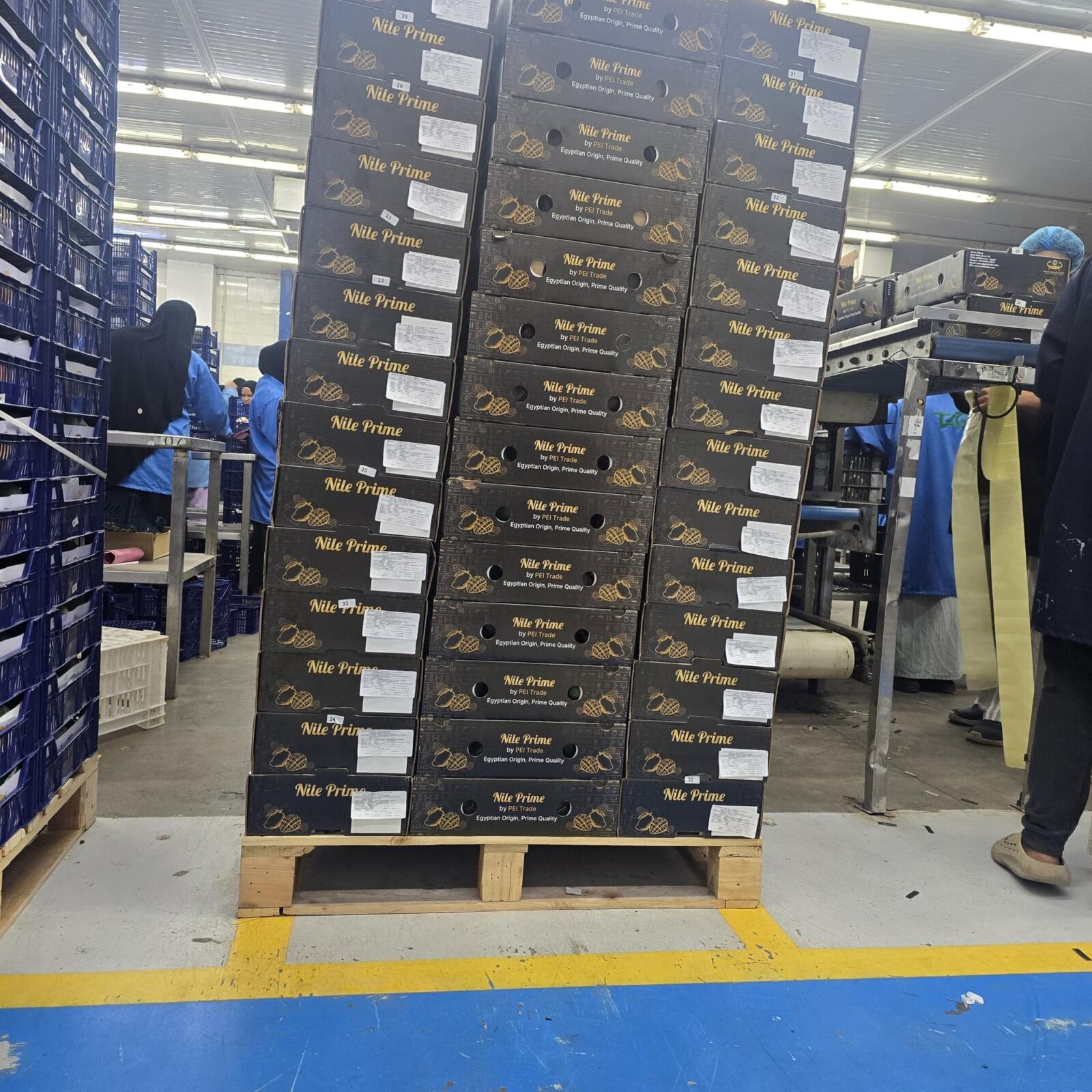
| Packhouse control | The exporter owns or has a dedicated line in the packhouse and can name it | Request a live video walkthrough during your loading week, not a stock photo library | A pure trading intermediary cannot control grading, and cannot fix a problem mid-season |
| Cold chain | Pre-cooling within hours of harvest, cold rooms on site, reefer loading at temperature | Ask for pulp temperature at loading and the reefer set point, in writing | Fruit arrives soft or with internal breakdown; the claim is unwinnable after discharge |
| Variety and season coverage | Named varieties with honest harvest windows, including when they cannot supply | Cross-check their stated windows against the published season calendar | Substitution — you order one variety and receive whatever was available |
| Experience in your market | Has shipped to your destination before and knows its documentation quirks | Ask which ports they have discharged at and what paperwork that market required | Detention at destination for a missing certificate nobody warned you about |
| References and traceability | Contactable buyers in a comparable market, and lot codes that trace back to a specific farm block | Actually call one reference; ask for a sample traceability record | No recourse and no root-cause analysis when quality varies between pallets |
| Documentation | Phytosanitary certificate, certificate of origin, packing list, invoice and bill of lading issued without prompting | Ask to see a complete redacted document set from a past shipment | Cargo sits at the port accruing demurrage while paperwork is corrected |
| Payment terms and claims | Clear, staged terms and a written procedure for quality claims with an inspection mechanism | Get the claims procedure in the contract, not in an email | Full prepayment with no leverage if the container arrives short of spec |
Certifications are not interchangeable, and a supplier who lists five of them is not necessarily better than one who holds the two your buyer requires. GlobalGAP covers practice at farm level — pesticide use, water, worker welfare, record keeping. BRCGS, IFS and ISO 22000 cover the packhouse: hygiene, hazard control, traceability of a lot through the line. GRASP or SMETA are social audits that European retail chains increasingly ask for alongside GlobalGAP. Organic certification is a separate track again, with its own inspection body and its own chain-of-custody paperwork.
Two practical rules. First, check the scope line on the certificate — it names the crops and the sites covered, and a certificate that covers citrus does not cover mango. Second, check the expiry date against your loading week, not against today. Market-specific requirements on treatment, residue limits and labelling are a separate layer on top; those are set out in the Egyptian mango export requirements guide.
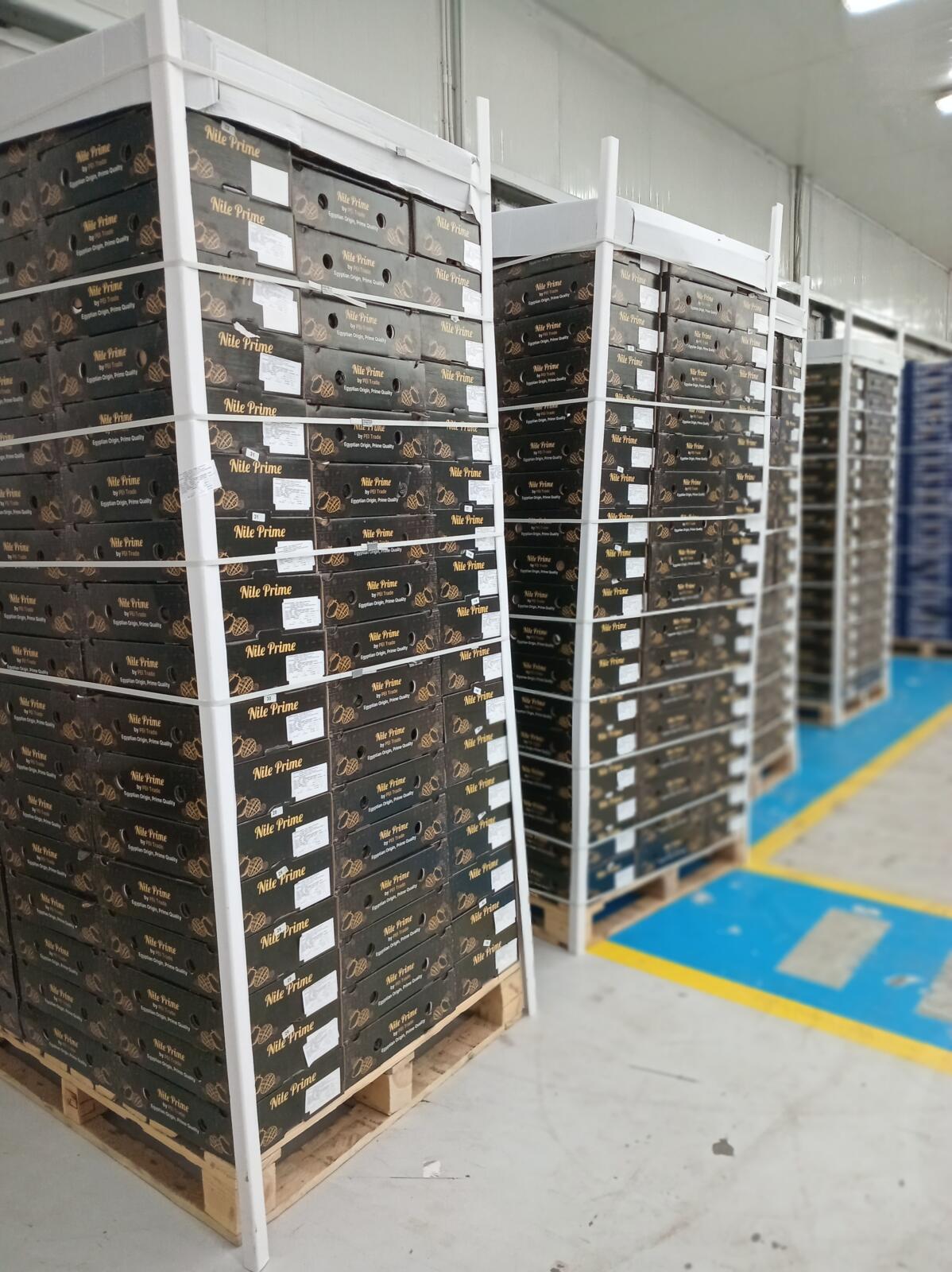
Mango is picked warm, in an Egyptian summer, and every hour before pre-cooling is shelf life you will never get back. A supplier with real cold-chain capacity can tell you the interval between harvest and the cold room, the pulp temperature at the moment the reefer doors close, and the transport temperature they will set for your variety. For mature green Keitt and Kent we ship at 10 to 12°C, with 85–90% relative humidity and fresh air exchange of 15–25 m³/h to vent ethylene and carbon dioxide. Below 10°C the risk is chilling injury, which shows up after arrival as grey flesh and uneven ripening — the full set-point sheet by crop is in our reefer container loading guide. A supplier without that capacity will answer in generalities.
Capacity matters just as much as equipment. A 40 ft high cube reefer takes 20 industrial pallets at 120 by 100 cm, which for mango is 18.7 to 20.8 tonnes depending on carton weight — so a weekly programme means the packhouse has to hit that volume repeatedly, at your grade, while the same season peak is pulling everyone else’s fruit. Ask what the daily throughput of the line is and how much of it is already committed for your loading weeks.
Send these verbatim. The speed and specificity of the reply tells you more than the answers themselves.
Question twelve is the sharpest one in the list. A supplier confident in their grading has no reason to refuse an independent inspector at the door.
Terms tell you how a supplier sees the relationship. A structure that splits the risk — a deposit at booking with the balance released against a scanned bill of lading and the shipping documents — leaves both sides exposed to roughly the same degree, and the split itself should be negotiated per order rather than assumed. A confirmed letter of credit costs more in bank fees but is the standard instrument for larger programmes and for buyers who cannot inspect at origin. Cash against documents sits between the two. Consignment terms should be treated with caution on a first shipment in either direction; they concentrate risk on whoever is furthest from the fruit. Our guide to payment methods in export trade sets out how each instrument works.
Whatever the structure, the claims mechanism belongs in the same document: who inspects at discharge, within how many hours, against which standard, and how a shortfall is settled. Agreeing that after a problem has occurred never goes well. Current market levels for the fruit itself are set out in the Egyptian mango prices guide, and the wider market picture — volumes, destinations, price direction — is in the 2026 export report.
A first container is a test of the supplier, so design it to produce information. Specify one variety and one size code rather than a mixed load, book it in a peak week rather than a shoulder week so that availability is not the variable being tested, ask for photographs of the loaded pallets with the temperature record attached, and open the container yourself at discharge with a written note of what you find. If it goes well you have a benchmark for every subsequent order. If it does not, you know precisely which of the eight criteria failed. The full sequence from enquiry to discharge is set out in the Egyptian mango export guide.
Verify the certificate number in the issuing body’s public database rather than trusting an emailed PDF, ask for a live video walkthrough of the packhouse during your loading week, call at least one buyer reference in a comparable market, and request a redacted document set from a past shipment. A genuine exporter can produce all four within a couple of working days.
There is no reliable published ranking of Egyptian mango exporters by volume, and size is a poor proxy for fit in any case. A large exporter with no line capacity left in your loading week is worse for you than a mid-sized one who can commit to it. Judge candidates on certification, packhouse control, cold chain and season coverage for the weeks you need.
GlobalGAP at farm level is the baseline for most export markets, plus a packhouse food-safety scheme such as BRCGS, IFS or ISO 22000. European retail buyers often add a social audit such as GRASP or SMETA. Always check the scope line — a certificate covering citrus does not cover mango — and check the expiry against your loading week.
A single 40 ft high cube reefer is the practical minimum for sea freight — 20 industrial pallets, which for mango is 18.7 to 20.8 tonnes depending on carton weight — and most exporters quote from one container. Smaller air-freight consignments are possible for high-value varieties early in the season, but the cost per kilogram is far higher and it is usually only worth it for sampling or for a premium retail launch.
Either can work, but you should know which one you are dealing with. An exporter with its own packhouse can control grading and fix a problem mid-season; an agent depends on whoever they source from that week. If you use an agent, make sure the contract names the packhouse and that your specification travels with the order.
Mature green Keitt and Kent travel at 10 to 12 degrees Celsius with 85 to 90 percent relative humidity and fresh air exchange of 15 to 25 cubic metres per hour. Below 10 degrees the fruit risks chilling injury, which appears after arrival as grey flesh and uneven ripening. The set point belongs in the booking instruction and on the bill of lading, not only in an email.
Follow the claims procedure agreed in the contract: inspect at discharge within the agreed window, document with photographs and a third-party surveyor’s report, and record pulp temperatures and the reefer data logger download. Claims raised without contemporaneous evidence, or after the agreed window has closed, are very difficult to settle.
Send the twelve questions above and we will answer every one of them in writing, with certificate numbers you can verify yourself and references you can call. Tell us the variety, size, carton format and loading week you have in mind and we will tell you honestly whether we are the right supplier for that order.
