Address
Work Hours
Monday to Friday: 7AM - 7PM
Weekend: 10AM - 5PM
Address
Work Hours
Monday to Friday: 7AM - 7PM
Weekend: 10AM - 5PM


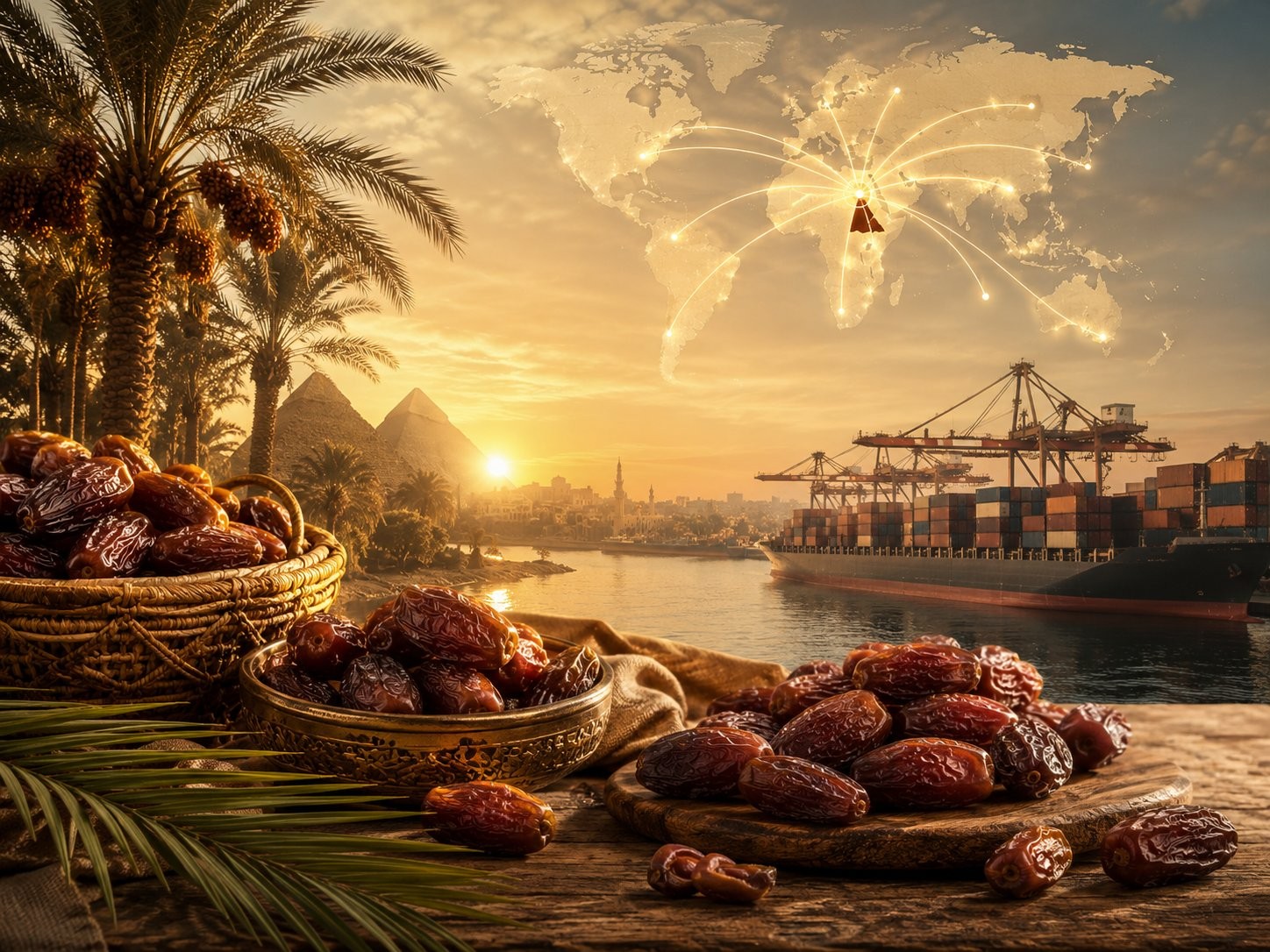
Egypt is the world's largest date producer (~1.7M t) yet exports only a fraction — the sector's biggest opportunity. Markets, Medjool & Siwi varieties, outlook.
Egypt is the world’s largest producer of dates — around 1.7 million tonnes a year — yet it exports only a small share of that crop. That gap is the single biggest opportunity in Egyptian agri-export: with the global date trade worth about USD 2.4 billion in 2024 and growing roughly 20% a year, and rising international demand for premium Medjool and semi-dry varieties, Egypt is positioned to convert production leadership into export leadership. This report compiles the production, exports, destinations, varieties and the opportunity into one citable reference, updated annually. For the wider picture see the produce export statistics hub and the State of Egyptian Agri-Export 2026.
Egypt’s export markets are led by Morocco, Indonesia and Turkey, with the Gulf, Asia and Europe offering room to grow. The lever is variety: shifting more of the crop toward export-friendly semi-dry types (such as Siwi) and premium Medjool. The figures below set out where Egypt’s dates stand and where the trade can go.
2026 edition · Last Updated: June 2026. Figures use FAO/official production data and ITC trade data cross-checked with IndexBox and trade press; export-specific figures are described with their basis. See Sources & Methodology.
The headline numbers, ready to quote:
Egypt leads the world in date production. It out-produces Saudi Arabia, Algeria, Iran and Iraq, and its palm count and output have grown steadily. But global date trade is concentrated among origins that grow more export-grade dry and semi-dry fruit, which is why Egypt’s share of exports lags its share of production.
| Metric | Value | Source |
|---|---|---|
| Egypt date production | ~1.7 million t (world #1) | FAO / official |
| Egypt + Saudi + Algeria share | ~49% of global production | 2024 · IndexBox |
| Global date trade value | ~USD 2.4 billion | 2024 · trade press |
| Global trade growth | ~20% / year | trade press |
| Main export competitors | Saudi Arabia, Tunisia, Iran, Jordan, Israel | trade |
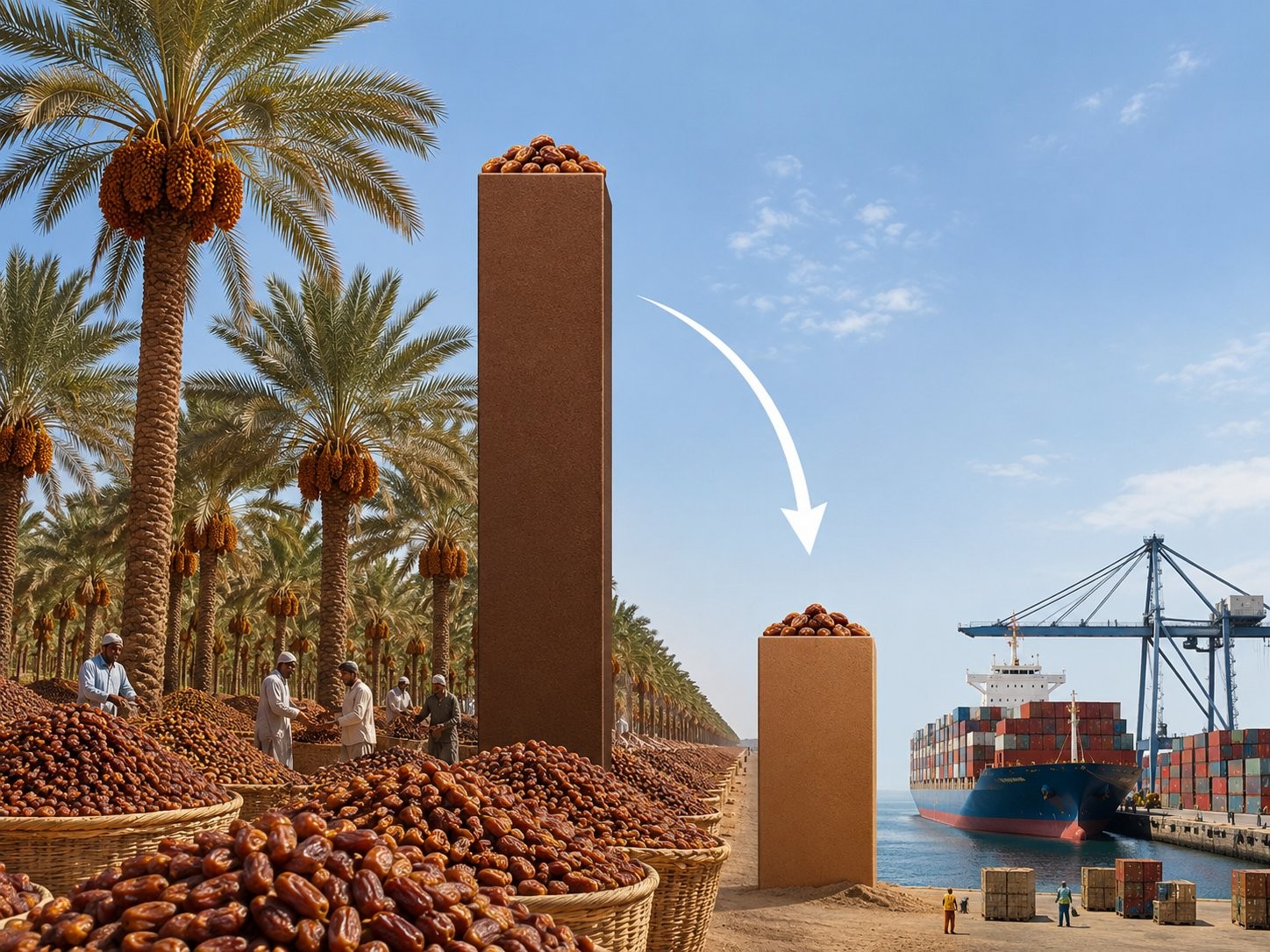
Egypt’s defining date story is the distance between production (number one in the world) and exports (still a small share of the crop). Much of the harvest is soft, high-moisture fruit consumed domestically and less suited to long-haul export. The path to closing the gap is well understood in the sector: expand semi-dry and dry varieties that travel well, invest in grading, packing and food-safety certification, and target the fast-growing premium segment. Doing so would let the world’s biggest producer claim a matching place in the USD 2.4 billion global trade.
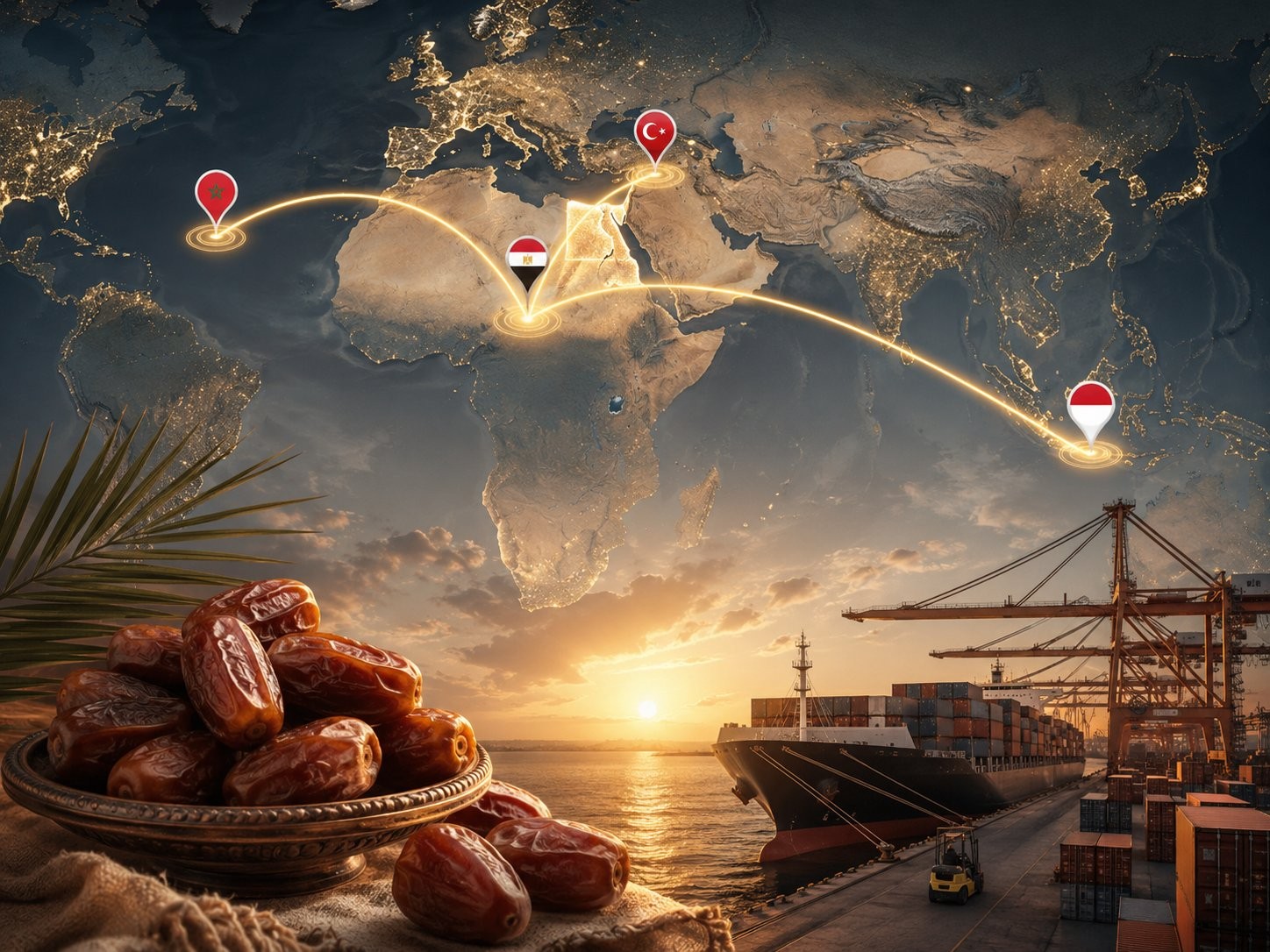
Egypt’s date exports go mainly to nearby and high-consumption markets, with significant headroom in the Gulf, Asia and Europe.
| Market | Role | Note |
|---|---|---|
| Morocco | Top market | Among the largest by value |
| Indonesia | Top market | Large Ramadan demand |
| Turkey | Top market | Re-processing & demand |
| Gulf (Saudi, UAE) | Important | Regional demand & re-export |
| Asia / Europe | Growth | Medjool & semi-dry potential |
Source: IndexBox (top markets Morocco, Indonesia, Turkey). Demand peaks around Ramadan.
Egypt grows the full spectrum from soft to dry. Soft varieties dominate the crop and the domestic market; semi-dry and premium types drive the export opportunity.
| Variety | Type | Role |
|---|---|---|
| Zaghloul | Soft (red) | Iconic fresh; mainly domestic |
| Hayani | Soft (dark) | Fresh & some export |
| Samani / Bent Eisha | Soft | Domestic & regional |
| Siwi (Saidy) | Semi-dry | Main export-grade variety |
| Medjool | Premium semi-dry | Fast-growing premium export |
Two levers turn Egypt’s production lead into export growth. First, Medjool: international interest in large, premium Medjool dates is rising fast, and Egyptian Medjool plantings are expanding to capture it. Second, semi-dry varieties (Siwi and others), which currently make up only about a fifth of the crop but travel well and meet broad global demand — the sector has called for a dedicated council and a strategy to scale them. Both shift Egypt’s mix toward what the world buys, in a trade growing ~20% a year.
Date prices vary widely by variety and grade — premium Medjool commands a multiple of bulk semi-dry and soft dates. Egypt’s cost base keeps semi-dry Siwi competitive, while Medjool targets the premium tier.
| Segment | Position | Source |
|---|---|---|
| Medjool (premium) | Highest price tier | trade |
| Siwi / semi-dry | Competitive bulk | trade |
PEI Trade does not publish a price list. Date FOB moves week to week with variety, grade, calibre, available volume, packing and vessel space, and a figure fixed at publication misleads more than it helps. For a current number against your spec and destination port, ask the export desk.
Egypt’s date palms span the Nile Delta and Valley, Upper Egypt, the New Valley, and the oases — Siwa is the heartland of semi-dry Siwi dates. Egypt has one of the world’s largest palm populations, and continued planting (including Medjool) underpins both its production lead and its export ambitions.
| Item | Detail |
|---|---|
| Harvest | Roughly August–November |
| Shelf life | Dry/semi-dry store long; soft dates need chilling |
| Container | Ambient for dry/semi-dry; reefer for soft & premium |
| Packing | Retail packs, 5 kg cartons, bulk by segment |
| Lead ports | Alexandria, Damietta; Red Sea for Asia/Gulf |
The outlook is one of large untapped potential. A 20%-a-year global trade, rising Medjool demand, expanding premium plantings and a clear strategy to grow semi-dry varieties all favour Egyptian exporters who invest in grading, packing and certification. The swing factors are variety mix, food-safety compliance for new markets, and competition from established date exporters. The producer that closes the production–export gap stands to gain the most.
Egypt offers the world’s deepest date supply base and a competitive cost position across semi-dry Siwi and premium Medjool. The practical levers for 2026: choose the variety and grade for your market (Medjool premium vs Siwi bulk), specify packing, confirm food-safety and phytosanitary documentation, and plan around the August–November harvest and Ramadan demand. PEI Trade can source across Egyptian date varieties and advise on grade, packing, ports and Incoterms.
Method. This report compiles FAO/official production data and ITC trade data, cross-checked with IndexBox and trade press. Egypt’s world-leading production (~1.7 million tonnes) is well established; precise export volume and value are smaller and reported inconsistently, so export-specific figures are described qualitatively rather than stated as precise totals. The global-trade value (~USD 2.4 billion, 2024) and ~20% growth are from trade-press market sizing.
Edition: 2026 · Compiled: June 2026 · Update cadence: annually.
Reusing a figure? Please cite it and link to this page as the source.
PEI Trade (2026). Egyptian Dates Export Report 2026. PEI Trade. https://peitrade.com/egyptian-dates-export-report-2026/
Yes. Egypt is the world’s largest producer of dates, at around 1.7 million tonnes a year. Egypt, Saudi Arabia and Algeria together account for about 49% of global date production.
Egypt exports only a small share of its large crop — the sector’s biggest growth opportunity. Top export markets by value are Morocco, Indonesia and Turkey, with strong potential in the Gulf, Asia and Europe as Egypt expands export-friendly varieties.
Egypt grows soft varieties such as Zaghloul, Hayani and Samani (mostly domestic), the semi-dry Siwi (its main export variety), and premium Medjool, whose export plantings are expanding.
The leading markets by value are Morocco, Indonesia and Turkey, with the Gulf, Asia and Europe offering growth. Demand peaks around Ramadan.
The date harvest runs roughly from August to November. Dry and semi-dry dates store for long periods, while soft dates need chilling, giving Egypt year-round export availability across segments.
Looking for a date partner with access to the world’s deepest supply base — premium Medjool, semi-dry Siwi and soft varieties — with grading, packing, certification and documentation handled end to end? Let’s build your 2026 date programme.
Browse our dates product page, or see the full produce export statistics, the pomegranate report and the State of Egyptian Agri-Export 2026.
