Address
Work Hours
Monday to Friday: 7AM - 7PM
Weekend: 10AM - 5PM

Address
Work Hours
Monday to Friday: 7AM - 7PM
Weekend: 10AM - 5PM


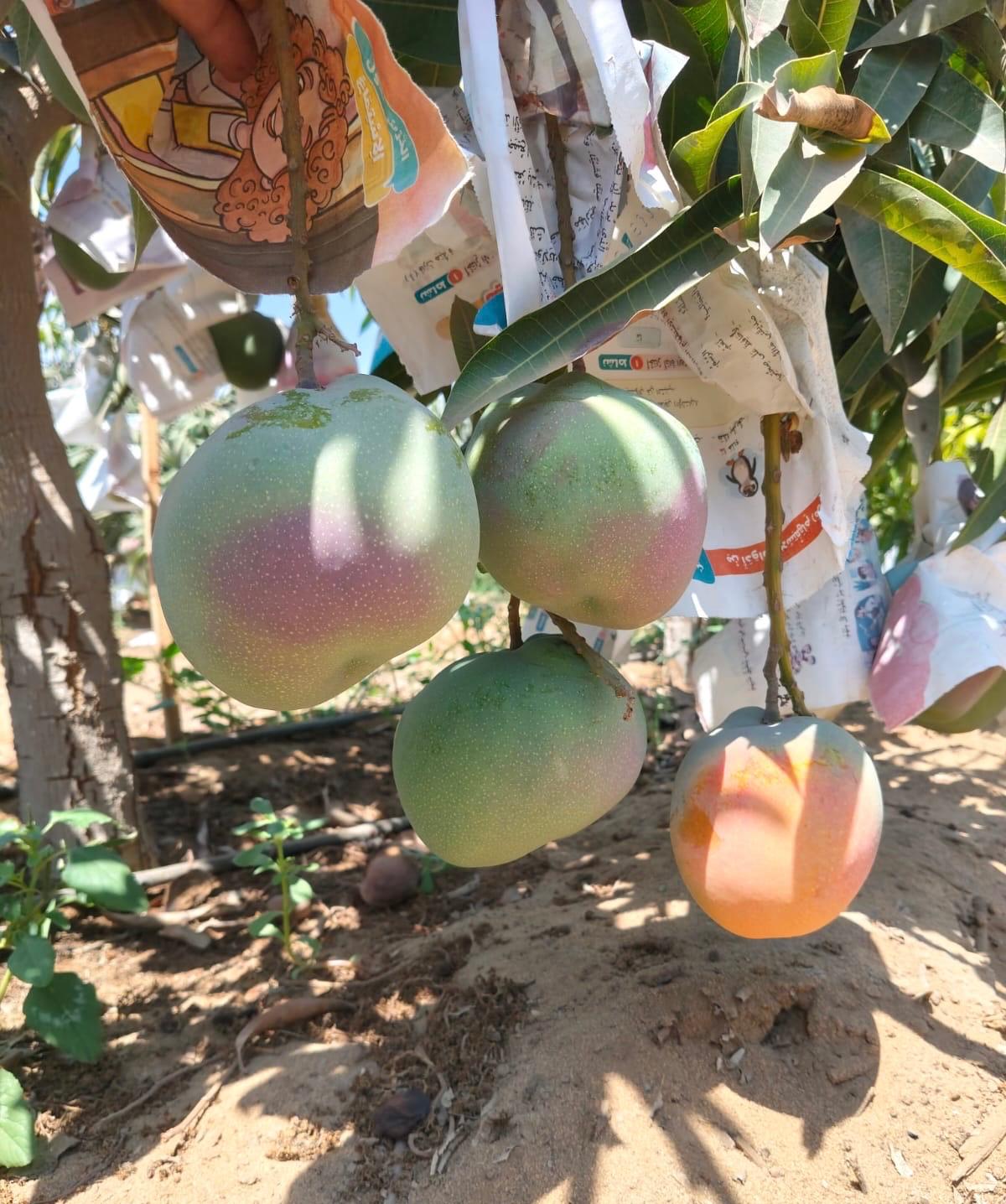
Where Egypt's export mangoes grow — Bahariya Oasis, Ismailia, Sharkia and the Delta — and how region decides variety, harvest weeks and your loading window.
Egypt ships mango from five distinct production zones, and they do not ripen at the same time. A buyer who only asks “is Keitt ready?” gets one answer. A buyer who asks “is Keitt ready in Bahariya?” gets a loading date. This page maps the mango growing regions of Egypt, explains what each region does to the fruit in the carton, and gives you a region-by-variety harvest table you can plan a container against.
Egypt runs roughly 1,000 km north to south, and mango is planted along almost all of it. That spread creates a natural harvest stagger, and the sequence is well established: picking starts in Upper Egypt at Aswan, moves north to Luxor, and then reaches Ismailia and the Delta. The same variety planted at both ends of that line is picked weeks apart. For an importer this is the whole point of buying Egyptian — you are not tied to one four-week window the way you are with a single-region origin.
Three regional factors move the date and the spec:
None of this is theoretical for you as a buyer. Region is what decides whether the fruit you booked for week 38 actually exists in week 38.
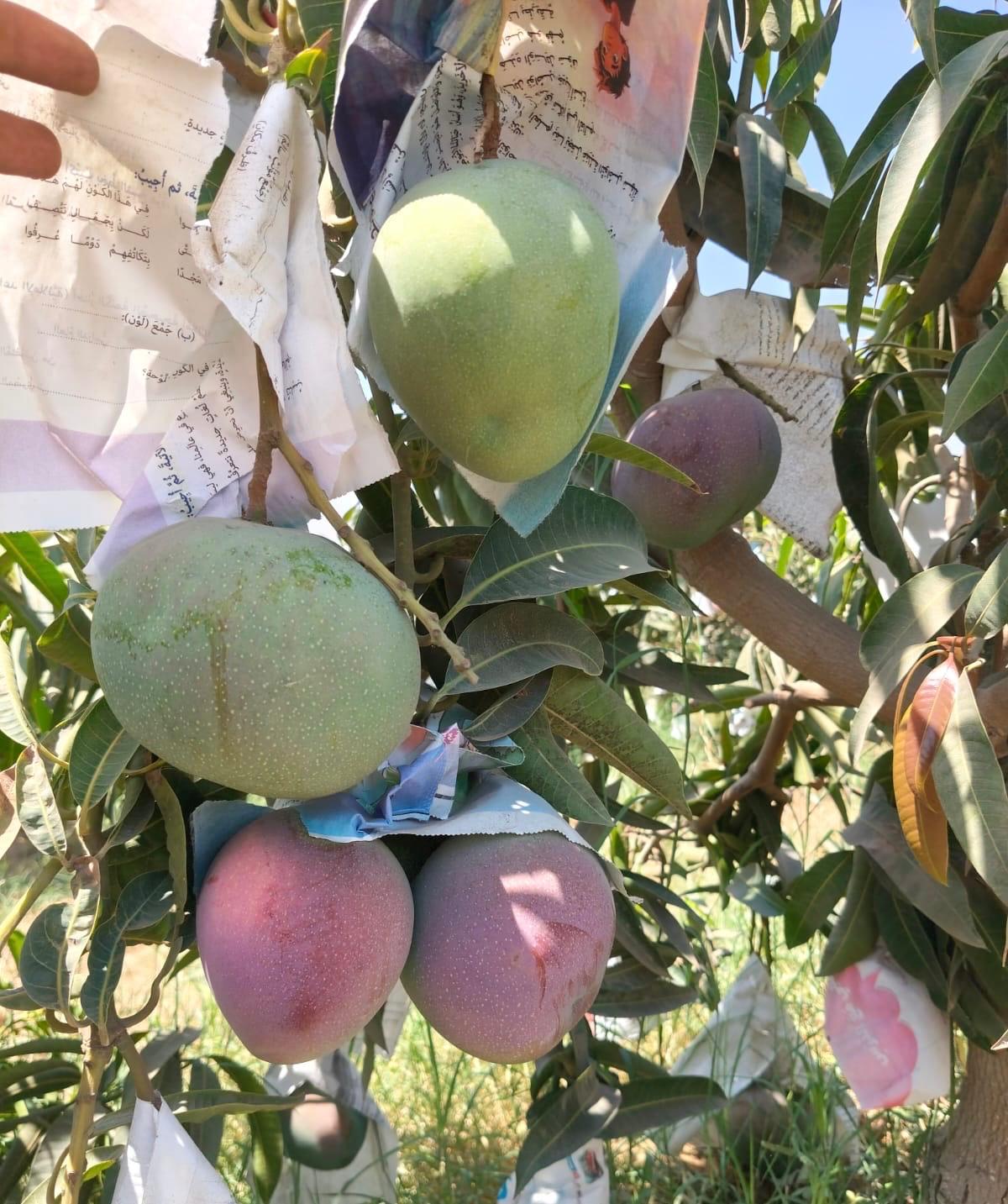
Bahariya sits in the Western Desert, roughly 370 km southwest of Cairo, and it is the region most buyers have never heard of and most technical buyers end up asking for by name. Everything there is planted on reclaimed sand, irrigated from wells through drip, and grown under a wide day-to-night temperature swing.
Three things follow from that. First, humidity is very low, so fungal skin defects are rare and the fruit tends to arrive at the packhouse with clean, unmarked skin. Second, the cool nights slow ripening, which pushes the Bahariya harvest weeks behind the same variety in the Delta — this is the region that carries Egypt’s late-season Keitt through to the end of the national window. Third, the wide temperature swing tends to lift sugars, so desert-grown fruit generally tests higher than the same variety from the humid north. All export fruit is picked mature-green and monitored for Brix at harvest; we confirm the actual reading per lot rather than quoting a standing figure, because it moves with the block and the pick date.
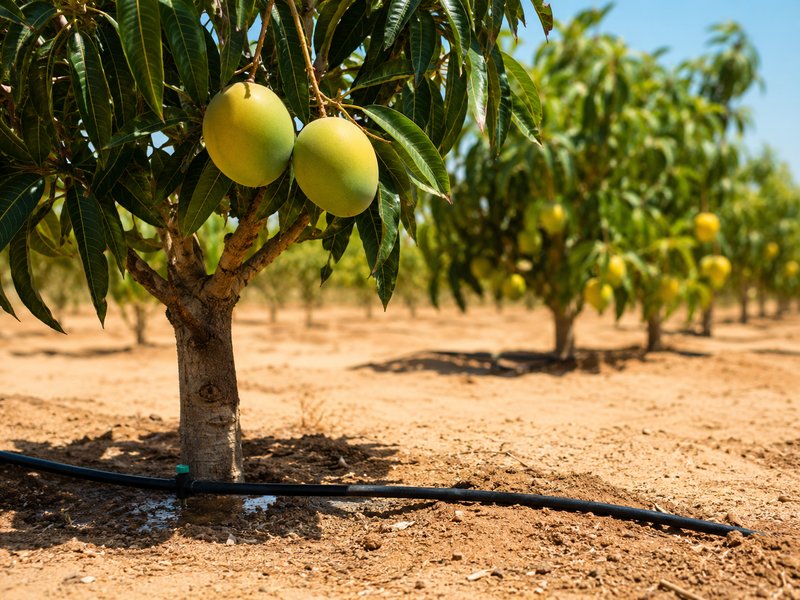
The trade-off is distance. That 370 km to Cairo is followed by a further run to Damietta or Alexandria, so inland trucking is longer and the cold chain has to be right from the field. Ask any supplier quoting you Bahariya fruit how quickly it is pre-cooled after picking.
Dominant export varieties: Keitt and Kent. See the Egyptian mango varieties guide for full specs on each.
Ismailia is Egypt’s flagship mango governorate and, with neighbouring Sharkia, forms the belt that most export volume actually comes from. The scale is worth stating plainly: Ismailia alone carries around 120,000 acres of mango — roughly 36% of Egypt’s total mango area — and accounts for about 40% of the country’s mango exports. The land here is reclaimed sandy soil along the Ismailia Canal, irrigated but not waterlogged, which is close to ideal for mango.
This belt is also where Egypt’s local-favourite varieties are concentrated. Ewais (Owaisi), Zebda and Sokary are grown here at scale, alongside the international varieties. That matters commercially: Ewais and Zebda command strong prices in the Gulf and among diaspora buyers, and Ismailia is where you source them properly rather than as a by-catch of a Keitt programme.
On timing, the belt works in two stages. The international varieties come first — Kent picks from around early August — while the main Ismailia harvest of the local varieties runs from mid-August into October. Packhouse infrastructure here is the densest in the country, so lead times from confirmation to loading are the shortest.
Dominant export varieties: Ewais (Owaisi), Zebda, Sokary, Naomi, Kent.
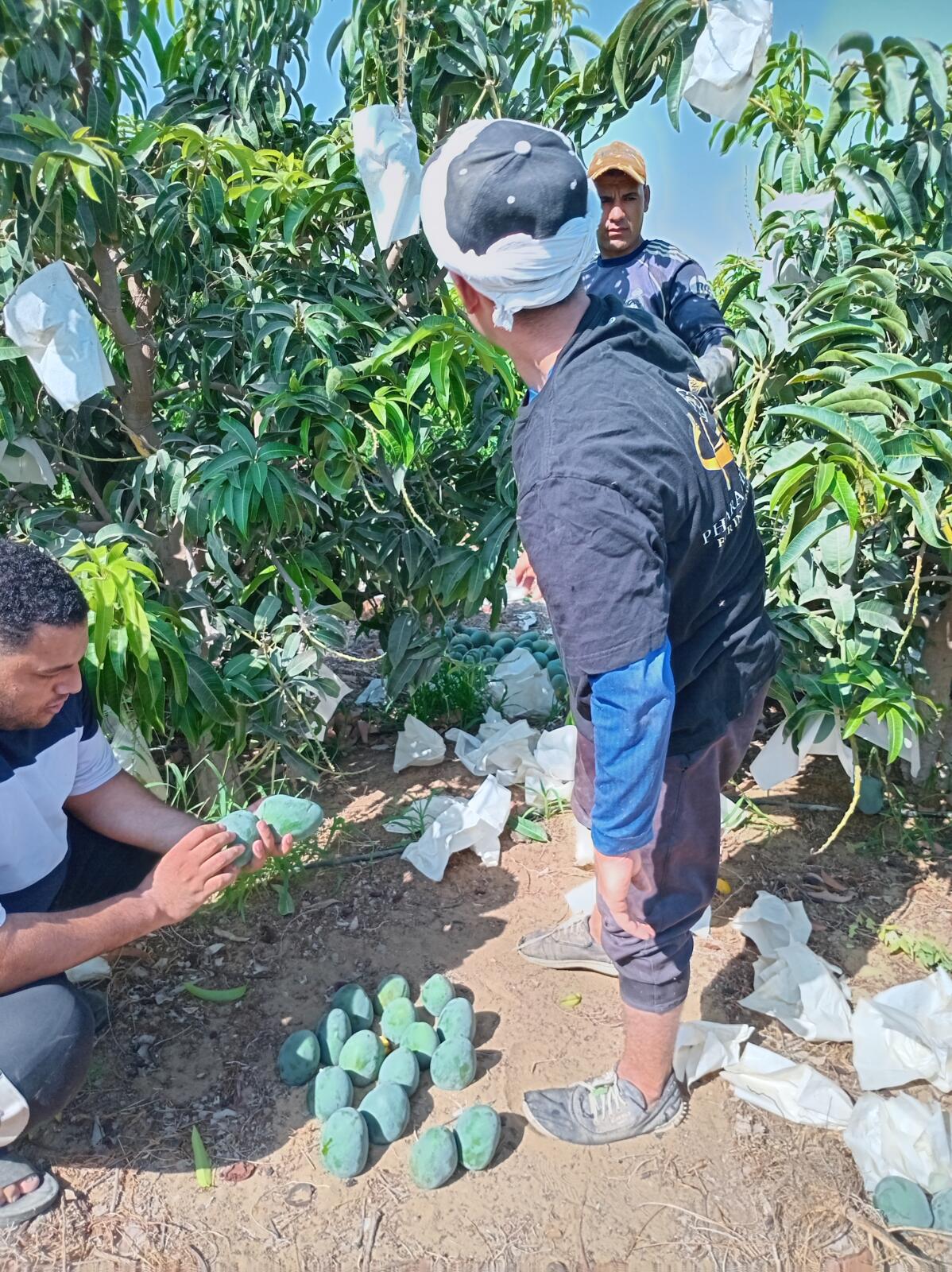
Two quite different things get grouped under “the Delta”. The old Delta — Beheira, Qalyubia, Menoufia — is heavier clay loam on canal irrigation, older plantings, high volume, and more size variation within a block. The Nubaria and west Delta reclamation is newer: sandy loam, drip, purpose-planted for export, with Kent, Naomi and Keitt going in specifically for European and Gulf retail specs.
The Delta’s structural advantage is logistics. Alexandria and Damietta are close, inland trucking is short, and pre-cooling happens quickly after picking. If your programme is price-led and volume-led rather than spec-led, Delta fruit is usually where the number works.
The counterweight is humidity. Canal-side blocks carry more disease pressure, so the packhouse reject rate on skin defects runs higher and your grade-out assumption should reflect that. Insist on seeing the grade and carton spec in writing before you commit.
Dominant export varieties: Tommy Atkins, Zebda, Kent and Naomi, Keitt.
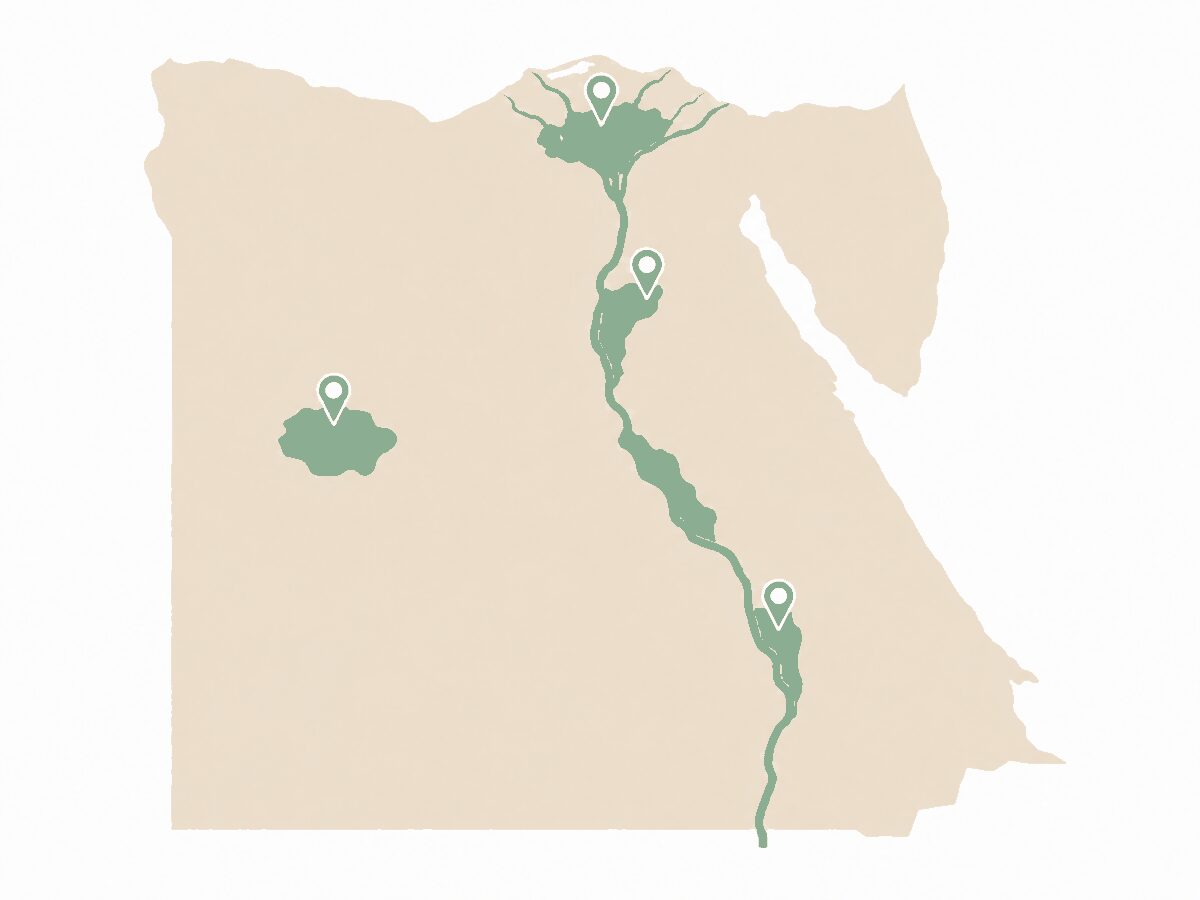
This is the table to plan against. The harvest periods below follow the published variety windows — Tommy Atkins early from July, Kent from August to October, Naomi through the mid-to-late season, Keitt from September to November — read against each region’s position in the north-to-south stagger. Egypt’s export season as a whole runs broadly July to November, with the peak in August to October.
| Region | Soil & irrigation | Main export varieties | Indicative harvest period | Position in the national season |
|---|---|---|---|---|
| Upper Egypt (Aswan, Luxor) | Sandy alluvial, canal + drip; hottest, driest | Ewais, Tommy Atkins | From July, ahead of the rest of the country | Opens the season — Aswan picks first, then Luxor |
| Ismailia & Sharkia | Reclaimed sand, canal + drip | Ewais, Zebda, Sokary, Naomi, Kent | Kent from early August; main local-variety harvest mid-August to October | The volume core — about 36% of Egypt’s mango area, 40% of exports |
| Central Nile Delta (Qalyubia, Menoufia) | Clay loam, canal; higher humidity | Tommy Atkins, Zebda, Naomi | Tommy Atkins from July; Zebda and Naomi through the mid-season | Peak-season volume, shortest run to port |
| Nubaria & Beheira (west Delta) | Reclaimed sandy loam, drip | Kent, Naomi, Keitt | Kent from August to October; Keitt from September | Purpose-planted for European and Gulf retail specs |
| Bahariya Oasis | Deep desert sand, well water + drip; wide day/night swing | Keitt, Kent | Keitt from October, weeks behind the Delta | Carries the tail of the season |
Read down the last column and the commercial logic is obvious: Upper Egypt opens the season, Ismailia and the Delta carry the peak, and Bahariya closes it. Cross-reference this against the Egyptian mango season calendar for the variety-level view of the same window.
For the wider sourcing picture — pricing, packaging, destination markets and documentation — start with the Egyptian mango export guide or the volume and market data in the 2026 export report.
Five zones supply almost all export volume: Upper Egypt (Aswan and Luxor), the Ismailia and Sharkia belt, the central Nile Delta, the Nubaria and west Delta reclamation, and Bahariya Oasis in the Western Desert. Ismailia is the flagship mango governorate, holding roughly 36% of Egypt’s mango area and around 40% of its mango exports.
Upper Egypt. The national picking sequence starts in Aswan, moves to Luxor and then reaches Ismailia and the Delta, so the south opens the season with early Ewais and Tommy Atkins from July.
Bahariya has cold desert nights, and the wide day-to-night temperature swing slows ripening. The same Keitt block there picks weeks after a Delta block, which is how Egypt extends its Keitt supply to the end of the season.
Yes, in two ways buyers notice. Dry desert regions have low fungal pressure and generally produce cleaner skin with fewer blemish rejects. Wide temperature swings also tend to raise sugar levels, so desert-grown fruit usually tests higher on Brix than the same variety from the humid Delta. Brix is monitored at harvest and confirmed per lot.
Yes. Region should be part of the specification alongside variety, size and carton format, because it is what fixes your loading week. Tell us the week you need to load and the quality tolerance you are working to, and we will tell you which region can supply it.
Send us the loading week you are aiming for and the variety and size you need. We will come back with which regions are picking that week, what the current grade-out looks like, and a firm price.
