Address
Work Hours
Monday to Friday: 7AM - 7PM
Weekend: 10AM - 5PM
Address
Work Hours
Monday to Friday: 7AM - 7PM
Weekend: 10AM - 5PM
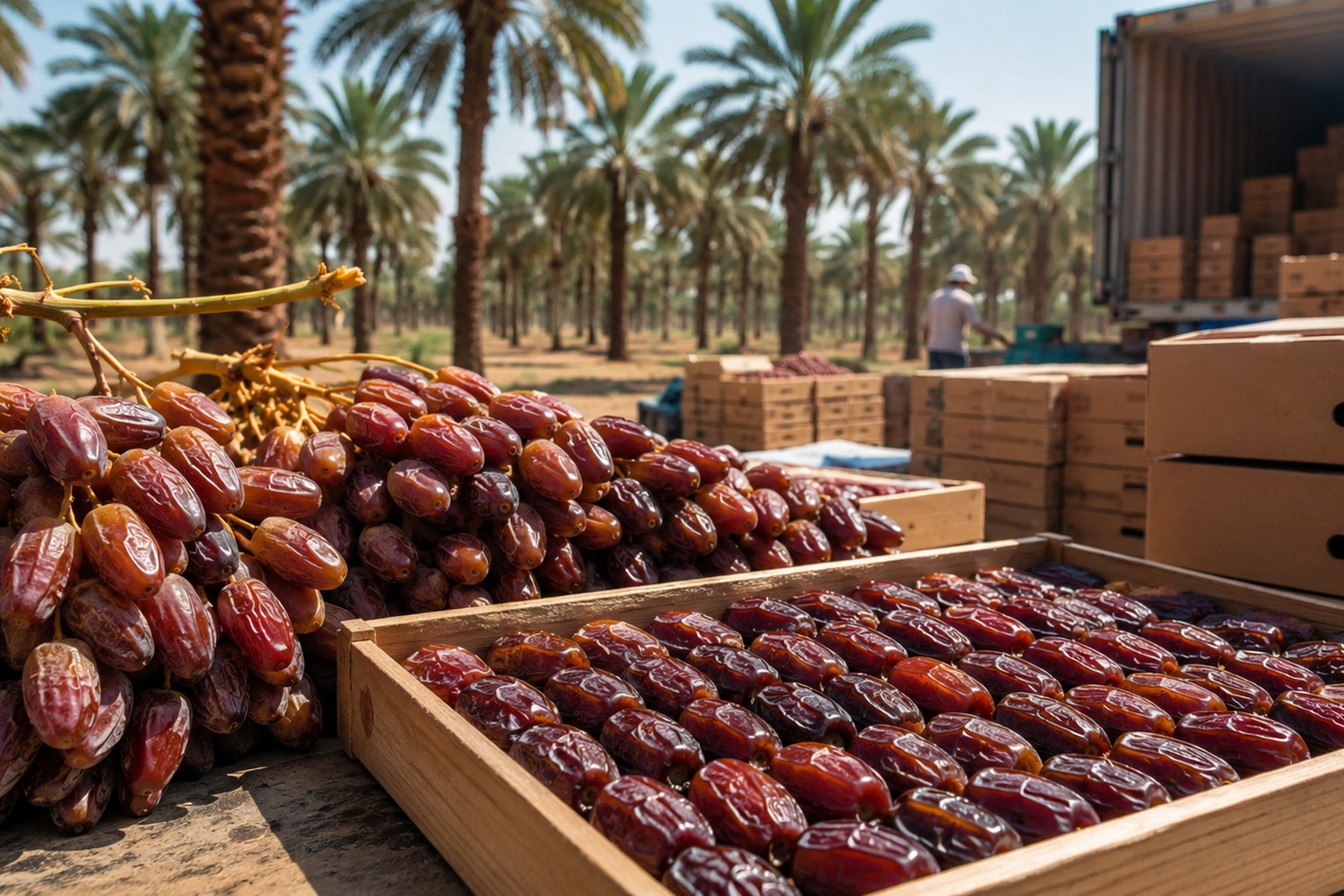
Egypt is the world’s largest producer of dates, with a vast palm population spread across the Nile Valley, the Western Desert oases and fast-growing reclaimed-desert projects. From soft Zaghloul to dry Siwi and premium Medjool, Egyptian dates supply the Gulf, South and Southeast Asia, Morocco, Europe and beyond — fresh, semi-dry and dry, in bulk and retail packs. This guide is the hub for importers: what Egypt grows, when it ships, the markets it serves, the specifications buyers ask for and the compliance behind every consignment.
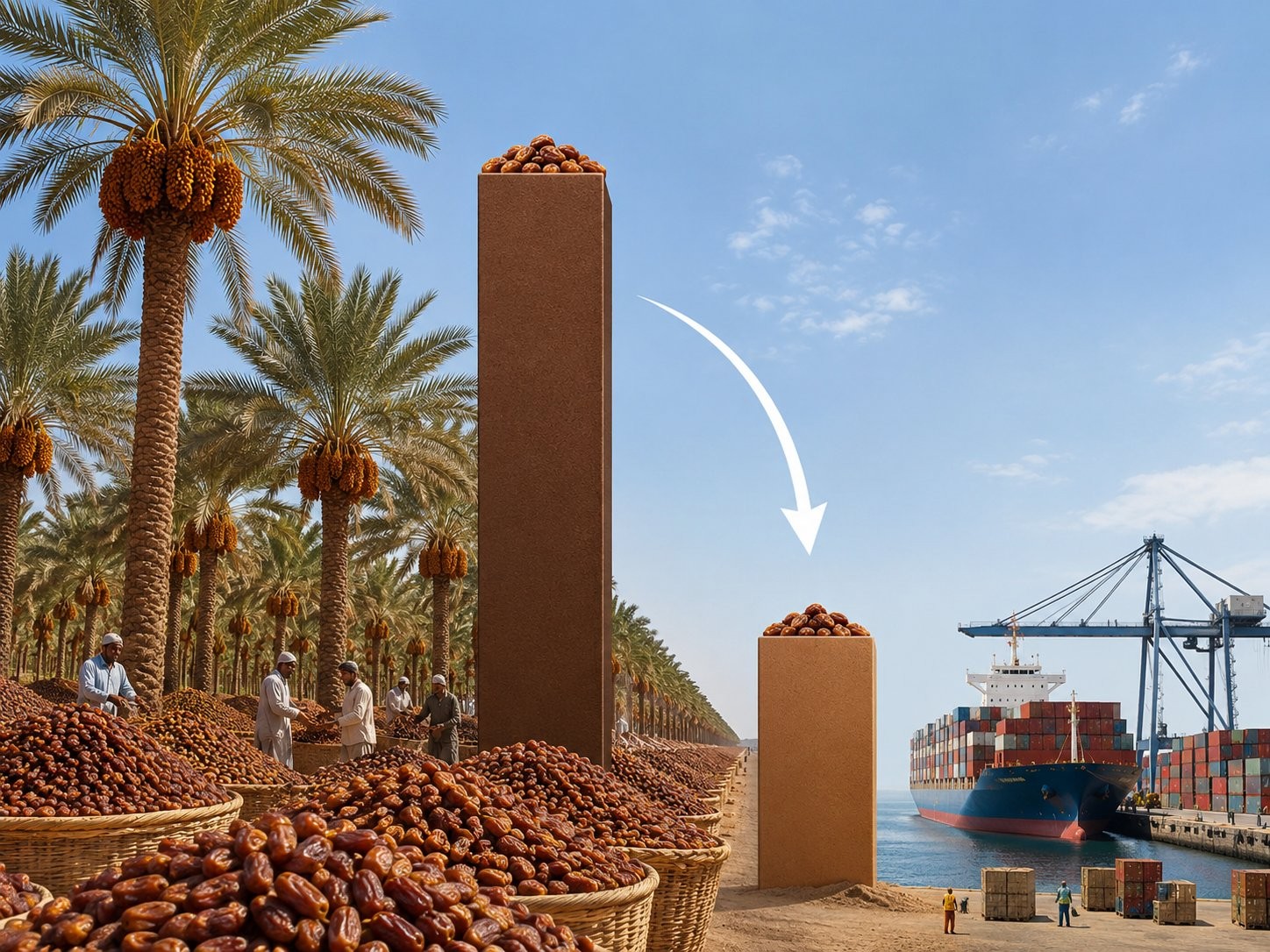
Quick answer: Egypt is the world’s largest producer of dates — around 1.86 million tonnes a year (FAO, 2023), roughly 19–21% of global production — grown on one of the world’s largest date-palm populations. Yet it exports only about 35,000–40,000 tonnes, so its export share is far smaller than its production lead. The main exported dry date is Siwi (from Siwa); premium Medjool is expanding fast in reclaimed projects; soft varieties such as Zaghloul and Hayany serve fresh and regional markets. Season by variety: Medjool ships fresh from August to February and from cold store from March to July; Saidi fresh from July to February and from cold store from March to June; Siwi fresh from August to November. Dates trade under HS code 0804.10. Main markets: the Gulf, Indonesia, Malaysia, Bangladesh and India, Morocco and the EU. (Sources: FAO, 2023; ITC Trade Map, 2025.)
Egyptian dates fall into three moisture classes, plus the premium imported-genetics segment:
| Type | Examples | Use / market |
|---|---|---|
| Soft (wet / rutab) | Zaghloul, Hayany, Samani | Fresh eating; regional & Gulf (needs cold chain) |
| Semi-dry | Saidy (Saidi), Amhat, Bartamuda | Versatile; storage & export |
| Dry | Siwi (Siwa), Sakkoti, Malakabi, Gondaila | Long shelf life; main export to S/SE Asia & Morocco |
| Premium | Medjool, Barhi | Premium retail; EU, Gulf, global |
Egyptian dates are exported as fresh (rutab), semi-dry and dry whole dates, pitted dates, date paste and other processed products (syrup, diced, date bars). Dry dates and paste are shelf-stable; fresh rutab needs a cold chain.
Season by variety: Medjool ships fresh from August to February and from cold store from March to July; Saidi fresh from July to February and from cold store from March to June; Siwi fresh from August to November. Demand concentrates strongly around Ramadan. Growing spans the Nile Valley and Delta (soft and semi-dry), the oases and Upper Egypt — Siwa, the New Valley and Aswan (dry dates) — and reclaimed desert (Medjool and barhi).
Note: Egypt leads the world in date production (~1.86 million tonnes) but exports only around 35,000–40,000 tonnes — a small fraction of its output — so it holds a far smaller share of global export value than its production lead suggests. Premium-variety (Medjool, barhi) and processing investment is steadily closing that gap.

Dates are traded under HS code 0804.10.
For Medjool, size and grade are separate choices: size is the weight of one fruit, in six bands from Babysmall to SuperJumbo, plus a Mix of sizes, and grade is the degree of skin separation, in three levels from Premium to Classic. A quote names both, together with the pack and the destination port. The size bands by fruit weight and the grade definitions are laid out in our Medjool grade and size table. Size names differ between Egyptian, Jordanian and Palestinian packers, so compare offers in grams per fruit; see Medjool dates by origin.
Dates require a phytosanitary certificate, compliance with destination MRLs, and control of storage pests — chiefly the carob / date moth (Ectomyelois ceratoniae) and stored-product beetles — managed by cleaning, freezing, controlled atmosphere or approved fumigation. Halal certification is commonly required for Gulf and Muslim-market buyers. Egyptian dates are not on the EU’s enhanced official-controls list (Regulation (EU) 2019/1793), so they are not subject to increased EU border checks — standard MRL and phytosanitary rules apply.
Yes – Egypt is the world’s largest producer of dates by volume, growing around 1.86 million tonnes a year (FAO, 2023), about 19-21% of global production. Its exports, however, are far smaller at roughly 35,000-40,000 tonnes.
The dry variety Siwi (from Siwa) is the main export date to South and Southeast Asia and Morocco; premium Medjool is a fast-growing export segment.
The fresh season depends on the variety: Medjool ships fresh from August to February and from cold store from March to July, Saidi fresh from July to February and from cold store from March to June, and Siwi fresh from August to November.
Dry dates go to Morocco, Indonesia, Malaysia, Bangladesh and India; premium Medjool to the EU and Gulf; soft and fresh dates to Gulf and regional markets.
A phytosanitary certificate, MRL compliance, storage-pest control (freezing, controlled atmosphere or approved fumigation), food-safety certification for packed/processed dates, and halal certification for many markets.
How to cite this page. Reusing a figure from this guide? Please cite it and link to this page as the source.
PEI Trade. “Egyptian Dates Export: The Complete Guide.” peitrade.com, 2026. https://peitrade.com/egyptian-dates-export-guide/
Source Egyptian dates with PEI Trade. We supply whole dry (Siwi), semi-dry, soft and premium (Medjool) dates to Gulf, Asian, North African and EU buyers, with phytosanitary documentation and pest treatment. Contact: sales@peitrade.com · WhatsApp +20 10 9911 1918 · www.peitrade.com