Address
Work Hours
Monday to Friday: 7AM - 7PM
Weekend: 10AM - 5PM

Address
Work Hours
Monday to Friday: 7AM - 7PM
Weekend: 10AM - 5PM


Bulb diameter bands, cure targets, mesh and carton packing, pallet configuration and the realistic storage window for Egyptian white and Balady garlic in the 2026/2027 season.
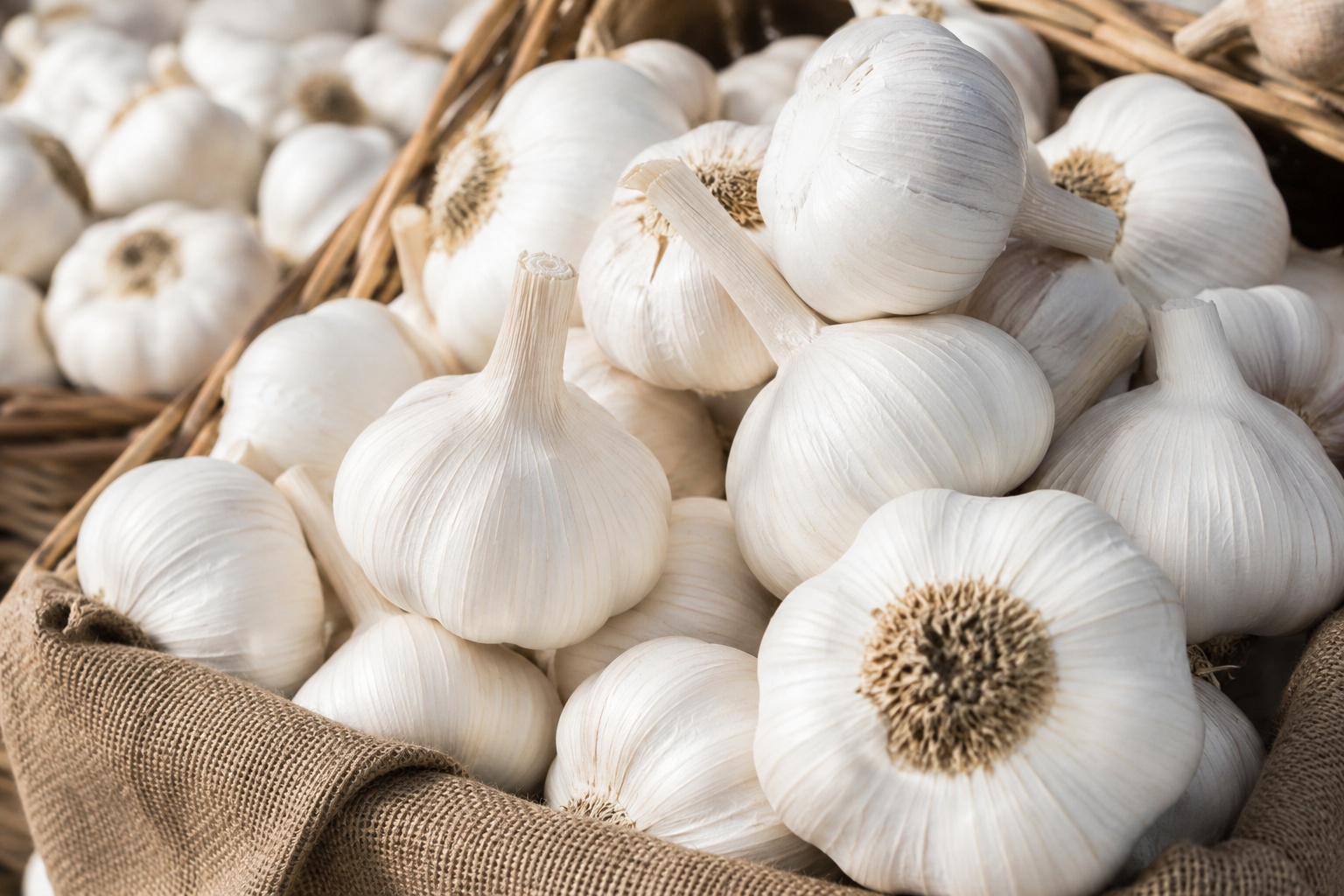
Garlic is the crop where buyers most often accept a specification they have not defined. A contract that says only “Egyptian white garlic, 5 kg carton” leaves bulb diameter, cure state, clove count and root trim entirely to the packhouse. The result arrives as a legitimate shipment that nobody wanted. This is the specification we ask buyers to fix before a quotation is issued for the 2026/2027 season.
Two commercial types move out of Egypt in volume. White garlic, the dominant export type, gives large uniform bulbs with clean outer skin and a clove count usually between 10 and 16. It suits repacking, retail nets and general wholesale. Balady garlic, the local landrace, is smaller and more strongly flavoured, with a tighter clove structure and a pink to purple skin tone. It moves to markets that buy on flavour rather than on appearance, and it does not compete on calibre.
Egyptian garlic is graded on bulb diameter, not weight. The bands most commonly quoted are 4.5 to 5.5 cm, 5.5 to 6.0 cm, 6.0 to 6.5 cm and 6.5 cm and up. Larger than 6.5 cm is available but not in every week of the season, and pricing reflects that. Specify a single band with a tolerance rather than a minimum, because a stated minimum of 5.5 cm allows the packhouse to fill the carton with anything above it, and the visual uniformity a repacker needs is then lost.
Cure is not a formality. Properly cured garlic loses roughly 25 to 30 percent of its field weight, the neck closes, and the outer wrapper skins dry to a papery finish. Under-cured bulbs feel soft at the neck and go on to sprout and mould in the box. Ask for cured stock with a moisture content in the low 60s by percentage and reject anything shipped straight from the field. Our detailed reference on curing onions, garlic and root crops covers the times and temperatures behind this.
Standard export trim is stem cut to 5 to 10 mm and roots trimmed flush to the base plate. Longer stems are available for braided and bunched presentations, which are a separate order line and a separate price. The common formats are 5 kg and 10 kg mesh bags in a master carton, 10 kg loose carton, and 500 g or 1 kg consumer nets packed 10 or 20 to a case. On a 1.0 x 1.2 m pallet, 10 kg cartons build to roughly 100 to 120 cartons depending on carton height, which is set by the board and vent choices covered in our export carton specification guide.
Harvest runs from March into May, with fresh green garlic earlier. Cured stock then ships out of cold store from April through to roughly January, tightening in quality and price from November onward. Garlic holds at minus 1 to 0 degrees Celsius at 60 to 70 percent relative humidity, or in dry ambient conditions for shorter programmes. High humidity is the enemy here, not warmth, because it drives root regrowth and neck rot. Most volume moves in ventilated dry containers on short GCC lanes and in reefers on longer EU and Asian lanes.
Send us the type, the diameter band, the pack format, the destination port and your Incoterms 2020 preference, and we will come back with availability and a price against a defined specification rather than a general offer. Certificates of analysis and third party inspection through SGS or Intertek can be arranged on request. Message the export desk on WhatsApp at +20 10 9911 1918.
