Address
Work Hours
Monday to Friday: 7AM - 7PM
Weekend: 10AM - 5PM
Address
Work Hours
Monday to Friday: 7AM - 7PM
Weekend: 10AM - 5PM


Egypt is one of Europe’s key winter suppliers of fresh green beans — the slim, deep-green fine beans (haricots verts) that fill EU and UK shelves when local production has stopped. Backed by a warm winter climate and a large freezing industry, Egypt supplies fresh beans counter-seasonally and frozen beans year-round. This guide is the hub for importers: what Egypt grows, when it ships, the markets it serves, the specifications buyers ask for and the compliance behind every consignment.
Quick answer: Egypt is one of Europe’s leading counter-seasonal suppliers of fresh green beans (haricots verts) and a significant frozen/IQF bean exporter. The main export is the slim fine / extra-fine green bean (haricot vert), alongside bobby (round) and flat beans. The fresh season runs roughly October to May (peak December–March), counter-seasonal to Europe; frozen beans ship year-round. Fresh beans trade under HS code 0708.20 and frozen under HS 0710.22. Green beans are chilling-sensitive and stored around 5–7°C. Markets include the EU, UK, the Gulf and Russia. (Sources: CBI; ITC Trade Map, 2025.)
| Type | Character | Main market |
|---|---|---|
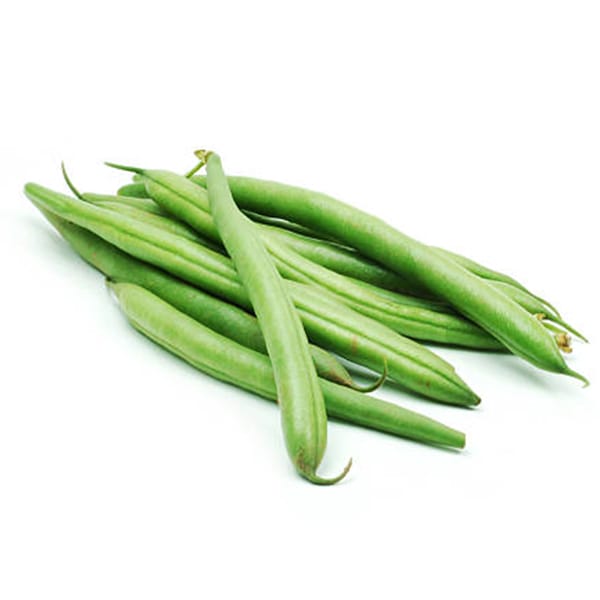
| Fine beans (haricot vert) | Slim, ~6–9 mm, tender, deep green | EU & UK retail (the export mainstay) |
| Extra-fine | Very slim, <6 mm, premium | Premium EU retail & foodservice |
| Bobby beans | Round, thicker, fuller | UK & general retail |
| Flat / helda beans | Wide, flat pods | Selected markets |
Egyptian green beans are exported fresh (whole pods, topped-and-tailed or as grown) and frozen — IQF whole, cut or French-cut. Fresh fine beans are the premium retail segment; frozen beans serve year-round retail and processing.
The fresh export season runs from about October to May, peaking December to March — the European winter window, when EU production has stopped. Frozen and IQF beans are produced through the season and held in cold storage, so Egypt can supply year-round for processing and retail. Growing is concentrated in Nubaria, Beheira and Ismailia and the reclaimed-desert zones. Exact windows shift year to year with planting and weather.
Fresh beans are traded under HS code 0708.20, frozen under HS 0710.22.
Fresh green beans require a phytosanitary certificate (a key pest concern is false codling moth, Thaumatotibia leucotreta), compliance with destination MRLs (EU: Regulation (EC) No 396/2005), and increasingly GLOBALG.A.P. certification with ISPM 15 wood packaging and traceability. Note that Egyptian green beans are not on the EU’s enhanced official-controls list (Regulation (EU) 2019/1793) — the bean entries on that list apply to other origins (such as Bangladesh and India), not Egypt — so Egyptian beans are not subject to increased border checks, though sound residue management remains important. Frozen beans are a processed food and additionally need food-safety management (HACCP, and where required BRCGS / IFS / ISO 22000) with microbiological control.
The fresh export season runs roughly October to May, peaking December-March; frozen/IQF beans are available year-round.
The slim fine and extra-fine green bean (haricot vert), with bobby (round) and flat beans also grown.
The EU and UK (the main fresh winter market), the Gulf and Russia; frozen beans go to EU processing and retail.
Fresh beans fall under HS 0708.20 and frozen beans under HS 0710.22.
A phytosanitary certificate, MRL compliance, GLOBALG.A.P. and ISPM 15 for fresh; plus HACCP/GFSI food-safety certification for frozen.
How to cite this page. Reusing a figure from this guide? Please cite it and link to this page as the source.
PEI Trade. “Egyptian Green Beans Export: The Complete Guide.” peitrade.com, 2026. https://peitrade.com/egyptian-green-beans-export-guide/
Source Egyptian green beans with PEI Trade. We supply fresh fine and extra-fine beans and frozen IQF beans to EU, UK, Gulf and Russian buyers, with GLOBALG.A.P. handling, phytosanitary documentation and chilling-sensitive cold-chain discipline. Contact: [email protected] · WhatsApp +20 109 911 1918 · www.peitrade.com