Address
Work Hours
Monday to Friday: 7AM - 7PM
Weekend: 10AM - 5PM

Address
Work Hours
Monday to Friday: 7AM - 7PM
Weekend: 10AM - 5PM


Egypt is one of the world’s largest tomato growers — among the top five producers globally and the biggest in Africa — but most of that crop is consumed at home, and its export trade runs on two tracks: a relatively limited fresh trade (round, cherry, plum and vine) shipped mainly to the Gulf, and a stronger processing industry exporting tomato paste, concentrate and sun-dried tomatoes — the segment where Egypt ranks among the world’s larger paste exporters. A warm climate, multiple plantings and large scale make Egyptian tomatoes a year-round option. This guide is the hub for importers: what Egypt grows, when it ships, the markets it serves, the specifications buyers ask for and the compliance behind every consignment.
Quick answer: Egypt is among the world’s top five tomato producers (around 6.3–6.7 million tonnes a year, FAO — the largest in Africa), but the crop is mostly consumed domestically. Fresh exports (round/globe, cherry/cocktail, plum/Roma, vine/truss) are relatively limited and go mainly to the Gulf; the bigger export story is processed tomato — paste/concentrate (Egypt is roughly the world’s ninth-largest exporter by value), sun-dried and diced. Fresh tomatoes are available much of the year from staggered plantings (field peaks December–March and May–July); processing peaks in summer–autumn. Fresh tomatoes trade under HS code 0702.00, paste/concentrate under HS 2002.90. Fresh tomatoes are chilling-sensitive and stored around 10–13°C. Markets include the Gulf, EU, Russia and Africa. (Sources: FAO, 2023; ITC Trade Map, 2025.)
| Type / form | Character | Main use |
|---|---|---|
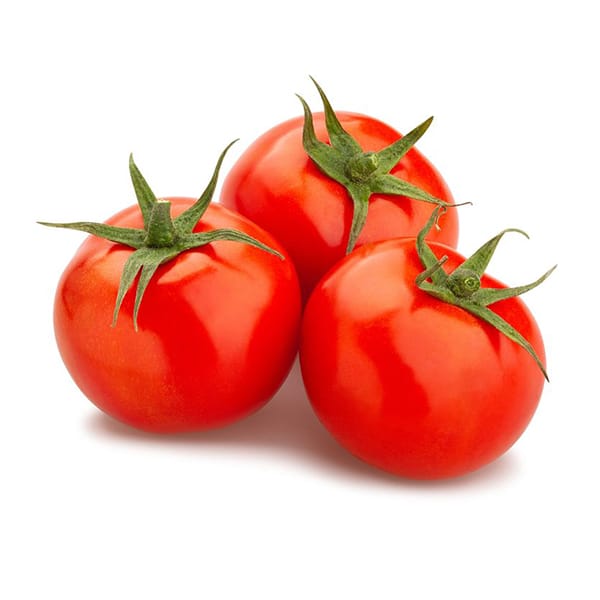
| Round / globe | All-purpose, firm | Fresh retail (Gulf & regional) |
| Cherry / cocktail | Small, sweet, high Brix | EU & premium retail |
| Plum / Roma | Meaty, low-moisture | Processing & fresh |
| Vine / truss (TOV) | On-the-vine clusters | EU retail premium |
| Paste / concentrate | Double concentrate (28–30% Brix) | Global food industry |
| Sun-dried | Dried halves | EU & specialty |
Thanks to staggered winter and summer plantings, fresh tomatoes are available for much of the year, with field production peaking around December–March and again May–July, and windows shifting by region and type. Processing — paste, concentrate and sun-dried — peaks with the summer–autumn crop and ships year-round from stock. Production spans Nubaria, Beheira, the Delta and Upper Egypt, with processing in industrial zones. Exact windows shift year to year with planting and weather.
Fresh tomatoes are traded under HS code 0702.00; paste and concentrate under HS 2002.90.
Fresh tomatoes require a phytosanitary certificate — the key pest is the tomato leafminer (Tuta absoluta), alongside fruit flies and whitefly-borne viruses — compliance with destination MRLs (EU: Regulation (EC) No 396/2005), and GLOBALG.A.P. with ISPM 15 packaging and traceability. Paste, concentrate and sun-dried products are processed foods and additionally need food-safety management (HACCP, and where required BRCGS / ISO 22000). Egyptian tomatoes are not on the EU’s enhanced official-controls list (Regulation (EU) 2019/1793), so they are not subject to increased border checks — standard MRL and phytosanitary rules apply (residue and Tuta absoluta control remain central for fresh fruit).
Fresh tomatoes are available much of the year from staggered plantings (field peaks December-March and May-July); processing peaks in summer-autumn.
Round/globe, cherry/cocktail, plum/Roma and vine/truss fresh, plus paste, concentrate and sun-dried.
Although Egypt is a top-five global producer, fresh exports are relatively limited (mostly Gulf-bound); processed tomato – especially paste and concentrate – is the larger export by value, with Egypt among the world’s leading paste exporters.
The Gulf (fresh), the EU, Russia and Africa (especially paste).
Fresh tomatoes under HS 0702.00; paste/concentrate under HS 2002.90.
Cool, around 10-13 degrees C – tomatoes are chilling-sensitive and lose flavour if stored too cold.
How to cite this page. Reusing a figure from this guide? Please cite it and link to this page as the source.
PEI Trade. “Egyptian Tomato Export: The Complete Guide.” peitrade.com, 2026. https://peitrade.com/egyptian-tomato-export-guide/
Source Egyptian tomatoes with PEI Trade. We supply fresh round, cherry, plum and vine tomatoes and processed paste, concentrate and sun-dried to Gulf, EU, Russian and African buyers, with GLOBALG.A.P. handling, phytosanitary documentation and chilling-sensitive cold-chain discipline. Contact: [email protected] · WhatsApp +20 109 911 1918 · www.peitrade.com