Address
Work Hours
Monday to Friday: 7AM - 7PM
Weekend: 10AM - 5PM
Address
Work Hours
Monday to Friday: 7AM - 7PM
Weekend: 10AM - 5PM


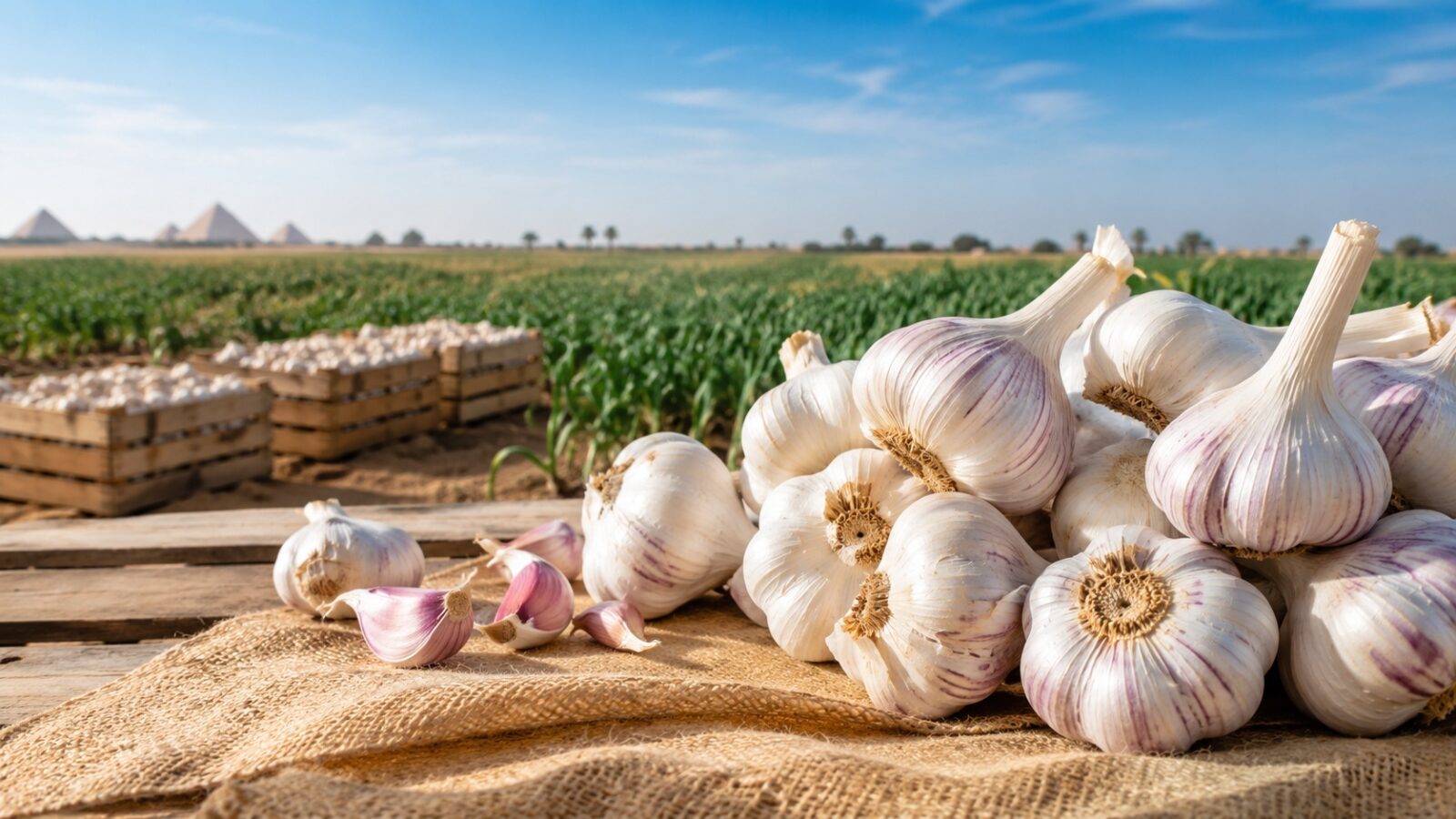
Egypt is one of the world’s larger garlic producers and a competitive exporter, known for strong, pungent bulbs with good storage life. From large white export garlic to the traditional purple-tinged Balady, and from fresh cured bulbs to peeled cloves and dehydrated flakes, Egypt supplies the EU, the Gulf, Brazil, Southeast Asia and beyond. This guide is the hub for importers: what Egypt grows, when it ships, the markets it serves, the specifications buyers ask for and the compliance behind every consignment.
Quick answer: Egypt is the world’s fourth-largest garlic producer (around 396,000 tonnes, FAOSTAT 2022) and a competitive exporter. The main types are large white garlic (the export mainstay) and the traditional, pungent Balady (purple-tinged); improved varieties such as Sids 40 are also grown. Harvest runs about March to May, and cured/stored garlic ships much of the year. Egypt also has a significant dehydrated garlic segment. Fresh garlic trades under HS code 0703.20 (dried/dehydrated under 0712.90). Markets include the EU, the Gulf, Brazil, Southeast Asia and Russia. (Sources: FAOSTAT, 2022; ITC Trade Map, 2025.)
| Type | Character | Use / market |
|---|---|---|
| White garlic | Large white bulbs, firm | Main export — EU, Gulf, Brazil, Asia |
| Balady (local) | Purple-tinged, very pungent, smaller cloves | Traditional; regional & select export |
| Sids 40 & improved | Higher-yielding, larger bulbs | Fresh export |
| Dehydrated garlic (segment) | Dried flakes / granules / powder | Food processing — global |
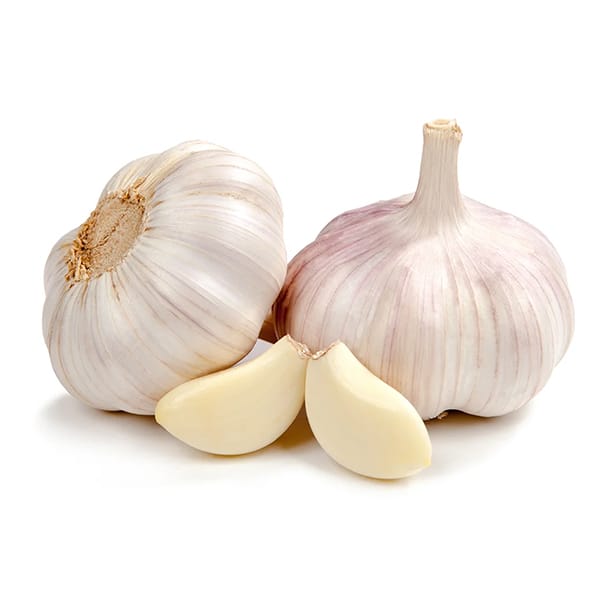
Egyptian garlic is exported as fresh cured whole bulbs, peeled cloves (fresh or vacuum-packed), and dehydrated garlic — flakes, granules, minced and powder — plus garlic paste. Whole bulbs are the largest segment; dehydrated and peeled add value for processing and foodservice.
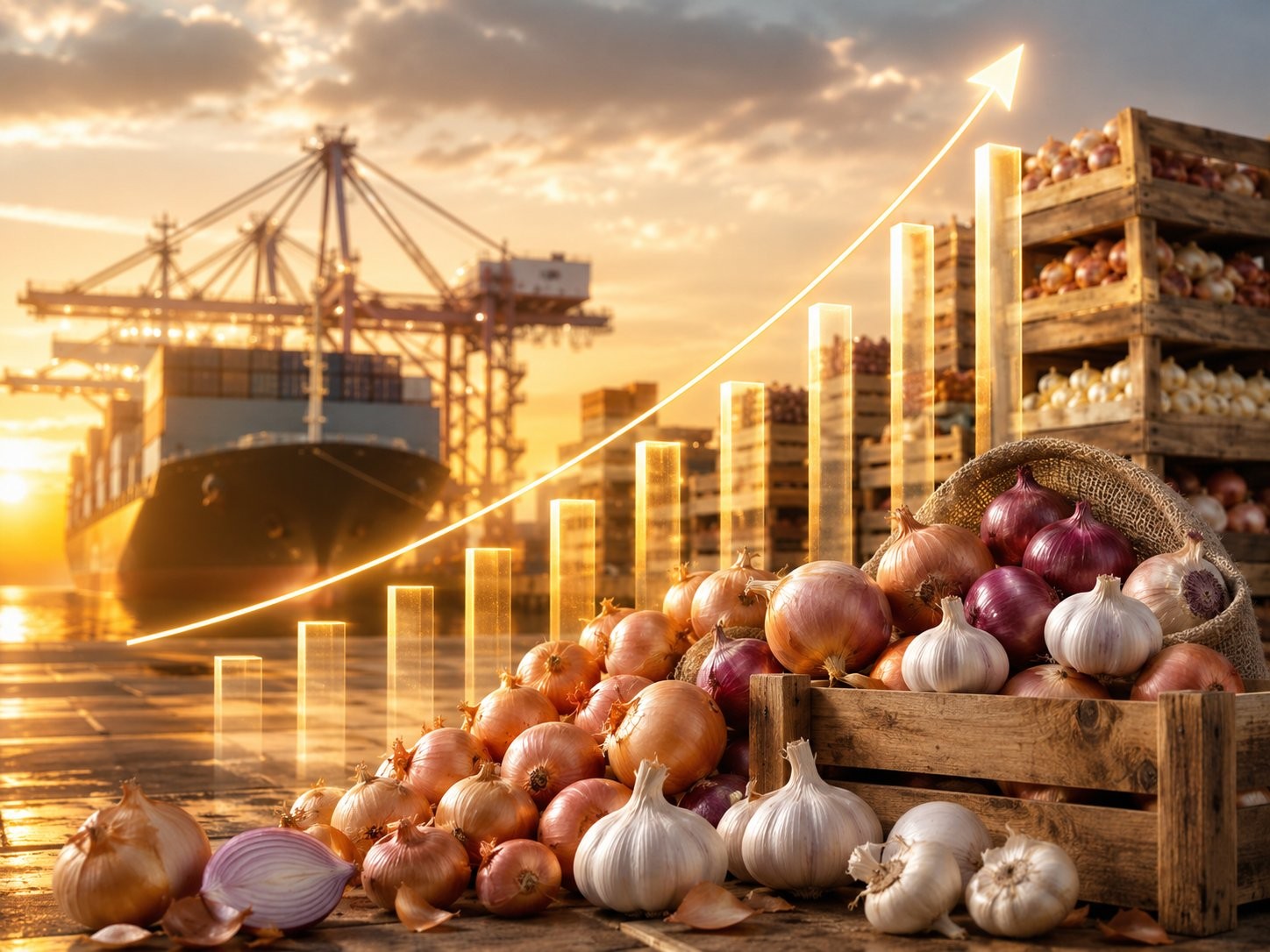
Garlic is planted in autumn and harvested across spring — about March to May, with the earliest bulbs from late February giving Egypt an early-season edge over other Northern-Hemisphere origins. After curing, the new crop is exported from around April, and well-stored garlic ships through much of the year. Growing is concentrated in Beheira, Minya, Beni Suef and Sohag. Exact windows shift year to year with planting and weather.
Fresh garlic is traded under HS code 0703.20; dried or dehydrated garlic (flakes, granules, powder) falls under 0712.90.
Garlic requires a phytosanitary certificate (the key disease concern, shared with onions, is white rot, Sclerotium cepivorum), compliance with destination MRLs (EU: Regulation (EC) No 396/2005) and the EU general marketing standard, and increasingly GLOBALG.A.P. certification with ISPM 15 wood packaging and lot-coded traceability. Dehydrated garlic is a processed food and additionally needs food-safety management (HACCP, and where required ISO 22000 / BRCGS) with microbiological control. Egyptian garlic is not on the EU’s enhanced official-controls list (Regulation (EU) 2019/1793), so it is not subject to increased border checks — standard MRL and phytosanitary rules apply.
The crop is harvested around March to May; after curing, the new crop exports from about April, and stored garlic ships through much of the year.
Mainly large white garlic and the traditional purple-tinged Balady, plus improved varieties such as Sids 40 and a significant dehydrated-garlic segment.
The EU, the Gulf, Brazil and Latin America, Southeast Asia, Russia and Africa.
Fresh garlic falls under HS code 0703.20; dried or dehydrated garlic falls under 0712.90.
A phytosanitary certificate (white rot is the key concern), MRL compliance, GLOBALG.A.P. and ISPM 15 packaging, plus food-safety certification for dehydrated garlic.
How to cite this page. Reusing a figure from this guide? Please cite it and link to this page as the source.
PEI Trade. “Egyptian Garlic Export: The Complete Guide.” peitrade.com, 2026. https://peitrade.com/egyptian-garlic-export-guide/
Source Egyptian garlic with PEI Trade. We supply white and Balady garlic — whole bulbs, peeled cloves and dehydrated — to EU, Gulf, Brazilian, Asian and Russian buyers, with GLOBALG.A.P. handling, full documentation and cold-dry storage discipline. Contact: [email protected] · WhatsApp +20 109 911 1918 · www.peitrade.com